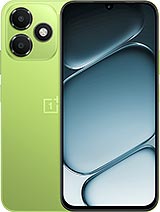
Xiaomi Redmi R70m review
The R70m is best for someone who prioritizes battery life and a large screen over display sharpness and performance. Skip it if you use your phone for games, video, or expect a responsive, pixel-dense display—this phone is fighting yesterday's battle at today's price."

This review is written with AI assistance from Xiaomi’s published specifications and public benchmark data for the Xiaomi Redmi R70m, and the rating is spec-based. GoSolo does not physically test devices; where we estimate real-world behaviour such as battery life or charge time, we say so. How we rate phones.
Overview
The Redmi R70m is a budget 5G phone with a big screen and decent battery, but its 720p display and entry-level Unisoc chipset mean it feels like a 2023 device selling in 2026. For the money, it does the basics fine—calling, messaging, light browsing—but it is fighting a rearguard battle in a market full of faster and sharper alternatives at the same price.
Design & build
At 210 grams and 8.2 mm thick, the R70m is pleasantly light and slim for a phone with a 6.9-inch screen. The IPS LCD panel sits under minimal bezel, and the overall proportions feel balanced rather than stretched. There is nothing wrong with the industrial design—Xiaomi has done competent work here—but there is nothing distinctive about it either. The materials and finish are adequate for the price, though durability details (glass type, coating resistance) are not specified. For someone who wants a straightforward slab that fits comfortably in hand and pocket, this is solid enough.
Display
The 6.9-inch IPS LCD is the biggest win and the biggest compromise in one breath. At 254 ppi, the 720p resolution means visible pixels on a screen this size—text and icons look soft compared to rivals that hit 1080p or higher in this price tier. The 120Hz refresh helps scrolling feel less jagged, and 800 nits peak brightness is adequate for outdoor reading in most light. Colours are neutral, not vibrant, which is typical of IPS. The screen-to-body ratio of 84% is respectable, though not exceptional. For video and games, the low pixel density is noticeable; for reading and messaging, it passes. This is a display that prioritizes size over sharpness, which is a deliberate trade-off, not a hidden weakness.
Performance
The Unisoc T8300 is an entry-level chip, and 2026 benchmarks confirm it: it is slower than Snapdragon 4 series and mid-range MediaTek options rivals are shipping at this price. Apps launch without drama, light multitasking works, and scrolling through social media is smooth thanks to the 120Hz panel. Gaming and video editing will stutter. Paired with 6GB of RAM as standard (up to 12GB on higher tiers), the phone can hold a handful of apps in memory, but do not expect snappy app switching or heavy workloads. The real-world feel is adequate for a second phone or a gift for someone who does not push hardware hard, but by 2026 standards at this price, the chipset is visibly dated. UFS 2.2 storage is slow by current norms; UFS 3.x is standard in rivals.
Software
Android 16 with HyperOS 3 is current, and Xiaomi has a track record of regular updates. HyperOS is bloated by some accounts, but the core experience is functional. There are pre-installed apps you may not want, and the customization menus are deep if you dig. For most users, the software does not stand out in either direction—it works, updates land, and you move on. The 6GB of RAM on the base model means background app closure might happen faster than on competitors with more memory, though not dramatically.
Camera
A 13MP main sensor and 8MP front camera are modest by any measure. The main lens shoots 1080p video at 30fps, which is fine for social media but basic by 2026 standards when peers offer 4K. Daytime shots are acceptable, though dynamic range is flat and detail is soft. Night mode is absent, so low-light photography will disappoint. The front camera is suited for video calls and casual selfies, nothing more. There is no ultra-wide, macro, or telephoto option—this is the core offering. For someone who takes the occasional snapshot and does not care about low light or video quality, it is fine. For anyone who values a capable camera, look elsewhere at this price.
Battery & charging
The 6300 mAh battery is a genuine strength for this class. With the low-power Unisoc chip and modest display, real-world battery life should stretch to a full day of moderate use, possibly longer. The charging spec is listed as 15W, which is slow by 2026 standards when budget rivals hit 33W or 66W. A full charge will take about two hours, which is not catastrophic but falls behind. There is no wireless charging, as expected at this price. The large battery capacity buys time between charges; it just does not charge quickly.
Value & verdict context
At around 220 EUR, the R70m is positioned in the entry-5G segment where it competes with phones from Realme, Samsung, and others. The appeal is size (6.9 inches), battery endurance, and 5G connectivity without breaking the bank. The drawbacks—720p display, slow processor, basic cameras, slow charging—are real but familiar in this tier. Xiaomi has traded performance and display quality for battery and screen real estate, which is a valid choice but not the choice every buyer will make. If you want a large phone with long battery life for basic tasks and light entertainment, and you do not care about sharpness or speed, this works. If you expect snappy performance or a clear display at this price, rivals offer better value.
Verdict
The R70m is best for someone who prioritizes battery life and a large screen over display sharpness and performance. Skip it if you use your phone for games, video, or expect a responsive, pixel-dense display—this phone is fighting yesterday's battle at today's price."
- Large 6.9-inch screen with 120Hz refresh and 84% screen-to-body ratio for an immersive viewing experience without excessive bezel
- 6300 mAh battery with strong real-world endurance, easily lasting a full day of moderate use
- Light and slim (210g, 8.2mm) despite the large display, making it comfortable to hold and pocket
- 5G connectivity and dual SIM support with microSDXC expansion up to 256GB
- 720p display on a 6.9-inch screen produces visible pixelation that rivals at this price have moved past
- Unisoc T8300 is noticeably slower than competing entry chips at the same price point, visible in app launches and multitasking
- 15W charging is slow by 2026 budget standards; rivals now hit 33W or more, cutting charge time in half
Xiaomi Redmi R70m Key Specifications
The essentials at a glance. See the full spec sheet.
| Released | 2026, April 15 |
|---|---|
| Display | 6.9 inches, 114.9 cm2 (~84.3% screen-to-body ratio), IPS LCD, 120Hz, 800 nits (peak) |
| Resolution | 720 x 1600 pixels, 20:9 ratio (~254 ppi density) |
| Chipset | Unisoc T8300 (6 nm) |
| RAM & storage | 128GB 6GB RAM, 256GB 6GB RAM, 256GB 8GB RAM, 256GB 12GB RAM |
| Main camera | 13 MP |
| Selfie camera | 8 MP |
| Battery | 6300 mAh |
| Software | Android 16, HyperOS 3 |
| Dimensions | 171.6 x 79.5 x 8.2 mm (6.76 x 3.13 x 0.32 in) |
| Weight | 210 g (7.41 oz) |
| Network | GSM / HSPA / LTE / 5G |
| NFC | No |
| USB | USB Type-C 2.0, OTG |
Xiaomi Redmi R70m FAQ
Common questions, answered from the spec sheet.
Does the Redmi R70m support 5G?
Yes. The Redmi R70m supports 5G networks.
What chipset does the Redmi R70m use?
The Redmi R70m runs on the Unisoc T8300 (6 nm).
What display does the Redmi R70m have?
A 6.9 inches, 114.9 cm2 (~84.3% screen-to-body ratio) IPS LCD, 120Hz, 800 nits (peak), 720 x 1600 pixels, 20:9 ratio (~254 ppi density).
How big is the Redmi R70m battery?
The Redmi R70m has a 6300 mAh battery.
Does the Redmi R70m have NFC?
No, the Redmi R70m does not list NFC support.
Does the Redmi R70m support a microSD card?
Yes, the Redmi R70m supports expandable storage (microSDXC).
Alternatives to consider
If the Redmi R70m isn’t quite right, these are the closest calls.
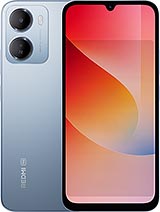
Redmi 15a

Redmi R70
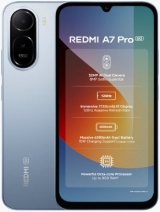
Redmi A7 Pro
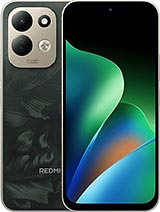
Redmi 17 4G

Galaxy M17e