Yezz Art 3 Pro review
The Art 3 Pro suits buyers in emerging markets who value battery life, expandable storage, and dual SIM over gaming and speed, or anyone who lives offline and simply needs reliable all-day messaging and calls. Shop elsewhere if you game, use 5G where it is available, or expect fast charging as a minimum.
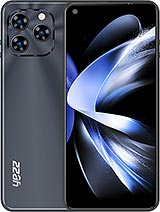
This review is based on Yezz’s published specifications and public benchmark data for the Yezz Art 3 Pro, and the rating is spec-based. GoSolo does not physically test devices; where we estimate real-world behaviour such as battery life or charge time, we say so. How we rate phones.
Overview
The Yezz Art 3 Pro is a 160-euro all-day phone that pairs a large battery with a tall screen and decent cameras, but lags in charging speed and processing grunt. It is a sensible choice for messaging and social media on a budget, though anyone gaming or multitasking will feel the limits of the Helio G85.
Design & build
At 201 grams and 9 mm thick, the Art 3 Pro lands in the middle ground between light and hefty. The dimensions are sensible for the 6.49-inch screen, and the 83.5% screen-to-body ratio shows Yezz did not waste bezel space. Asahi Glass protection is a small signal of durability. The body itself is unspecified in the sheet, so it likely sits somewhere between plastic and metal, typical of the entry-budget tier. For the price, this is unremarkable in the best way: it does not feel cheap, nor does it announce itself as a bargain device.
Display
The 1080p IPS LCD at 406 ppi is sharp enough for text and photos at normal arm's length. The 20:9 aspect ratio deserves attention because it actually solves a real problem at this size: a wider phone can be cramped for scrolling, but this one trades some width for height, so Reddit, email, and news apps give you more vertical breathing room without forced panning. Sixty hertz refresh will feel noticeably less fluid than phones costing fifty percent more, and there is no brightness spec, so outdoor legibility remains a question mark. For everyday indoor use, it is perfectly adequate.
Performance
The Helio G85 is a mainstream midrange chip from 2021, meaning it handles messaging, social media, light browsing, and video calls without stutter. Where it stumbles is gaming: demanding titles like PUBG Mobile or Genshin Impact will require low graphics settings or accept frame drops. By 2026, this chip feels a generation behind where budget flagships sit, and app creep means its longevity is maybe two years before everyday multitasking feels sluggish. Android 12 is not ancient, but it means no guarantee of Android 13 or 14 from Yezz, and third-party support for this brand is thin.
Camera
The 48 MP main sensor with autofocus does solid daylight work, capturing detail that holds up in crops. The 0.3 MP depth sensor is marketing filler—ignore it. The real value is the 8 MP ultrawide, which handles landscapes and group shots without the barrel distortion that cheap ultrawide lenses often bake in. Video tops out at 1080p@30fps, which is fine for TikTok and WhatsApp but not for archival. The 16 MP selfie is straightforward, good enough for video calls and casual self-portraits. Night mode is absent, so low-light photography relies on the sensor and software tuning alone. This is a competent combo for social media documentation, not a zoom beast or a computational photography powerhouse.
Battery & charging
The 5000 mAh battery is generous and delivers a full day on moderate use: messaging, social media, one hour of video, and a bit of browsing should see you to bedtime without panic. Light use (mostly standby and calls) stretches beyond a day. Gaming or video streaming will drain it faster, taking you to evening instead of night. The real friction is the 10W charger. Two to three hours from empty to full is slow by any standard, and by 2026, rivals in this price tier often hit 30W or higher. You cannot top up from zero in an hour before leaving the house, so overnight charging is assumed.
Software
Android 12 is solid but no longer current. Yezz is a small brand without a track record of rapid updates, so expecting timely security patches or a bump to Android 13 is optimistic. For users in emerging markets who keep phones for three to four years, this matters. The UI appears stock Android based on the spec, without heavy bloat, which is a relief. FM radio recording is a quirk that some users in regions with poor mobile data will appreciate.
Value & verdict-context
At 160 euros, the Art 3 Pro occupies an awkward middle ground. It undercuts flagship killers by 100 euros but lacks the charm or unique selling point to justify picking it over a Poco, Redmi, or Realme phone in the same bracket. The battery is good, the camera is functional, and the display is tall enough to feel generous. But the 10W charging is punitive by 2026 standards, the Helio G85 is visibly slower than what rivals offer at similar prices, and the lack of 5G and NFC—increasingly common even in budget phones—suggests Yezz is behind the curve. This is a phone for someone who absolutely needs expandable storage, dual SIM, and FM radio, and who is willing to trade processor speed and charge pace for it. Everyone else has better options.
Verdict
The Art 3 Pro suits buyers in emerging markets who value battery life, expandable storage, and dual SIM over gaming and speed, or anyone who lives offline and simply needs reliable all-day messaging and calls. Shop elsewhere if you game, use 5G where it is available, or expect fast charging as a minimum.
- 5000 mAh battery lasts a full day on moderate use without afternoon anxiety
- 6.49-inch 20:9 display offers generous vertical space for reading and scrolling without feeling cramped
- Dual 48MP main and 8MP ultrawide cameras handle daylight shots and group photos without pretense
- microSDHC expansion and dual SIM for flexibility in emerging markets
- 10W charging takes two to three hours from empty, making quick top-ups impossible
- Helio G85 stumbles on demanding games and heavy multitasking, limiting longevity as apps grow heavier
- No 5G or NFC, missing connectivity standards that are becoming routine even in this price bracket by 2026
Yezz Art 3 Pro Key Specifications
The essentials at a glance. See the full spec sheet.
| Released | 2022, September |
|---|---|
| Display | 6.49 inches, 101.7 cm2 (~83.5% screen-to-body ratio), IPS LCD |
| Resolution | 1080 x 2400 pixels, 20:9 ratio (~406 ppi density) |
| Chipset | Mediatek MT6769Z Helio G85 (12 nm) |
| RAM & storage | 128GB 6GB RAM, 256GB 6GB RAM |
| Main camera | 48 MP, AF 8 MP 0.3 MP |
| Selfie camera | 16 MP |
| Battery | 5000 mAh |
| Charging | 10W wired |
| Software | Android 12 |
| Dimensions | 162 x 75.2 x 9 mm (6.38 x 2.96 x 0.35 in) |
| Weight | 201 g (7.09 oz) |
| Network | GSM / HSPA / LTE |
| NFC | No |
| USB | USB Type-C 2.0 |
Yezz Art 3 Pro FAQ
Common questions, answered from the spec sheet.
Does the Art 3 Pro support 5G?
No. The Art 3 Pro tops out at GSM / HSPA / LTE, without 5G.
What chipset does the Art 3 Pro use?
The Art 3 Pro runs on the Mediatek MT6769Z Helio G85 (12 nm).
What display does the Art 3 Pro have?
A 6.49 inches, 101.7 cm2 (~83.5% screen-to-body ratio) IPS LCD, 1080 x 2400 pixels, 20:9 ratio (~406 ppi density).
How big is the Art 3 Pro battery?
The Art 3 Pro has a 5000 mAh battery. Charging is rated at 10W wired.
Does the Art 3 Pro have NFC?
No, the Art 3 Pro does not list NFC support.
Does the Art 3 Pro support a microSD card?
Yes, the Art 3 Pro supports expandable storage (microSDHC).
Does the Art 3 Pro have a headphone jack?
No, the Art 3 Pro does not have a 3.5mm headphone jack.
Alternatives to consider
If the Art 3 Pro isn’t quite right, these are the closest calls.
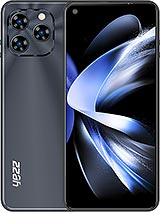
Art 2 Pro
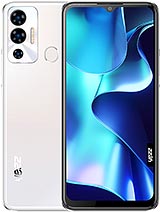
Art 3S
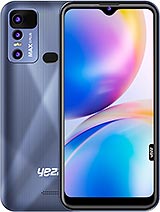
Max 3 Plus
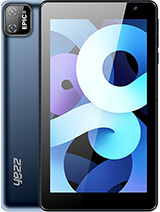
EPIC 3
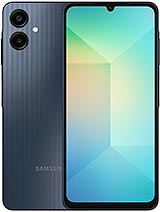
Galaxy A06