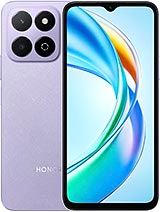
Yezz Liv 3S LTE review
The Yezz Liv 3S LTE suits cost-conscious buyers in emerging markets who prioritize repairability, the ability to swap batteries, and compact portability over raw performance or screen quality. Anyone wanting all-day battery life, smooth multitasking, or a modern display should look at a mid-range device with a larger cell and an IPS screen.
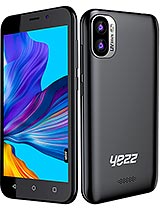
This review is based on Yezz’s published specifications and public benchmark data for the Yezz Liv 3S LTE, and the rating is spec-based. GoSolo does not physically test devices; where we estimate real-world behaviour such as battery life or charge time, we say so. How we rate phones.
Overview
The Yezz Liv 3S LTE is a bare-bones Android Go phone built for calls, texts, and light browsing in cost-conscious markets. Its removable battery and 3.5mm jack are genuine perks, but the 2000 mAh cell demands daily charging and the TN display feels dated even for a budget device.
Design & build
The Yezz is slim at 10.7 mm and pocketable at 144.5 mm tall—a genuine advantage in markets where people still value that. The TN TFT display has a 65% screen-to-body ratio and comes under Asahi Glass, which is fine for a 60 EUR device but tells you this is not a glass-and-metal flagship; the actual construction materials are not specified. What stands out is the removable Li-Ion battery, a rarity now outside the Go market, and the presence of a 3.5mm jack and microSDXC slot. Both are practical concessions to users who value them, not luxury extras.
Display
The 5.0-inch TN TFT screen at 196 ppi is small and sharp enough for reading and casual use, but TN panels are known for narrow viewing angles and weak color reproduction. At 480 by 854 pixels, the density is acceptable for arm's-length viewing, yet the contrast and color wash-out typical of TN technology mean this is not a display you'll enjoy looking at an angle. For a device meant to sell in price-sensitive regions, it is functional but uninspiring, and you'll notice the limitation compared to even mid-range IPS panels.
Performance
The Unisoc SC9832E with 1.3 GHz quad-core Cortex-A53 and Mali-T820 MP1 GPU is entry-level, designed for basic tasks without stuttering: calls, messaging, light browsing, YouTube at low resolution. With only 2 GB of RAM and 16 GB storage (of which 8–10 GB is free after the OS), multitasking is limited. Android 12 Go edition keeps the system lean, which helps, but demanding apps, games, or heavy backgrounding will cause lag. This is not a device for someone who switches between ten apps or expects smooth video editing. It is honest about its purpose: durability in a cost market, not performance.
Camera
The 8 MP main camera with LED flash and HDR handles daylight snapshots and 1080p video at 30 fps adequately. Low-light shots will be soft and noisy, and any zoom will pixelate visibly because there is no telephoto. The 2 MP selfie is passable for video calls and nothing more. For a phone in this price bracket, the camera is not a selling point; it is a checkbox that acknowledges phones have cameras now.
Battery & charging
This is where real-world use gets harsh. A 2000 mAh cell delivers about 4 to 5 hours of screen-on time with light use, meaning daily charging is non-negotiable. The removable battery design is a lifeline: users can carry a spare and swap it without powering down, a trick modern flagships abandoned. There is no fast charging spec listed, so assume standard microUSB speeds. For a person in a region with unreliable power grids, the ability to swap batteries is a practical win; for anyone else, the battery capacity is a genuine compromise.
Software & connectivity
Android 12 Go is stripped down to run on 2 GB RAM and older hardware, which works. The OS is current enough to handle basic security patches, though a 2026 GoSolo reader should know that updates on this device tier often dry up after a year or two. Connectivity spans LTE bands 2, 3, 4, 7, and 17—enough for most of the world—but Wi-Fi is 802.11 b/g/n, the oldest modern standard; modern routers outpace it. Bluetooth 4.2 is adequate for headphones but dated for fast file transfer. The microUSB 2.0 port is slow by current standards, and the lack of NFC means no contactless payments.
Value & verdict-context
At 60 EUR, this phone targets someone who needs a pocket-sized device for calls, texts, and basic browsing in a market where older-generation hardware is still new. The removable battery and 3.5mm jack are genuine draws for users who value repairability and local audio. The compromises are real: the screen is dim and narrow-viewing, the CPU stutters under load, the battery demands daily charging, and the Wi-Fi is obsolete. It is not a modern phone trying to do everything; it is a deliberately minimal device that accepts its limits. If you live in an area where finding spares for 10-year-old phones is normal, and you work around networks and apps designed for older hardware, the Yezz makes sense. If you expect all-day battery life, vivid colors, or smooth app switching, look at a used flagship or a modern budget phone with a larger cell.
Verdict
The Yezz Liv 3S LTE suits cost-conscious buyers in emerging markets who prioritize repairability, the ability to swap batteries, and compact portability over raw performance or screen quality. Anyone wanting all-day battery life, smooth multitasking, or a modern display should look at a mid-range device with a larger cell and an IPS screen.
- Removable battery with realistic 4–5 hours of screen time, letting you swap in a spare without killing the entire phone
- 3.5mm headphone jack and FM radio in an era when both are vanishing, plus microSD card slot for local storage
- Compact 5.0-inch frame fits a pocket; at ~60 EUR it undercuts many rivals in emerging markets
- LTE bands 2, 3, 4, 7, 17 cover most global networks
- 2000 mAh battery is too small for real all-day use; expect frequent charging or the need to carry a spare
- TN TFT display has narrow viewing angles and muddy colors even by budget standards
- Unisoc SC9832E is entry-level by 2022 standards; heavy apps, gaming, or multitasking will stutter
Yezz Liv 3S LTE Key Specifications
The essentials at a glance. See the full spec sheet.
| Released | 2022, October |
|---|---|
| Display | 5.0 inches, 68.9 cm2 (~65.0% screen-to-body ratio), TN TFT |
| Resolution | 480 x 854 pixels, 16:9 ratio (~196 ppi density) |
| Chipset | Unisoc SC9832E (28 nm) |
| RAM & storage | 16GB 2GB RAM |
| Main camera | 8 MP secondary unspecified camera |
| Selfie camera | 2 MP |
| Battery | 2000 mAh |
| Software | Android 12 (Go edition) |
| Dimensions | 144.5 x 73.4 x 10.7 mm (5.69 x 2.89 x 0.42 in) |
| Network | GSM / HSPA / LTE |
| NFC | No |
| USB | microUSB 2.0 |
Yezz Liv 3S LTE FAQ
Common questions, answered from the spec sheet.
Does the Liv 3S LTE support 5G?
No. The Liv 3S LTE tops out at GSM / HSPA / LTE, without 5G.
What chipset does the Liv 3S LTE use?
The Liv 3S LTE runs on the Unisoc SC9832E (28 nm).
What display does the Liv 3S LTE have?
A 5.0 inches, 68.9 cm2 (~65.0% screen-to-body ratio) TN TFT, 480 x 854 pixels, 16:9 ratio (~196 ppi density).
How big is the Liv 3S LTE battery?
The Liv 3S LTE has a 2000 mAh battery.
Does the Liv 3S LTE have NFC?
No, the Liv 3S LTE does not list NFC support.
Does the Liv 3S LTE support a microSD card?
Yes, the Liv 3S LTE supports expandable storage (microSDXC).
Does the Liv 3S LTE have a headphone jack?
Yes, the Liv 3S LTE has a 3.5mm headphone jack.
Alternatives to consider
If the Liv 3S LTE isn’t quite right, these are the closest calls.
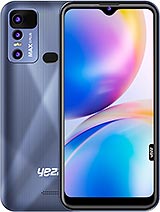
Max 3 Plus

Liv 3 LTE
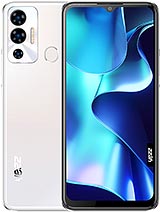
Art 3S
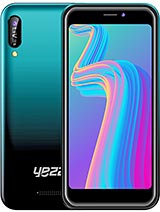
Liv 1s
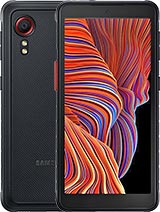
Galaxy XCover 7