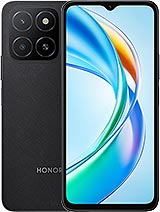
Yezz Max 3 review
The Yezz Max 3 suits someone who genuinely needs a cheap Android phone for calls and messages in a region where chargers are scarce (the removable battery is the draw). Anyone expecting responsive multitasking, long battery life, or reasonable camera quality should look elsewhere, even in the budget segment.
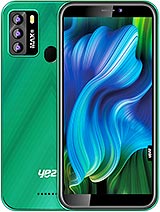
This review is based on Yezz’s published specifications and public benchmark data for the Yezz Max 3, and the rating is spec-based. GoSolo does not physically test devices; where we estimate real-world behaviour such as battery life or charge time, we say so. How we rate phones.
Overview
The Yezz Max 3 is a bare-bones Android phone built for calls, messages, and light browsing on a razor-thin budget—it delivers on that promise, but the 1.3 GHz quad-core, 2GB RAM, and 2600 mAh battery mean you're living with tight performance and short battery life.
Design & build
At 149.3 × 77.2 × 9.7 mm, the Max 3 is pocket-friendly and lightweight, though weight isn't listed. The 18:9 aspect ratio and 66.5% screen-to-body ratio feel dated compared to current budget phones, which have tightened bezels noticeably since 2023. The five color options (Denim Blue, Aurora Green, Space Gray, Coral Red, Glacier Blue) add visual choice, but without spec detail on materials or durability, build quality remains a question mark at this price point.
Display
The 5.45-inch 720 × 1440 LCD delivers about 295 ppi, which is visibly pixelated if you hold it at arm's length—acceptable for a 70 EUR phone, but rivals even in this tier often hit 300–350 ppi now. IPS LCD color reproduction is flat and predictable; brightness spec is absent, suggesting it's ordinary in sunlight. The 18:9 ratio is narrow and taller than modern phones, which suits one-handed reach but feels cramped for video or games. For calling and messaging, it works; for anything richer, you will notice the cheapness.
Performance
The Unisoc SC9832E is a 2016-era chip; a 1.3 GHz quad-core with Mali-T820 MP1 GPU and 2GB RAM is entry-level even by budget 2023 standards. Basic messaging, calls, and simple apps (email, notes, light web browsing) run, but expect delays when opening multiple apps or switching between them. Gaming is out; even casual titles will stutter. Android 12 itself is not lightweight, so the OS and a handful of apps will consume most of that 2GB, leaving little room for a second app in memory. For someone whose phone use is genuine calling and texting, it is passable. For anyone who browses, streams, or installs multiple apps, this is cramped.
Software
Android 12 is current enough and not bloated by default, but on 2GB RAM it will feel sluggish. Update outlook is unclear from the spec sheet; a 2023 release on a mid-2016 chipset suggests limited ongoing support. Yezz is a minor brand, so do not expect years of patches. For a 70 EUR disposable phone, security and timely updates are risks you accept.
Camera
The 13MP rear camera with LED flash shoots 1080p video at 30 fps and handles daylight adequately. In bright conditions, colors are acceptable and detail is present, but the small sensor and basic processing produce noisy results once shadows appear. Night mode does not exist; low-light shots are grainy. The 8MP selfie camera is functional for video calls but adds nothing beyond the minimum. Video locked to 30 fps is a limitation, though that speed is still common at this price. For documenting documents or casual daytime shots, it passes; for anything beyond that, results will disappoint.
Battery & charging
The 2600 mAh capacity is small even by budget standards, and the lack of charging specs (watts, time-to-full) is a red flag for a 2023 phone. Based on mAh alone, expect about 4–5 hours of mixed screen-on use—roughly one working day if you are not a heavy user. The genuine advantage here is the removable battery: if you have a spare, you swap it and keep going instead of searching for a charger. This was standard a decade ago; seeing it return in a budget phone is a nod to durability and user control, though it also signals that fast charging was not feasible at this price. For travelers in regions with unreliable power, a second battery is practical; for most others, it is a band-aid on weak endurance.
Value & verdict-context
At 70 EUR, the Max 3 competes in the absolute floor of the smartphone market. For that money, you get LTE, dual SIM, expandable storage, and a usable OS. The removable battery and headphone jack are bonuses that appeal to specific users. The real question is whether the tight specs—2GB RAM, 1.3 GHz chip, 2600 mAh battery—align with your actual needs. If you need a phone for calling, SMS, WhatsApp, and basic web browsing in areas where chargers are scarce, this works. If you expect to run multiple apps, game, stream, or use your phone as an everyday workhorse, you will resent it within days. Even at 70 EUR, there are likely rivals with faster chips or bigger batteries in the same market; the Max 3's selling points are the removable battery and the five color options, not raw capability.
Verdict
The Yezz Max 3 suits someone who genuinely needs a cheap Android phone for calls and messages in a region where chargers are scarce (the removable battery is the draw). Anyone expecting responsive multitasking, long battery life, or reasonable camera quality should look elsewhere, even in the budget segment.
- Removable battery lets you swap in a spare instead of hunting for a charger
- Dual SIM and microSD expansion for flexibility on budget
- Headphone jack and FM radio still present for users who rely on them
- Battery lasts only 4–5 hours of real use; a removable spare helps, but basic power management is a constant friction point
- 2GB RAM and 1.3 GHz chipset struggle with multitasking and any app beyond the most basic
- 295 ppi screen is visibly pixelated, and brightness is weak for outdoor use
Yezz Max 3 Key Specifications
The essentials at a glance. See the full spec sheet.
| Released | 2022, September |
|---|---|
| Display | 5.45 inches, 76.7 cm2 (~66.5% screen-to-body ratio), IPS LCD |
| Resolution | 720 x 1440 pixels, 18:9 ratio (~295 ppi density) |
| Chipset | Unisoc SC9832E (28 nm) |
| RAM & storage | 32GB 2GB RAM |
| Main camera | 13 MP, AF 0.3 MP 0.3 MP |
| Selfie camera | 8 MP |
| Battery | 2600 mAh |
| Software | Android 12 |
| Dimensions | 149.3 x 77.2 x 9.7 mm (5.88 x 3.04 x 0.38 in) |
| Network | GSM / HSPA / LTE |
| NFC | No |
| USB | microUSB 2.0 |
Yezz Max 3 FAQ
Common questions, answered from the spec sheet.
Does the Max 3 support 5G?
No. The Max 3 tops out at GSM / HSPA / LTE, without 5G.
What chipset does the Max 3 use?
The Max 3 runs on the Unisoc SC9832E (28 nm).
What display does the Max 3 have?
A 5.45 inches, 76.7 cm2 (~66.5% screen-to-body ratio) IPS LCD, 720 x 1440 pixels, 18:9 ratio (~295 ppi density).
How big is the Max 3 battery?
The Max 3 has a 2600 mAh battery.
Does the Max 3 have NFC?
No, the Max 3 does not list NFC support.
Does the Max 3 support a microSD card?
Yes, the Max 3 supports expandable storage (microSDXC).
Does the Max 3 have a headphone jack?
Yes, the Max 3 has a 3.5mm headphone jack.
Alternatives to consider
If the Max 3 isn’t quite right, these are the closest calls.
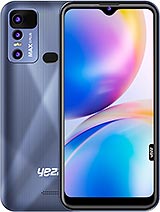
Max 3 Plus
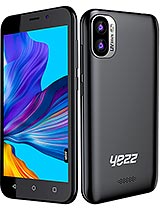
Liv 3S LTE
Art 3S
Max 3 Ultra
Galaxy XCover 7