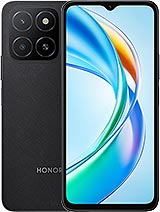
Yezz Max 3 Plus review
This phone suits someone who needs a second line, a durable backup, or the cheapest entry to mobile in a region where data networks are sparse and phone costs matter. Anyone expecting to multitask, snap decent photos, or get through a day on one charge should spend more.
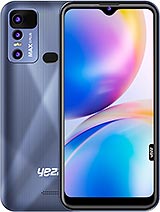
This review is based on Yezz’s published specifications and public benchmark data for the Yezz Max 3 Plus, and the rating is spec-based. GoSolo does not physically test devices; where we estimate real-world behaviour such as battery life or charge time, we say so. How we rate phones.
Overview
The Yezz Max 3 Plus is a bare-bones budget phone built for light daily use—calls, messaging, social apps—in regions where 4G availability and price matter more than performance or camera quality. At around 90 EUR it costs what it offers, but the low-resolution display and anemic processor mean it is best suited to someone who simply needs a second line or basic phone, not anyone expecting to do much beyond texting.
Design & Build
The Yezz Max 3 Plus is admirably thin—9.5mm slots into a pocket without bulk—and light enough for all-day carry, though the weight is unmarked in the spec sheet. Build materials are not specified, so assume plastic throughout, which at this price is expected. The removable battery is the most useful design choice here, and a real advantage for travelers or anyone living where battery swaps matter more than sealed chassis bragging. Dual Nano-SIM slots let you run two carriers or a work and personal line without a second device. Nothing fancy, but the form factor is practical for its intended buyer.
Display
At 6.1 inches with only 480×1010 resolution, the 183 ppi density is low enough that jagged edges on text and icons become visible up close. This is not the worst screen in the budget space—it is an IPS LCD so colors do not shift wildly at angles—but the low sharpness means reading small text or enjoying photos is a chore. The 75.4% screen-to-body ratio is decent for 2022, and INX Glass protection is modest but better than nothing. Brightness is not rated, so expect a panel that works indoors and in shade but struggles in direct sunlight, a common weakness of budget IPS.
Performance
The quad-core 1.4 GHz Unisoc SC9832E and Mali-T820 GPU are entry-level even for 2022. This chipset was designed for light work: browsing, messaging apps, light social media, basic video playback. Heavy multitasking, demanding games, or modern apps with complex UIs will stall noticeably. Pair it with only 2GB of RAM and you hit memory limits fast. The eMMC 5.1 storage is slow by today's standard; apps take time to launch and load. For someone who opens one app at a time and does not mind a delay, it is bearable. For anyone expecting snappy performance, it is a dealbreaker.
Software
Android 12 is shipped, but do not expect timely updates; at this price point, Yezz does not have the resources of larger vendors. Security patches will likely trickle in late, if at all. The OS itself is clean enough, but the underpowered hardware means system animations feel sluggish even out of the box. Within a year or two, as apps demand more resources and Android patches accumulate, performance will degrade.
Camera
The 13MP main camera and 8MP selfie are adequate for messaging and WhatsApp, but not for anything aspirational. Photos in good light are acceptable for social media at small sizes, but zoom in or take a shot indoors and grain becomes obvious. 1080p video at 30fps is standard for budget phones but lacks the fluidity of 60fps, and autofocus is present but slow. If your phone camera is a must-have tool, look elsewhere; if it is a backup or a way to send a quick snap to friends, this works.
Battery & Charging
The 3700 mAh battery is small by modern standards and, paired with the modest processor, delivers roughly 4–5 hours of screen-on time with mixed use. Light use (messaging, WiFi browsing, calls) may push it to 6 hours; heavy use with video will drain it faster. The removable battery means you can carry a spare and swap it out anywhere, a genuine perk that modern sealed phones cannot match. Charging speed is not listed, so assume slow microUSB speeds typical of this class. For a full day away from power, you will need to plan.
Value & Verdict
At around 90 EUR, the Yezz Max 3 Plus is honest budget pricing. You get what you pay for: a phone that handles basic tasks without pretense. The removable battery and dual SIM are genuinely useful features rarely found in modern phones, even at higher prices. The trade-off is a low-resolution display, sluggish performance, poor battery endurance, and a camera that only works in bright light. In 2026, this phone is obsolete by mainstream standards, but it retains value for specific users: someone in a low-connectivity region who needs a second line, a backup phone, or simply the cheapest possible handset to make calls and send texts. Do not buy this expecting a capable daily driver or hoping to run modern apps smoothly.
Verdict
This phone suits someone who needs a second line, a durable backup, or the cheapest entry to mobile in a region where data networks are sparse and phone costs matter. Anyone expecting to multitask, snap decent photos, or get through a day on one charge should spend more.
- Removable battery, a rarity now and useful for travel or swapping in a spare
- Dual SIM for switching between carriers or home and work lines
- Thin and pocketable at 9.5mm
- microSDXC slot for cheap storage expansion to avoid the cramped 32GB base
- Display is visibly low-res at 183 ppi; text and icons look jagged even at arm's length
- Processor and 2GB RAM are sluggish for any multitasking or modern apps; expect lag in heavier social media feeds
- Battery life capped at roughly 4–5 hours of screen time, below what you'd want for a full day
Yezz Max 3 Plus Key Specifications
The essentials at a glance. See the full spec sheet.
| Released | 2022, October |
|---|---|
| Display | 6.1 inches, 93.1 cm2 (~75.4% screen-to-body ratio), IPS LCD |
| Resolution | 480 x 1010 pixels, 19:9 ratio (~183 ppi density) |
| Chipset | Unisoc SC9832E (28 nm) |
| RAM & storage | 32GB 2GB RAM |
| Main camera | 13 MP, AF 0.3 MP 0.3 MP |
| Selfie camera | 8 MP |
| Battery | 3700 mAh |
| Software | Android 12 |
| Dimensions | 159.8 x 77.2 x 9.5 mm (6.29 x 3.04 x 0.37 in) |
| Network | GSM / HSPA / LTE |
| NFC | No |
| USB | microUSB 2.0 |
Yezz Max 3 Plus FAQ
Common questions, answered from the spec sheet.
Does the Max 3 Plus support 5G?
No. The Max 3 Plus tops out at GSM / HSPA / LTE, without 5G.
What chipset does the Max 3 Plus use?
The Max 3 Plus runs on the Unisoc SC9832E (28 nm).
What display does the Max 3 Plus have?
A 6.1 inches, 93.1 cm2 (~75.4% screen-to-body ratio) IPS LCD, 480 x 1010 pixels, 19:9 ratio (~183 ppi density).
How big is the Max 3 Plus battery?
The Max 3 Plus has a 3700 mAh battery.
Does the Max 3 Plus have NFC?
No, the Max 3 Plus does not list NFC support.
Does the Max 3 Plus support a microSD card?
Yes, the Max 3 Plus supports expandable storage (microSDXC).
Does the Max 3 Plus have a headphone jack?
Yes, the Max 3 Plus has a 3.5mm headphone jack.
Alternatives to consider
If the Max 3 Plus isn’t quite right, these are the closest calls.
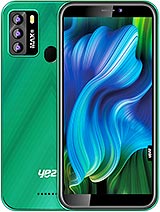
Max 3
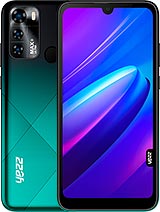
Max 3 Ultra
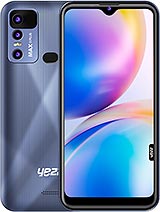
Max 2 Plus
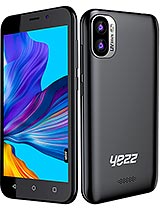
Liv 3S LTE
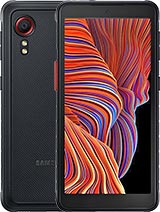
Galaxy XCover 7