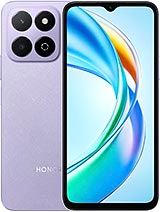
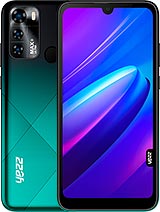
Yezz Max 3 Ultra review
The Max 3 Ultra suits buyers in emerging markets who value a removable battery and microSD expansion over speed and display quality, and who will use the phone for calls, messaging, and basic browsing. Anyone else should save a bit more for a modern budget phone with better performance and a usable display."
This review is based on Yezz’s published specifications and public benchmark data for the Yezz Max 3 Ultra, and the rating is spec-based. GoSolo does not physically test devices; where we estimate real-world behaviour such as battery life or charge time, we say so. How we rate phones.
Overview
The Yezz Max 3 Ultra is a bottom-shelf Android phone that trades speed and camera sharpness for a removable battery and expandable storage—useful perks for emerging markets but undermined by sluggish performance, weak battery life, and a low-res display that shows pixels at normal viewing distance.
Design & build
The Max 3 Ultra is slim and light—9.9 mm thick and 182 grams—which works well for pockets and one-handed use. The 6.26-inch frame with thin bezels delivers a 79.2 percent screen-to-body ratio, so the phone doesn't feel oversized for its display. Build materials are ordinary (plastic, no flagship durability here), and there's no IP rating, so water resistance is a gamble. For a phone at this price point targeting emerging markets, the removable battery is a real selling point—you can swap in a spare without hunting for a wall outlet, a genuine convenience in regions with spotty electricity. Dual nano-SIM and an SD card slot sweeten the deal for travellers or those managing multiple phone lines.
Display
The 6.26-inch IPS LCD runs at 720 by 1520 pixels, which delivers a meager 269 ppi. At arm's length, the pixel grid becomes visible, particularly in fine print like small app text or numbers in spreadsheets. Colors are decent enough for a basic LCD—not washed out—but sharpness is the killer. For scrolling social media or reading longer text, you'll adjust, but side-by-side with any mid-range phone from 2023 onward, the softness is noticeable. The 19:9 aspect ratio is now standard, so no surprises there.
Performance
The Unisoc SC9832E is a low-power quad-core processor from 2017, clocked at 1.4 GHz and paired with a Mali-T820 GPU. This chip handles light tasks—email, messaging, light web browsing—but noticeably stumbles under load. Switching between apps is sluggish, and anything demanding (games, video editing, heavy multitasking) triggers lag and slowdowns. Only 2 GB of RAM compounds the problem, forcing the OS to swap memory constantly. For someone who plans to use this as a basic phone rather than a pocket computer, it's tolerable; for anyone else, it's a step backward from even budget flagships of the same era.
Software
Android 12 ships on the device, which is a solid baseline for 2022. No sign of heavy custom skins or bloat in the specs—the UI should feel clean and responsive (relative to the hardware). Updates are another question entirely; Yezz is not known for rapid patch schedules, so security fixes and OS upgrades may arrive late or not at all. If you value timely software support, this brand does not deliver it.
Camera
The 13 MP rear camera with autofocus and dual-LED flash captures acceptable daylit snapshots and social-media-ready shots, but low light turns to grain and color shifts. The 1080p 30 fps video cap is now standard for budget phones, though without advanced stabilization, handheld footage will look jerky. The 8 MP selfie does the job for video calls and selfies but lacks any beautification or night mode tricks. For a phone at this price, the camera is not a liability—just ordinary and nothing you'd brag about.
Battery & charging
The 3700 mAh removable battery is the headline feature here, but capacity is small. Expect about 4 to 5 hours of screen-on time with normal use (messaging, light browsing, social media), meaning most people will need to charge daily or carry a spare cell. The 10W wired charger is glacially slow; a full charge from zero takes roughly 4 to 5 hours. For travelers or those without reliable mains power, the removable cell is a genuine escape hatch, but light users in stable grids will find the battery endurance frustrating compared to any modern phone with a 5000 mAh cell.
Value & verdict
At roughly 100 EUR, the Yezz Max 3 Ultra is squarely a budget play for emerging markets where a removable battery and expandable storage still matter. The weak points—sluggish processor, low-resolution display, fragile battery life, slow charging—would be deal-breakers on a phone from a bigger brand at the same price, but Yezz is betting that buyers in these regions prioritize durability and self-sufficiency over raw speed. If you live somewhere power is unreliable or you travel constantly and want a spare battery, this phone makes sense. If you can stretch your budget to a mid-range device or have stable electricity, faster phones with sharper screens cost only a little more and will feel significantly more capable.
Verdict
The Max 3 Ultra suits buyers in emerging markets who value a removable battery and microSD expansion over speed and display quality, and who will use the phone for calls, messaging, and basic browsing. Anyone else should save a bit more for a modern budget phone with better performance and a usable display."
- Removable battery with microSD slot—genuine advantages for users in markets with unreliable power or who travel frequently
- Dual SIM and 3.5mm jack still present, alongside FM radio
- Lightweight at 182g and thin enough to slip into a pocket
- Android 12 out of the box, not stripped down to an ancient OS
- Battery life is fragile—3700 mAh and modest efficiency mean you'll likely see 4 to 5 hours of screen-on time and need daily charging
- Quad-core 1.4 GHz chip with Mali-T820 GPU struggles with everyday multitasking and handles games poorly
- Display is visibly pixelated at normal distance (269 ppi on a 6.26-inch screen), making text in small fonts uncomfortable to read
Yezz Max 3 Ultra Key Specifications
The essentials at a glance. See the full spec sheet.
| Released | 2022, September |
|---|---|
| Display | 6.26 inches, 97.8 cm2 (~79.2% screen-to-body ratio), IPS LCD |
| Resolution | 720 x 1520 pixels, 19:9 ratio (~269 ppi density) |
| Chipset | Unisoc SC9832E (28 nm) |
| RAM & storage | 32GB 2GB RAM |
| Main camera | 13 MP, AF 0.3 MP |
| Selfie camera | 8 MP |
| Battery | 3700 mAh |
| Charging | 10W wired |
| Software | Android 12 |
| Dimensions | 159.7 x 77.3 x 9.9 mm (6.29 x 3.04 x 0.39 in) |
| Weight | 182 g (6.42 oz) |
| Network | GSM / HSPA / LTE |
| NFC | No |
| USB | USB Type-C 2.0 |
Yezz Max 3 Ultra FAQ
Common questions, answered from the spec sheet.
Does the Max 3 Ultra support 5G?
No. The Max 3 Ultra tops out at GSM / HSPA / LTE, without 5G.
What chipset does the Max 3 Ultra use?
The Max 3 Ultra runs on the Unisoc SC9832E (28 nm).
What display does the Max 3 Ultra have?
A 6.26 inches, 97.8 cm2 (~79.2% screen-to-body ratio) IPS LCD, 720 x 1520 pixels, 19:9 ratio (~269 ppi density).
How big is the Max 3 Ultra battery?
The Max 3 Ultra has a 3700 mAh battery. Charging is rated at 10W wired.
Does the Max 3 Ultra have NFC?
No, the Max 3 Ultra does not list NFC support.
Does the Max 3 Ultra support a microSD card?
Yes, the Max 3 Ultra supports expandable storage (microSDXC).
Does the Max 3 Ultra have a headphone jack?
Yes, the Max 3 Ultra has a 3.5mm headphone jack.
Alternatives to consider
If the Max 3 Ultra isn’t quite right, these are the closest calls.
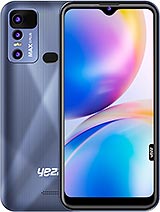
Max 3 Plus
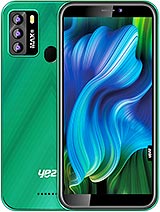
Max 3
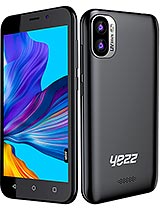
Liv 3S LTE
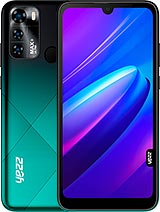
Max 2 Ultra
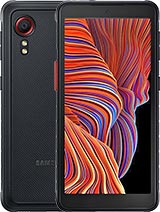
Galaxy XCover 7