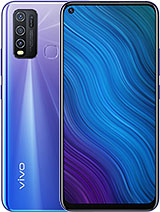
ZTE Axon 60 Lite review
This phone suits someone who wants a day-long battery, a big screen for reading, and a decent main camera without caring about display sharpness or performance headroom. Look elsewhere if you scroll lots of text, play games, or want your phone to feel snappy in 2024."
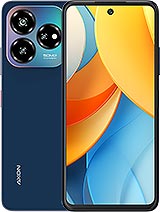
This review is based on ZTE’s published specifications and public benchmark data for the ZTE Axon 60 Lite, and the rating is spec-based. GoSolo does not physically test devices; where we estimate real-world behaviour such as battery life or charge time, we say so. How we rate phones.
Overview
The Axon 60 Lite is a budget 2024 phone that trades sharp display for battery capacity and a roomy 6.6-inch screen at €150. It's honest about what it is—a device for casual scrolling and messaging—but the 720p resolution and older Unisoc chipset mean it won't satisfy anyone who values responsiveness or picture clarity.
Design & Build
At 164.2 x 75.3 x 8.6 mm, the Axon 60 Lite is a tall, narrow frame typical of budget 2024 phones chasing an 84.6% screen-to-body ratio without much actual bulk. The thickness at 8.6 mm is comfortable to hold and falls well within modern norms. Build materials aren't specified, which on a €150 phone usually means a mix of plastic with perhaps a metal frame; nothing surprising there. Dual nano-SIM support makes it relevant for emerging markets where two carriers or accounts remain practical. The phone is visibly designed to fit hands and pockets, not impress. That's the whole point, and ZTE doesn't waste budget on pretense.
Display
The 6.6-inch IPS LCD sounds generous until you note the resolution: 720 x 1612 pixels works out to 267 ppi, which is below the threshold for sharpness on a modern phone held at normal distance. Text, icons, and fine details look soft and slightly blurry in comparison to any 1080p panel, even on much cheaper rivals. The 20:9 ratio does favor scrolling and reading—a practical win for heavy email and social-media users—but it can't offset the lack of pixel density. IPS LCD means good viewing angles and adequate color, but no punch or contrast. For a device at this price, a 1080p IPS panel has become the realistic baseline elsewhere in the market; ZTE chose to spend that saving on battery capacity instead, which is a defensible trade but not universally popular.
Performance
The Unisoc T606 is an entry-level 12 nm chipset with Cortex-A75 and A55 cores clocked at 1.6 GHz, paired with a Mali-G57 GPU and just 4GB RAM. It handles emails, messaging, maps, and light web browsing without lag. Casual games run fine, but demanding 3D titles drop frames or require lower settings. Multitasking is noticeably slower than mid-range phones; switching between apps leaves brief pauses. For someone scrolling news sites and checking messages, this is adequate. For someone playing Genshin Impact or editing video, it's a hard no. The absence of 5G is standard at this price and doesn't sting in most parts of the world where 4G LTE remains the fast-enough norm. Android 13 is a solid, mature OS, though a phone at this price won't see timely updates.
Camera
The 50MP f/1.8 main sensor with PDAF is the genuine bright spot here. In daylight, it captures sharp, well-detailed photos that punch above the €150 price point—better than most rivals can claim in this bracket. The wide aperture and phase detection help with lower-light shots, which often look cleaner and brighter than phone cameras at this tier would suggest. HDR and panorama modes add flexibility for everyday photography. The 8MP selfie camera is fine for video calls but unremarkable. Video is capped at 1080p@30fps, which is a limitation for smooth action footage or vlogging, but acceptable for casual recording. The absence of ultra-wide or telephoto lenses is expected at this price; ZTE's choice to push the main sensor instead of spreading pixels thin is sensible.
Battery & Charging
The 5000 mAh battery, paired with a 720p display and entry-level chipset, should deliver about one full day of moderate screen time—roughly 12 to 14 hours before the phone hits empty. For light users, it could stretch to two days. That's credible stamina for this class. Charging is the weak link: 22.5W is noticeably slow by 2024 standards. Rivals at the same price now commonly offer 30W to 65W, cutting charge time significantly. At 22.5W, expect 50 to 70 minutes from flat to full, which feels like an oversight in a phone otherwise built around battery endurance. A faster charger would have cemented the Axon 60 Lite as a standout battery phone; instead, it's merely average on speed.
Software & Connectivity
Android 13 is solid and no longer cutting edge, but this phone likely won't see many updates given the budget tier. The experience should remain smooth for daily tasks, though custom overlays and bloatware aren't specified here. Connectivity covers LTE and Wi-Fi 5 (802.11ac), which is current-generation but not ahead; 5G is absent, a practical non-issue for most of the world but a reminder this is a 2024 budget phone, not a future-proofed device. Bluetooth 5.2 is pleasantly up-to-date for wireless audio, and the USB Type-C 2.0 port keeps charging and file transfer simple. The presence of a 3.5mm headphone jack is increasingly rare and a genuine plus for those with wired earbuds. GPS is included, so navigation works as expected.
Value & Verdict
At €150, the Axon 60 Lite occupies a peculiar middle ground. It's not the cheapest phone available, but it's also not cheap enough to excuse a 720p display in 2024—that choice feels a generation behind. The battery life and screen size are strengths; the charging speed and pixel density are weaknesses. It's best suited for buyers in emerging markets who value a large battery and screen space over sharpness and speed, or for someone upgrading from a much older phone who won't immediately notice the soft display. Anyone willing to save a bit more should look for a 1080p option in a slightly higher tier; anyone on a tighter budget might find better value in a smaller, similarly-specced phone that costs less.
Verdict
This phone suits someone who wants a day-long battery, a big screen for reading, and a decent main camera without caring about display sharpness or performance headroom. Look elsewhere if you scroll lots of text, play games, or want your phone to feel snappy in 2024."
- 5000 mAh battery and modest chipset should push a day of moderate use on a single charge, which is credible for this tier.
- 50MP main camera with f/1.8 and PDAF captures usable photos in daylight and performs better than typical rivals at this price in low light.
- 6.6-inch display with an 84.6% screen-to-body ratio maximizes usable space without making the phone feel padded, and the 20:9 aspect ratio suits reading and scrolling.
- Includes a 3.5mm headphone jack, which remains rare enough in 2024 to matter for users who prefer wired audio.
- 720p resolution at 267 ppi on a 6.6-inch screen looks noticeably soft; text and images lack sharpness compared to phones with even modest 1080p panels at the same price.
- 22.5W charging is one of the slowest in its class—rivals often push 30W to 65W—meaning around 50–70 minutes to full, which feels dragged out in 2024.
- Unisoc T606 with 4GB RAM is adequate for apps and light tasks but stumbles on heavier games and multitasking; no 5G either.
ZTE Axon 60 Lite Key Specifications
The essentials at a glance. See the full spec sheet.
| Released | 2024, May 07 |
|---|---|
| Display | 6.6 inches, 104.6 cm2 (~84.6% screen-to-body ratio), IPS LCD |
| Resolution | 720 x 1612 pixels, 20:9 ratio (~267 ppi density) |
| Chipset | Unisoc T606 (12 nm) |
| RAM & storage | 256GB 4GB RAM |
| Main camera | 50 MP, f/1.8, (wide), PDAF Auxiliary lens |
| Selfie camera | 8 MP |
| Battery | 5000 mAh |
| Charging | 22.5W wired |
| Software | Android 13 |
| Dimensions | 164.2 x 75.3 x 8.6 mm (6.46 x 2.96 x 0.34 in) |
| Network | GSM / HSPA / LTE |
| NFC | Unspecified |
| USB | USB Type-C 2.0 |
ZTE Axon 60 Lite FAQ
Common questions, answered from the spec sheet.
Does the Axon 60 Lite support 5G?
No. The Axon 60 Lite tops out at GSM / HSPA / LTE, without 5G.
What chipset does the Axon 60 Lite use?
The Axon 60 Lite runs on the Unisoc T606 (12 nm).
What display does the Axon 60 Lite have?
A 6.6 inches, 104.6 cm2 (~84.6% screen-to-body ratio) IPS LCD, 720 x 1612 pixels, 20:9 ratio (~267 ppi density).
How big is the Axon 60 Lite battery?
The Axon 60 Lite has a 5000 mAh battery. Charging is rated at 22.5W wired.
Does the Axon 60 Lite have NFC?
No, the Axon 60 Lite does not list NFC support.
Does the Axon 60 Lite support a microSD card?
Yes, the Axon 60 Lite supports expandable storage (Unspecified).
Does the Axon 60 Lite have a headphone jack?
Yes, the Axon 60 Lite has a 3.5mm headphone jack.
Alternatives to consider
If the Axon 60 Lite isn’t quite right, these are the closest calls.
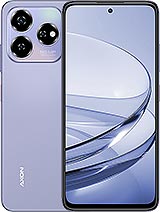
Axon 60
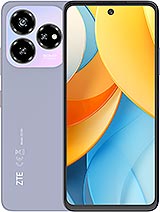
Blade V60

Blade A35 Lite

Changxing 60 Plus
Galaxy M06 5G