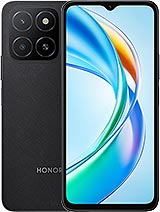
ZTE Blade A33s review
If you need a phone purely for calls, texts, and light browsing and can live with a pixelated screen and slow camera, the Blade A33s works. Anyone who reads, browses regularly, or takes photos should look at alternatives with a better display.
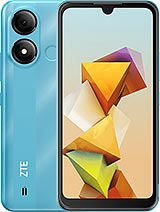
This review is based on ZTE’s published specifications and public benchmark data for the ZTE Blade A33s, and the rating is spec-based. GoSolo does not physically test devices; where we estimate real-world behaviour such as battery life or charge time, we say so. How we rate phones.
Overview
The Blade A33s is a bare-bones Android Go phone built for basic calls, texts, and light browsing in regions with reliable LTE. It delivers on those tasks without pretension, but the 480p display, 2GB RAM, and 5MP camera mean it has little left to offer beyond the basics.
Design & Build
The Blade A33s is built to be unobtrusive. At 160 x 78 x 10.3 mm, it's genuinely slim and light enough to pocket without thought. Dual nano-SIM slots give flexibility for multiple carriers or a second line. The spec sheet omits weight and build materials, which is a red flag for a device in this class—expect plastic throughout. The thin profile is the main design win; there is nothing else here that would make you pause at a store shelf, nor anything that particularly offends.
Display
The 6.3-inch IPS LCD with 480 x 1014 resolution is where this phone's limitations hit hardest. At 178 ppi pixel density, text and icons are noticeably jagged up close. Colours are flat and washed out compared to any OLED rival, even at this price, and the spec sheet provides no brightness figure—a sign that sunlight readability is likely poor. If you spend any time reading or typing, you'll feel this every day. Android Go helps by keeping the UI lightweight, but the display itself is a 2017-era compromise squeezed into a 2023 phone.
Performance
The Unisoc SC9863A is an entry-level chip designed to keep costs down. Light browsing, messaging, and calls run without hiccups, and app launch is acceptable. Switching between three or four open apps works, but the system feels tense under load. Gaming is off the table unless you're happy with low settings and lower frame rates. With only 2GB RAM, the phone relies on Android 12 Go Edition to stay nimble, and that works—this is not a laggy experience, just a constrained one. For office workers or students doing email and document apps, it covers the need. For anything beyond that, expectations need adjustment.
Software
Android 12 Go Edition is a stripped-down build optimized for 2GB RAM. It's lean and responsive, and Google's Go apps (Gmail Go, YouTube Go, Maps Go) are tailored for slow networks. This is pragmatic rather than slick. The trade-off is predictable: no bloatware, but also no premium features. Updates and security patches depend on ZTE's commitment, which is historically spotty on budget lines, so plan for a 1–2 year window before this phone falls off the update cycle.
Camera
The 5MP main sensor, interpolated to 8MP in software, is a fig leaf. Photos lack detail and sharpness in bright light; indoors or in shade, noise and softness dominate. The LED flash helps if you're close enough, but cannot fill a room or brighten distant subjects. The 2MP selfie camera is acceptable for video calls on a pinch, nothing more. Video tops out at 1080p 30fps, which is standard but uninspiring. If photos matter to you at all, this is not your phone.
Battery & Charging
The 4000 mAh battery is routine for the size, and charge time specs are absent from the data, so assume slow. Light use—calls, messages, and browsing—gets you through a day with moderate reserve. Heavy video or gaming cuts that to a few hours. The lack of a fast-charging spec is telling; this phone is designed around the assumption that you'll charge it overnight. For a device released in late 2023, no mention of wattage or time is conspicuous and suggests a bare minimum effort.
Value & Verdict
The Blade A33s costs little, and you get roughly what you pay for. It is not a bad phone in absolute terms—it makes calls, sends texts, and browses light web pages. It is simply a narrow device: effective within its lane, invisible outside of it. For schoolchildren in regions with spotty connectivity, or workers who need a second line and do not expect much from it, the draw is real. The dedicated microSD slot and headphone jack are unexpected bonuses. But in 2024, even at this price, rivals like the Samsung Galaxy A05 or Moto G Play offer sharper screens or more RAM. The Blade A33s is a last-resort buy for someone who needs a phone today and nothing else matters but price.
Verdict
If you need a phone purely for calls, texts, and light browsing and can live with a pixelated screen and slow camera, the Blade A33s works. Anyone who reads, browses regularly, or takes photos should look at alternatives with a better display.
- Dedicated microSDXC slot means you can expand storage without losing a SIM
- 3.5mm headphone jack and microUSB still present—a rare luxury in 2024
- Slim at 10.3mm, designed to slip into a pocket without bulk
- LTE and Bluetooth 5.2 keep connectivity modern enough for the price point
- 480p display at 178 ppi is visibly pixelated; text and icons lack sharpness
- Only 2GB RAM and 32GB storage mean multitasking is tight and you'll fill the phone quickly
- 5MP main camera produces soft, low-detail photos even in good light
ZTE Blade A33s Key Specifications
The essentials at a glance. See the full spec sheet.
| Released | 2023, November |
|---|---|
| Display | 6.3 inches, 99.0 cm2 (~79.3% screen-to-body ratio), IPS LCD |
| Resolution | 480 x 1014 pixels, 19:9 ratio (~178 ppi density) |
| Chipset | Unisoc SC9863A (28 nm) |
| RAM & storage | 32GB 2GB RAM |
| Main camera | 5 MP (interpolated to 8 MP), AF |
| Selfie camera | 2 MP (interpolated to 5 MP) |
| Battery | 4000 mAh |
| Software | Android 12 (Go edition) |
| Dimensions | 160 x 78 x 10.3 mm (6.30 x 3.07 x 0.41 in) |
| Network | GSM / HSPA / LTE |
| NFC | No |
| USB | microUSB |
ZTE Blade A33s FAQ
Common questions, answered from the spec sheet.
Does the Blade A33s support 5G?
No. The Blade A33s tops out at GSM / HSPA / LTE, without 5G.
What chipset does the Blade A33s use?
The Blade A33s runs on the Unisoc SC9863A (28 nm).
What display does the Blade A33s have?
A 6.3 inches, 99.0 cm2 (~79.3% screen-to-body ratio) IPS LCD, 480 x 1014 pixels, 19:9 ratio (~178 ppi density).
How big is the Blade A33s battery?
The Blade A33s has a 4000 mAh battery.
Does the Blade A33s have NFC?
No, the Blade A33s does not list NFC support.
Does the Blade A33s support a microSD card?
Yes, the Blade A33s supports expandable storage (microSDXC (dedicated slot)).
Does the Blade A33s have a headphone jack?
Yes, the Blade A33s has a 3.5mm headphone jack.
Alternatives to consider
If the Blade A33s isn’t quite right, these are the closest calls.
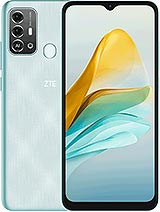
Blade A53 Pro
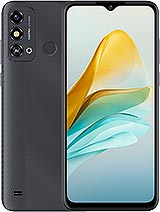
Blade A53+
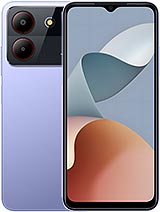
Blade A54
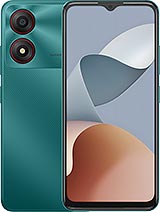
Blade A34
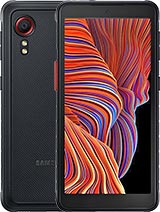
Galaxy XCover 7