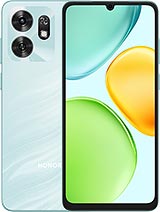
ZTE Blade A35 review
The Blade A35 suits users on tight budgets in regions where calling and messaging still dominate phone use—think rural areas, older demographics, or anyone treating a phone as a voice device first. Avoid it if you expect speed, sharp text, or frequent app switching; the slow chipset and soft screen will test your patience."
This review is based on ZTE’s published specifications and public benchmark data for the ZTE Blade A35, and the rating is spec-based. GoSolo does not physically test devices; where we estimate real-world behaviour such as battery life or charge time, we say so. How we rate phones.
Overview
The Blade A35 is a strict budget phone built for light daily tasks, calls, and messaging on a long battery haul—not gaming or heavy apps. At €80, it delivers what you pay for: a big screen, a day or more of power, and enough performance to avoid constant frustration, but nothing faster or sharper than the class demands.
Design & build
At 8.5mm thick, the Blade A35 feels slim for its era, and the 6.75-inch frame sits somewhere between a large phone and a small tablet. Without the exact weight listed, we can assume it skews light for the footprint. The phone is straightforward and durable-looking rather than refined—plastic and matte finishes, no frills. Dual nano-SIM and a dedicated microSD slot are practical wins that show ZTE isn't cutting bare subsistence. The 3.5mm jack is a bonus, not an insult, in 2024. What you're holding is honest budget design: nothing to love, nothing to resent.
Display
A 6.75-inch IPS LCD panel sounds generous, and the screen-to-body ratio of 83.5% confirms that ZTE maximized visible real estate. The problem is the resolution: 720 x 1600 pixels yields 262 ppi, which is noticeably soft when you hold it at reading distance. Text in emails, PDFs, and web pages appears fuzzier than you'd expect from a modern phone. The 90Hz refresh helps scrolling feel smoother than the usual 60Hz budget experience, which is appreciated for navigation and social media, but it cannot mask the resolution weakness. If your phone duties are mostly video calls, navigation, and messaging, you'll adapt quickly; if you read a lot on the phone, the display is a genuine limitation.
Performance
The Unisoc SC9863A1 is a low-power octa-core design that prioritizes battery life over speed. With 4GB RAM, the phone handles basic tasks—calls, messaging, light web browsing, and social media feeds—without crashing or extreme lag. Dial up the load even slightly, though, and slowness emerges. Opening multiple apps, editing photos, or playing games reveals the CPU's shallow headroom. Scrolling through heavy pages or switching between apps introduces stutters that remind you of the chipset's entry-level standing. This is not a chip for multitasking or anything ambitious; it is designed for a user who runs one or two apps at a time. Compared to rivals in this price bracket, performance is middle-of-the-road: not the slowest, but far from snappy.
Software
Android 14 Go edition is a lightweight variant built for phones with limited RAM and storage. It strips some features and pre-loaded apps that full Android would carry, freeing up resources and ensuring the phone stays responsive despite the weak chipset. The interface is vanilla Android with minimal ZTE bloat, which means fewer unwanted pre-installs to uninstall. Updates are a question mark at this price tier; ZTE's commitment to long-term software support is unpredictable. Security patches may arrive sporadically. For a phone at €80, expect roughly two to three years of usable software before lag and incompatibilities accumulate.
Camera
An 8MP sensor with autofocus and LED flash covers the basics. In daylight, photos are acceptable for sharing on messaging apps or social media; colors are neutral, and detail is fine as long as you don't crop or enlarge. Move indoors or into low light, and the small sensor and modest optics reveal their limits—noise creeps in, and shadows lose detail fast. The 1080p video at 30fps is usable for casual clips, though quality is compressed and lacking dynamic range. The 2MP selfie camera (interpolated to 5MP) is a video-call tool only; don't expect flattering or detailed self-portraits. For a budget phone aimed at basic communication, the camera is fit-for-purpose, not more.
Battery & charging
The 5000mAh battery is the Blade A35's strongest suit. With light to moderate use—browsing, calls, messaging, some video—expect a full day and often into the next before you need a charger. The efficiency comes from the low-power chipset and modest display refresh; they conspire to drain power slowly. The drawback is charging speed: 10W wired means roughly two to two-and-a-half hours from empty to full, which is slow by 2024 standards. At €100-plus rivals often ship 30W to 65W charging. If you're the type to charge overnight, this is moot; if you need quick top-ups during the day, carry a power bank or leave it plugged in longer.
Value & verdict-context
At €80, the Blade A35 is positioned as a no-compromise budget entry point. For the money, it delivers a large screen, substantial battery, dual SIM, and expandable storage—features that would cost more elsewhere. Where it stumbles is speed (the chipset is visibly slow under any pressure), display resolution (720p on 6.75 inches is fuzzy), and charging pace (10W feels dated). The phone is not a downgrade from last year; it is a continuation of the budget formula—low performance, long battery, low price. Rivals at similar cost exist, though none dramatically outpace it in all areas. If you prioritize battery life and dual-SIM flexibility over raw speed, the trade-off makes sense. If you multitask, play games, or spend hours reading on the phone, frustration will set in quickly.
Verdict
The Blade A35 suits users on tight budgets in regions where calling and messaging still dominate phone use—think rural areas, older demographics, or anyone treating a phone as a voice device first. Avoid it if you expect speed, sharp text, or frequent app switching; the slow chipset and soft screen will test your patience."
- 5000mAh battery easily lasts a full day of light use and stretches into a second day with minimal drain—rare efficiency at this price
- Dedicated microSD slot means real storage expansion without SIM sacrifices
- 6.75-inch screen is large and practical for browsing and video despite soft resolution, and 90Hz scrolling feels more fluid than the typical 60Hz budget fare
- Dual SIM and a 3.5mm jack preserve basics ZTE retained while others cut them
- Unisoc SC9863A1 is genuinely sluggish under any load—app launches stall, multitasking stumbles, and anything beyond light use exposes CPU limits
- 720p on a 6.75-inch screen reads as soft; text is fuzzy at arm's length, making reading emails or small text uncomfortable
- 10W charging crawls toward a full battery in over two hours, a frustration when you need quick top-ups
ZTE Blade A35 Key Specifications
The essentials at a glance. See the full spec sheet.
| Released | 2024, October 09 |
|---|---|
| Display | 6.75 inches, 108.3 cm2 (~83.5% screen-to-body ratio), IPS LCD, 90Hz |
| Resolution | 720 x 1600 pixels, 20:9 ratio (~262 ppi density) |
| Chipset | Unisoc SC9863A1 (22 nm) |
| RAM & storage | 64GB 2GB RAM, 64GB 4GB RAM |
| Main camera | 8 MP, AF |
| Selfie camera | 2 MP (interpolated to 5 MP) |
| Battery | 5000 mAh |
| Charging | 10W wired |
| Software | Android 14 (Go edition) |
| Dimensions | 167.7 x 77.4 x 8.5 mm (6.60 x 3.05 x 0.33 in) |
| Network | GSM / HSPA / LTE |
| NFC | No |
| USB | USB Type-C 2.0 |
ZTE Blade A35 FAQ
Common questions, answered from the spec sheet.
Does the Blade A35 support 5G?
No. The Blade A35 tops out at GSM / HSPA / LTE, without 5G.
What chipset does the Blade A35 use?
The Blade A35 runs on the Unisoc SC9863A1 (22 nm).
What display does the Blade A35 have?
A 6.75 inches, 108.3 cm2 (~83.5% screen-to-body ratio) IPS LCD, 90Hz, 720 x 1600 pixels, 20:9 ratio (~262 ppi density).
How big is the Blade A35 battery?
The Blade A35 has a 5000 mAh battery. Charging is rated at 10W wired.
Does the Blade A35 have NFC?
No, the Blade A35 does not list NFC support.
Does the Blade A35 support a microSD card?
Yes, the Blade A35 supports expandable storage (microSDXC (dedicated slot)).
Does the Blade A35 have a headphone jack?
Yes, the Blade A35 has a 3.5mm headphone jack.
Alternatives to consider
If the Blade A35 isn’t quite right, these are the closest calls.
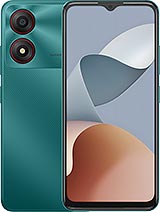
Blade A34
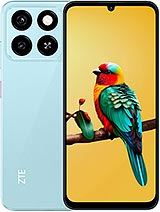
Blade A55

Blade A35 Lite
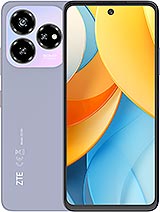
Blade V60
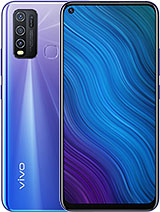
Y50 5G