ZTE Blade A53+ review
This phone suits buyers in highly price-sensitive markets who need calling, texting, and basic apps, and have no intention of multitasking or running demanding software. Anyone with budget flexibility should look elsewhere—a phone with 4GB RAM and a 1080p screen, available at only slightly higher prices, will feel noticeably more capable and last longer before becoming frustratingly slow.
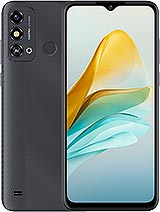
This review is based on ZTE’s published specifications and public benchmark data for the ZTE Blade A53+, and the rating is spec-based. GoSolo does not physically test devices; where we estimate real-world behaviour such as battery life or charge time, we say so. How we rate phones.
Overview
The Blade A53+ is a bare-bones Android phone for calls, messages, and light social media on a strict budget. It will stumble if you ask it to do much beyond that: the 2GB RAM and ageing Unisoc chip mean apps pause and load slowly, the 720p screen is soft, and the battery barely lasts a full day. Worth it only if the price drops low enough that you accept the trade-offs.
Design & Build
At 9.1mm, the Blade A53+ is pleasantly slim for a phone carrying a 4000mAh battery. The body feels lightweight in hand, and the dual-SIM setup (two Nano slots) is practical for users juggling work and personal lines, or switching carriers without a new device. Build quality appears standard for this price: plastic chassis, no sign of premium materials, but nothing obviously fragile either. The absence of any announced weight figure is frustrating, but thin bezel handling suggests it is not clunky.
Display
The 6.52-inch IPS LCD is spacious, but the 720p resolution at 269ppi shows its age. Text, icons, and web content appear noticeably softer than a 1080p display at the same size would—a trade-off that becomes obvious if you read a lot or scroll news frequently. 60Hz refresh rate is standard for phones in this tier, but rivals at similar prices have started including 90Hz panels, making scrolling feel rougher here by comparison. In outdoor brightness, the LCD is adequate though not exceptional. For basic messaging and social media, the screen works; for extended reading or photo browsing, you will notice the graininess.
Performance
The Unisoc SC9863A1 is a budget chip from 2020, paired with just 2GB of RAM—a combination that feels dated by 2023 standards. Messaging apps, light browsing, and phone calls run smoothly enough. Start opening multiple apps, jumping between social media and a web browser, or attempting any kind of multitasking, and you will feel lag. Heavy games stall almost immediately. App loading times stretch noticeably longer than you would expect from a modern phone. The Android 12 Go edition helps by running a lighter version of the OS, but it cannot fully paper over the hardware's limitations. This is a phone for serial task-switchers, not power users or gamers.
Software
Android 12 Go is optimized for low-end hardware: it disables some visual effects and uses less RAM than standard Android 12. The trade-off is a slightly less feature-rich interface and potential gaps in future update support—ZTE rarely commits to long-term updates for budget lines. Out of the box, the phone ships with bloatware that eats into the already tight 32GB storage. You can uninstall much of it, but the combination of 2GB RAM and limited storage means you are constantly managing space and memory.
Camera
The 8MP rear camera with autofocus captures reasonable photos in bright daylight—colors are natural and exposure is generally balanced. Indoors or in dim light, shots fall flat quickly: noise creeps in, detail smudges, and the modest sensor size (likely 1/3.2-inch or smaller) means it struggles with shadow recovery. The 5MP selfie camera is purely functional; expect soft, washed-out self-portraits. Video maxes out at 1080p@30fps, which is serviceable but does not feel fluid. Compared to phones at the next price tier up, this camera array is clearly a compromise—fine for snapshots, not for serious mobile photography.
Battery & Charging
The 4000mAh battery delivers about one full day of mixed use—calls, messages, light browsing, and a few social media sessions. Heavy screen time, video streaming, or gaming drains it to critical by evening. Charging time is not specified, and there is no mention of fast charging, suggesting it relies on a standard 5W or perhaps 10W charger. That means a full charge will take 5 to 8 hours from a standard adapter—slow enough to encourage overnight charging rather than quick top-ups.
Value & Verdict Context
The Blade A53+ competes in the ultra-budget segment where every rupee, peso, or naira counts. For buyers in regions where entry-level phones dominate the market, this device succeeds on price alone: dual SIM, a day of battery, basic connectivity, and a working fingerprint sensor justify the cost if it is genuinely cheap. However, the 2GB RAM and 720p screen are no longer baseline expectations in 2023, even for budget phones. Rivals from other brands—particularly Indian and Chinese makers—offer more RAM, sharper displays, or faster chips for the same money or a small premium. The Blade A53+ feels engineered to undercut rather than compete on features.
Verdict
This phone suits buyers in highly price-sensitive markets who need calling, texting, and basic apps, and have no intention of multitasking or running demanding software. Anyone with budget flexibility should look elsewhere—a phone with 4GB RAM and a 1080p screen, available at only slightly higher prices, will feel noticeably more capable and last longer before becoming frustratingly slow.
- Sim-free dual SIM on a budget phone, useful in regions where carriers lock devices
- Physically thin at 9.1mm despite a 4000mAh battery, making it pocketable
- Android 12 Go edition keeps the OS lean on memory-starved hardware
- Rear fingerprint sensor works reliably, a feature still rare at this price
- Only 2GB RAM and a weak Unisoc chipset mean lag and stuttering when switching apps or running anything beyond basic tasks
- 720p display at 269ppi makes text and icons look noticeably soft compared to rivals with higher density
- Slow 8MP camera captures flat, low-detail photos even in good light
ZTE Blade A53+ Key Specifications
The essentials at a glance. See the full spec sheet.
| Released | 2023, April |
|---|---|
| Display | 6.52 inches, 102.6 cm2 (~81.1% screen-to-body ratio), IPS LCD |
| Resolution | 720 x 1600 pixels, 20:9 ratio (~269 ppi density) |
| Chipset | Unisoc SC9863A1 (22 nm) |
| RAM & storage | 32GB 2GB RAM |
| Main camera | 8 MP, AF |
| Selfie camera | 5 MP |
| Battery | 4000 mAh |
| Software | Android 12 (Go edition) |
| Dimensions | 165.7 x 76.4 x 9.1 mm (6.52 x 3.01 x 0.36 in) |
| Network | GSM / HSPA / LTE |
| NFC | Yes (market/region dependent) |
| USB | microUSB |
ZTE Blade A53+ FAQ
Common questions, answered from the spec sheet.
Does the Blade A53+ support 5G?
No. The Blade A53+ tops out at GSM / HSPA / LTE, without 5G.
What chipset does the Blade A53+ use?
The Blade A53+ runs on the Unisoc SC9863A1 (22 nm).
What display does the Blade A53+ have?
A 6.52 inches, 102.6 cm2 (~81.1% screen-to-body ratio) IPS LCD, 720 x 1600 pixels, 20:9 ratio (~269 ppi density).
How big is the Blade A53+ battery?
The Blade A53+ has a 4000 mAh battery.
Does the Blade A53+ have NFC?
Yes, the Blade A53+ has NFC.
Does the Blade A53+ support a microSD card?
Yes, the Blade A53+ supports expandable storage (microSDXC (uses shared SIM slot)).
Alternatives to consider
If the Blade A53+ isn’t quite right, these are the closest calls.

Blade A53 Pro

Blade A34

Blade A35
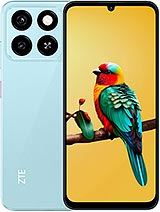
Blade A55
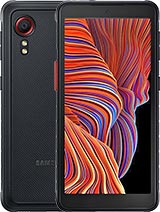
Galaxy XCover 7