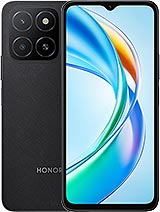
ZTE Blade A54 review
The Blade A54 suits buyers in markets where dual-SIM support, battery endurance, and a 3.5mm jack matter more than display crispness or gaming capability—think small business owners, cost-conscious travelers, or anyone whose phone use is calls and messaging with occasional browsing. Anyone expecting modern responsiveness, a sharp screen, or mobile gaming should look at competitors offering 1080p and faster processors at the same price."
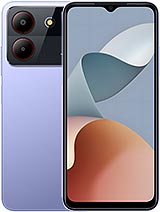
This review is based on ZTE’s published specifications and public benchmark data for the ZTE Blade A54, and the rating is spec-based. GoSolo does not physically test devices; where we estimate real-world behaviour such as battery life or charge time, we say so. How we rate phones.
Overview
The Blade A54 is a no-frills 2023 budget phone built around a 5000 mAh battery and dual SIM, aiming at markets that prioritize call and messaging longevity over performance or display crispness. At roughly 90 EUR it hits a price that works for light use, but the 720p screen and entry-level chipset leave little room for anything more demanding.
Design & Build
At 185g and 8.5mm thick, the Blade A54 feels reasonably balanced in hand—not lightweight, but not burdensome either for a 6.6-inch phone. The form factor is straightforward: a slab design without pretension. Construction details are sparse in the spec sheet, so durability and material quality remain unclear, but for a 90 EUR device you should expect plastic and modest water resistance at best. The side-mounted fingerprint sensor is a practical touch that works faster than in-display options on budget phones, and the button layout is standard. Slim bezels give a usable 84% screen-to-body ratio, so you are not fighting huge borders.
Display
The 6.6-inch 90Hz IPS LCD is where the budget cuts deepest. At 720 x 1612 pixels (267 ppi), text and UI elements lose crispness compared to what you would see on a 1080p panel at the same size—a noticeable step down if you are coming from a mid-range phone. Colors on IPS LCD are decent enough, and the 90Hz refresh helps scrolling through social feeds and web pages feel smoother than a static 60Hz display would. For reading, messaging, and video playback, it works; for photo editing or reading small fonts, you will notice the limitation. By late 2023 standards, this resolution-to-screen-size pairing is a step behind what competitors offer at the same price, and it shows.
Performance
The Unisoc SC9863A is an entry-level 28nm octa-core that prioritizes efficiency over speed. With its mix of 1.6 GHz and 1.2 GHz Cortex-A55 cores, it handles Android 13, browsing, calls, and messaging without strain, but do not expect fluidity once you venture into mobile gaming or run memory-heavy apps. Casual titles like Candy Crush or Two Dots work fine; anything 3D or demanding will stutter or fail to launch. Multitasking is sluggish with only 4GB RAM. This is a phone for people who use apps one at a time and do not demand responsiveness. If your day involves email, WhatsApp, YouTube, and the occasional photo, it will not frustrate. If you want to edit videos or run multiple apps in parallel, look elsewhere.
Software
Android 13 ships out of the box, which is respectable for a September 2023 launch. ZTE's skin is minimal—no word on the depth of bloatware or the update roadmap from the spec sheet, but historically ZTE phones receive less consistent long-term support than Samsung or Xiaomi. For a 90 EUR device, software expectations are modest: you get the core Android experience, security patches depending on ZTE's commitment, and a lifespan of perhaps one or two major OS updates if you are lucky.
Camera
The 13MP rear camera with autofocus and LED flash is functional but uninspired. Daytime shots in good light should come out acceptably sharp and color-balanced, and 1080p@30fps video is enough for social media clips. The HDR mode helps recover detail in backlit scenes, but do not expect dynamic range or detail that rivals even mid-range phones. Low light is where budget sensors truly falter: the LED flash is a flashlight, not a true lighting solution, and the modest sensor size limits night performance. The 2MP interpolated selfie is a joke on paper but handles video calls adequately—no one expects a 2MP selfie to produce a gallery-worthy portrait anyway.
Battery & Charging
The 5000 mAh battery is the phone's strongest selling point. On light to moderate use—calls, messaging, light browsing, some video—you should see a full day comfortably, possibly into the evening. With heavier use or gaming, 12–14 hours is realistic. Charging speed is not listed, which suggests it is unremarkable; expect USB Type-C 2.0 to charge slowly compared to 65W+ chargers on competitors. The lack of fast charging specs is telling, but for a device priced this low and aimed at emerging markets, slow charging is accepted trade-off. The long battery life suits the target use case: dual-SIM professionals and cost-conscious users who value uptime over speed.
Value & Verdict
At roughly 90 EUR, the Blade A54 is cheap enough that it fills a real gap: a dual-SIM phone with LTE, a 5000 mAh battery, and a 3.5mm jack for buyers in emerging markets who prioritize longevity and affordability over performance or display sharpness. The dedicated microSD slot is a bonus that many competitors have dropped. Where it falters is in the basics that have shifted market-wide by 2023: rivals in this price band now offer 1080p screens, faster chipsets, and better cameras. The 720p display and Unisoc chip feel behind even for a budget phone, and without specs on charging speed or build durability, it is hard to recommend warmly over locally available alternatives. It is not a bad phone—it does what it promises—but it demands acceptance of real compromises in display and performance for the sake of battery endurance and dual SIM.
Verdict
The Blade A54 suits buyers in markets where dual-SIM support, battery endurance, and a 3.5mm jack matter more than display crispness or gaming capability—think small business owners, cost-conscious travelers, or anyone whose phone use is calls and messaging with occasional browsing. Anyone expecting modern responsiveness, a sharp screen, or mobile gaming should look at competitors offering 1080p and faster processors at the same price."
- 5000 mAh battery should easily last a full day on light use, plus quick top-up from fumes if needed
- Dual-SIM and dedicated microSD slot mean both flexibility and storage without compromise
- Side-mounted fingerprint, 90Hz LCD, and Bluetooth 5.2 keep it modern enough for the price point
- 3.5mm headphone jack appeals to buyers who already own wired audio
- 720p resolution on a 6.6-inch display makes text soft and icons fuzzy by 2023 standards—rivals at this price now offer 1080p
- Unisoc SC9863A is too weak even for casual mobile gaming or heavy apps; performance stumbles beyond basic browsing and calls
- 13MP main camera with 2MP selfie feels underdone, though adequate for video calls and daylight snaps
ZTE Blade A54 Key Specifications
The essentials at a glance. See the full spec sheet.
| Released | 2023, September |
|---|---|
| Display | 6.6 inches, 104.6 cm2 (~84.2% screen-to-body ratio), IPS LCD, 90Hz |
| Resolution | 720 x 1612 pixels, 20:9 ratio (~267 ppi density) |
| Chipset | Unisoc SC9863A (28 nm) |
| RAM & storage | 64GB 4GB RAM, 128GB 4GB RAM |
| Main camera | 13 MP, (wide), AF Auxiliary lens |
| Selfie camera | 2 MP (interpolated to 5 MP) |
| Battery | 5000 mAh |
| Software | Android 13 |
| Dimensions | 164 x 75.8 x 8.5 mm (6.46 x 2.98 x 0.33 in) |
| Weight | 185 g (6.53 oz) |
| Network | GSM / HSPA / LTE |
| NFC | Yes (market/region dependent) |
| USB | USB Type-C 2.0 |
ZTE Blade A54 FAQ
Common questions, answered from the spec sheet.
Does the Blade A54 support 5G?
No. The Blade A54 tops out at GSM / HSPA / LTE, without 5G.
What chipset does the Blade A54 use?
The Blade A54 runs on the Unisoc SC9863A (28 nm).
What display does the Blade A54 have?
A 6.6 inches, 104.6 cm2 (~84.2% screen-to-body ratio) IPS LCD, 90Hz, 720 x 1612 pixels, 20:9 ratio (~267 ppi density).
How big is the Blade A54 battery?
The Blade A54 has a 5000 mAh battery.
Does the Blade A54 have NFC?
Yes, the Blade A54 has NFC.
Does the Blade A54 support a microSD card?
Yes, the Blade A54 supports expandable storage (microSDXC (dedicated slot)).
Does the Blade A54 have a headphone jack?
Yes, the Blade A54 has a 3.5mm headphone jack.
Alternatives to consider
If the Blade A54 isn’t quite right, these are the closest calls.
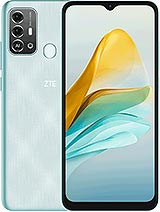
Blade A53 Pro
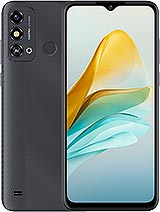
Blade A53+
Blade A34
Blade A35
Galaxy XCover 7