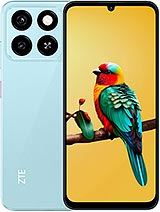
ZTE Blade A55 review
This phone suits someone who prioritizes screen size, all-day battery, and low cost over performance and display sharpness. It's aimed at calls, messaging, and casual media in low-income markets where electricity and data are metered. Anyone doing heavy app use, gaming, or expecting modern responsiveness should spend a bit more on a phone with a better chipset and faster charging."
This review is based on ZTE’s published specifications and public benchmark data for the ZTE Blade A55, and the rating is spec-based. GoSolo does not physically test devices; where we estimate real-world behaviour such as battery life or charge time, we say so. How we rate phones.
Overview
The ZTE Blade A55 is an intentionally lean budget phone with a big 6.75-inch screen and all-day battery that sacrifices sharpness, speed, and charging pace for price and size. It works as a calling and messaging device for low-income markets, but the blocky display and weak performance make it a frustrating daily driver if you do anything beyond basics.
Design & build
The Blade A55 is 8.5mm thick and fits the profile of an entry-level candybar—unremarkable but inoffensive. A 6.75-inch frame with an 84.7% screen-to-body ratio means minimal bezels for the price tier, though we don't know the exact weight from the spec sheet. The dual nano-SIM setup suits markets where switching between providers or having separate work and personal lines is routine. Build material isn't detailed, but for the cost this is a no-frills device meant to take calls and messages, not impress on aesthetics.
Display
Here's where budget cuts sting. The 6.75-inch IPS LCD runs at 720 x 1600 pixels—a 260ppi density that renders text and icons noticeably pixelated next to phones with 1080p or sharper panels. The 90Hz refresh is a nice touch that makes scrolling feel smoother than a 60Hz baseline, and the screen-to-body ratio is generous. But pair a large screen with low pixel density and you get a panel suited more for video watching from a distance than for reading small text comfortably. For a large-screen casual browser, it works. For daily reading and apps, it's a constant reminder you saved money.
Performance
The Unisoc SC9863A1 is a budget octa-core from 2022 designed for entry markets. With 4GB of RAM and eMMC 5.1 storage, it handles calls, messaging, and light social media without strain. Launch any heavy game, and you'll hit stuttering and lag within minutes. Multitasking more than two apps at once forces the system to swap and slowdown. It's not broken—a budget phone in 2024 shouldn't be—but don't expect responsiveness beyond basic tasks. Android 14 Go Edition helps by running lighter than the full OS, which is exactly what this hardware needs.
Software
Android 14 Go Edition is Google's lean build for devices with 4GB RAM and under. It strips bloat, closes background processes aggressively, and keeps system load down. You get fewer preinstalled apps and tighter memory management than a standard Android 14 build. The trade-off is that some features and visual polish are omitted, and app compatibility can be spotty—not every app on the Play Store runs well on Go. For messaging, calling, and light browsing, it's sufficient. For anyone expecting the full Android experience, it's a compromise.
Camera
The 13MP main camera with autofocus and LED flash is entry-level. In daylight, it captures acceptable color and detail for social media uploads. Indoors or low light, images get grainy and lose sharpness. The 1080p@30fps video is clear enough for short clips and video calls, but there's no stabilization mentioned and bitrate is modest. The 8MP front camera handles video calls and selfies adequately at that resolution, though there's no night mode or computational photography to enhance weak scenes. This is a phone for daylight photos and chats, not serious mobile photography.
Battery & charging
The 5000mAh battery is genuinely large and a selling point for the price. On light use—calls, messages, casual browsing—expect a full day or slightly more before needing a charge. Heavy video streaming or gaming drains it by afternoon. The real pain is the 10W charging speed: expect 2 to 3 hours from empty to full, which is slow by modern standards even for budget phones. You can't top up quickly before leaving the house. This forces deliberate charging habits, which suits someone in a market where electricity is metered or expensive, but frustrates anyone accustomed to faster top-ups.
Value & verdict context
The Blade A55 exists in a specific niche: it's cheap, has a genuinely large screen, and won't demand much power consumption. It suits someone in a low-income market who needs reliable calls, messaging, and light browsing without burning through credit on a data plan or charging frequency. The 720p display, weak performance, and slow charging are real limitations, but they're the price of entry-level. The dedicated microSD slot and FM radio are genuine additions most rivals skip. For the exact use case—a no-fuss calling and messaging device in a market where big screens are valued and charging infrastructure isn't always reliable—it delivers. For anyone expecting modern responsiveness, sharp text, or quick charging, look elsewhere.
Verdict
This phone suits someone who prioritizes screen size, all-day battery, and low cost over performance and display sharpness. It's aimed at calls, messaging, and casual media in low-income markets where electricity and data are metered. Anyone doing heavy app use, gaming, or expecting modern responsiveness should spend a bit more on a phone with a better chipset and faster charging."
- Large 6.75-inch display at entry-level price—rare value for someone who wants screen real estate without spending much
- 5000mAh battery gets through a full day on light use; combined with slow charging, it encourages discipline rather than constant top-ups
- Dedicated microSD slot and FM radio are practical features still present when many rivals have ditched them
- Runs Android 14 Go Edition, a lean build that keeps bloat minimal on modest hardware
- 720p resolution on a 6.75-inch screen is visibly blocky—text and icons lack sharpness compared to even mid-range phones from the same era
- 10W charging takes 2–3 hours from empty, forcing real planning if you need usable battery before leaving home
- Unisoc SC9863A1 and 4GB RAM struggle with anything beyond texting and calling; games and multitasking stutter quickly
ZTE Blade A55 Key Specifications
The essentials at a glance. See the full spec sheet.
| Released | 2024, January |
|---|---|
| Display | 6.75 inches, 110.0 cm2 (~84.7% screen-to-body ratio), IPS LCD, 90Hz |
| Resolution | 720 x 1600 pixels, 20:9 ratio (~260 ppi density) |
| Chipset | Unisoc SC9863A1 (22 nm) |
| RAM & storage | 64GB 4GB RAM, 128GB 4GB RAM |
| Main camera | 13 MP, AF Auxiliary lens |
| Selfie camera | 8 MP |
| Battery | 5000 mAh |
| Charging | 10W wired |
| Software | Android 14 (Go edition) |
| Dimensions | 167.7 x 77.4 x 8.5 mm (6.60 x 3.05 x 0.33 in) |
| Network | GSM / HSPA / LTE |
| NFC | No |
| USB | USB Type-C 2.0, OTG |
ZTE Blade A55 FAQ
Common questions, answered from the spec sheet.
Does the Blade A55 support 5G?
No. The Blade A55 tops out at GSM / HSPA / LTE, without 5G.
What chipset does the Blade A55 use?
The Blade A55 runs on the Unisoc SC9863A1 (22 nm).
What display does the Blade A55 have?
A 6.75 inches, 110.0 cm2 (~84.7% screen-to-body ratio) IPS LCD, 90Hz, 720 x 1600 pixels, 20:9 ratio (~260 ppi density).
How big is the Blade A55 battery?
The Blade A55 has a 5000 mAh battery. Charging is rated at 10W wired.
Does the Blade A55 have NFC?
No, the Blade A55 does not list NFC support.
Does the Blade A55 support a microSD card?
Yes, the Blade A55 supports expandable storage (microSDXC (dedicated slot)).
Does the Blade A55 have a headphone jack?
Yes, the Blade A55 has a 3.5mm headphone jack.
Alternatives to consider
If the Blade A55 isn’t quite right, these are the closest calls.
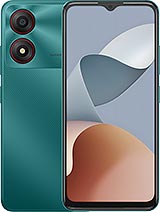
Blade A34
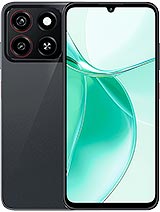
Blade A35
Blade V60
Blade V60 Design
Y50 5G