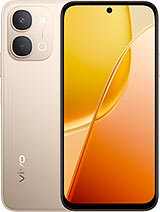
ZTE Blade A76 review
The Blade A76 is built for buyers in cost-conscious markets who prioritize battery life and screen size over display clarity and raw speed. It suits someone who needs a phone that lasts a full day, watches video, and uses apps lightly—not someone who games, edits video, or juggles many apps. If you can tolerate a soft 720p display and entry-level performance, it is a straightforward value buy; if you want screen sharpness or snappiness, look at rivals with higher-res panels and better silicon in your region."
This review is based on ZTE’s published specifications and public benchmark data for the ZTE Blade A76, and the rating is spec-based. GoSolo does not physically test devices; where we estimate real-world behaviour such as battery life or charge time, we say so. How we rate phones.
Overview
The Blade A76 is a budget 5G phone aimed at buyers who prioritize battery life and screen real estate over display sharpness or processing power. It delivers what it promises—a full day's use and a spacious 6.75-inch panel—but the 262 ppi screen looks soft and the Unisoc T8300 is strictly entry-level, so don't expect smooth gaming or app multitasking.
Design & Build
The Blade A76 is slim at 8.6 mm and reasonably compact for its 6.75-inch footprint, though weight is not listed. Dual Nano-SIM support suits dual-SIM markets, and IP54 protection guards against dust and splash (light rain, sink splashes)—not submersion. Mohs level 4 screen protection is basic; it will scratch from pocket sand and keys. The design is straightforward budget fare: no frills, nothing to complain about, nothing to celebrate.
Display
The 6.75-inch IPS LCD panel delivers 720 x 1612 pixels, working out to 262 ppi—visibly soft compared to 1080p phones at the same price. Text and icons lack crispness, and while the 89% screen-to-body ratio is good, the 20:9 aspect ratio and large diagonal make single-handed use awkward. The 90Hz refresh does make scrolling noticeably smoother than 60Hz, a meaningful touch. Brightness and color accuracy specs are absent; expect typical mid-range LCD performance—decent in shade, dim in bright sunlight. For this price and 2025 market, the resolution is the real shortcoming.
Performance
The Unisoc T8300 is a 6 nm octa-core chip with two Cortex-A78 cores and six Cortex-A55 cores, paired with Mali-G57 MP2 graphics. This is entry-level silicon. Everyday tasks—messaging, browsing, maps—work fine, but demanding games, heavy video editing, or aggressive multitasking will cause stuttering and thermal throttling. RAM comes in 4GB or 6GB variants; the 6GB option is safer for app switching. Do not expect flagship responsiveness or long-term smoothness as apps bloat; this is a phone that does basic duties without drama, then bogs down if you push it.
Software
Android version is not specified, but assume a current release or near-current. ZTE typically ships minimal bloat on budget lines, which is a point in its favor—less clutter, more breathing room. Long-term update support is uncertain; budget brands often trail flagship schedules. Security patches matter more than OS upgrades at this price point, and ZTE's track record is middling.
Camera
The 50MP main sensor with f/1.8 aperture and autofocus is capable in daylight and low light alike; the wide aperture and LED flash let you capture decent indoor shots without extreme blur. 4K video at 30 fps is standard at this price, though 30 fps will make fast motion look choppy. The 8MP selfie camera is functional but unremarkable. Overall, this is a competent budget shooter that punches above its price in stills; video is adequate but nothing more. Do not expect night mode sophistication or consistent autofocus performance in complex scenes.
Battery & Charging
The 5000 mAh battery paired with a modest-power LCD screen should deliver about 15–18 hours of mixed use per charge, or a full day on moderate use—a genuine strength for this class. The charging spec is frustratingly absent from the data sheet. If it follows ZTE's budget playbook, expect 15–18W charging, which means a full refill will take 2.5 to 3+ hours. That is slow compared to rivals offering 33W or faster; budget for a longer wait or carry a power bank. No wireless charging is obvious at this price.
Connectivity
5G support across multiple bands (1, 3, 7, 8, 20, 28, 38, 40, 41, 77, 78) is future-proofing for markets rolling out 5G infrastructure. Wi-Fi ac (not Wi-Fi 6) is adequate. USB Type-C 2.0 is standard but dated; USB 3.0 or higher is becoming common even at this price, so file transfers to a computer will be noticeably slower. NFC is present if your region supports it, and the headphone jack is a practical win for buyers without wireless buds. GPS and Bluetooth are expected.
Verdict
The Blade A76 is built for buyers in cost-conscious markets who prioritize battery life and screen size over display clarity and raw speed. It suits someone who needs a phone that lasts a full day, watches video, and uses apps lightly—not someone who games, edits video, or juggles many apps. If you can tolerate a soft 720p display and entry-level performance, it is a straightforward value buy; if you want screen sharpness or snappiness, look at rivals with higher-res panels and better silicon in your region."
- 5000 mAh battery and low-power LCD screen combine for solid endurance—expect a genuine full day on moderate use, maybe 15–18 hours mixed
- Large 6.75-inch display suits video watching and reading, even if clarity falls short; 90Hz scrolling is a bonus at this price
- 50MP main camera with f/1.8 aperture handles low-light shots reasonably well; 4K video recording is table stakes at 130 EUR
- Dual SIM, 5G, headphone jack, and NFC keep connectivity flexible for emerging markets
- 720p resolution on a 6.75-inch screen produces soft text and icons; rivals at similar prices now offer 1080p or better
- Unisoc T8300 is entry-level silicon that will stutter in demanding apps and multitasking—not suitable if you game or run heavy workloads
- No charging spec listed; if it ships with typical 15–18W charging for a 5000 mAh cell, refill times will be sluggish compared to competitors offering 33W or more
ZTE Blade A76 Key Specifications
The essentials at a glance. See the full spec sheet.
| Released | 2025, June 03 |
|---|---|
| Display | 6.75 inches, 109.5 cm2 (~89.3% screen-to-body ratio), IPS LCD, 90Hz |
| Resolution | 720 x 1612 pixels, 20:9 ratio (~262 ppi density) |
| Chipset | Unisoc T8300 (6 nm) |
| RAM & storage | 128GB 4GB RAM, 128GB 6GB RAM |
| Main camera | 50 MP, f/1.8, 27mm (wide), AF Auxiliary lens |
| Selfie camera | 8 MP, (wide) |
| Battery | 5000 mAh |
| Software | Android |
| Dimensions | 163.6 x 74.9 x 8.6 mm (6.44 x 2.95 x 0.34 in) |
| Durability | IP54 dust protected and water resistant (water splashes) |
| Network | GSM / HSPA / LTE / 5G |
| NFC | Yes (market/region dependent) |
| USB | USB Type-C 2.0 |
ZTE Blade A76 FAQ
Common questions, answered from the spec sheet.
Does the Blade A76 support 5G?
Yes. The Blade A76 supports 5G networks.
What chipset does the Blade A76 use?
The Blade A76 runs on the Unisoc T8300 (6 nm).
What display does the Blade A76 have?
A 6.75 inches, 109.5 cm2 (~89.3% screen-to-body ratio) IPS LCD, 90Hz, 720 x 1612 pixels, 20:9 ratio (~262 ppi density).
How big is the Blade A76 battery?
The Blade A76 has a 5000 mAh battery.
Does the Blade A76 have NFC?
Yes, the Blade A76 has NFC.
Is the Blade A76 water resistant?
The Blade A76 carries a IP54 dust protected and water resistant (water splashes) rating.
Does the Blade A76 support a microSD card?
No, the Blade A76 does not support expandable storage.
Does the Blade A76 have a headphone jack?
Yes, the Blade A76 has a 3.5mm headphone jack.
Alternatives to consider
If the Blade A76 isn’t quite right, these are the closest calls.

Blade A56
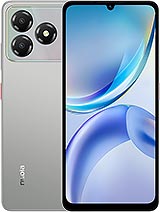
Blade A36
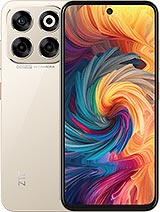
Blade V70
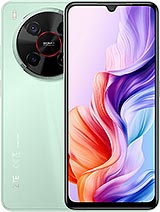
Blade V70 Max
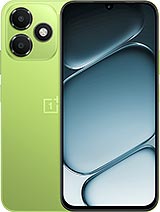
N6 Lite