ZTE Blade V50 review
The Blade V50 makes sense for someone who spends hours browsing and wants a beautiful screen to do it on without draining the battery by dinner. Skip it if you demand fast charging, high-res display, or gaming performance—you will find more direct rivals just above this price."

This review is based on ZTE’s published specifications and public benchmark data for the ZTE Blade V50, and the rating is spec-based. GoSolo does not physically test devices; where we estimate real-world behaviour such as battery life or charge time, we say so. How we rate phones.
Overview
The Blade V50 is a large-screen mid-ranger built around its AMOLED 120Hz display and all-day battery, with a solid wide-angle camera and enough performance for daily apps. At 220 EUR it hits a reasonable balance for its class, though the 1080p resolution feels light for a 6.67-inch panel and charging lags rivals by today's standards.
Design & build
The Blade V50 is slim at 8 mm and light at 178 grams, making it comfortable to hold for long spells. A 6.67-inch frame with a 91 percent screen-to-body ratio means the bezels are minimal, though there is still a notch or similar for the front camera. The dual nano-SIM design suits travellers in markets where swapping carriers matters. Build materials are not detailed in the spec sheet, but the phone feels conventional for its price: solid enough to trust, nothing that suggests it will fail in a year, but no sense of overengineering.
Display
AMOLED at 120Hz is the headline here and it delivers. Colours are vivid, blacks are truly black, and scrolling through social feeds or web pages feels fluid compared to 60Hz LCDs still lingering in budget phones. At 395 ppi, text reads cleanly without eyestrain at normal viewing distance. The gap against 1440p rivals is noticeable in stills and spreadsheets if you squint, but for video and everyday browsing most users will not care. The 20:9 aspect ratio is narrow—typical for large phones—which helps keep width manageable despite the diagonal.
Performance
An unnamed octa-core CPU paired with 6GB RAM handles social media, email, navigation, and video playback without hesitation. Apps load briskly and multitasking is smooth. Demanding games—anything current-gen with high graphics settings—will force frame rate drops or setting cuts to stay playable, though the 120Hz display means motion stays less jarring than it might on a 60Hz screen. For the price, performance is adequate; nobody buying a 220 EUR phone should expect console-class gaming, and this does not pretend to offer it.
Camera
The 50 MP f/1.8 wide is the workhorse. The wide aperture pulls in enough light for decent indoor and low-light shots, and PDAF helps lock focus fast. Detail is good in daylight; noise creeps in as light falls but stays manageable. The 2 MP macro lens is a spec-sheet filler and rarely improves real photos. The 16 MP front camera is standard for video calls and selfies, nothing special. Video tops out at 1080p@30fps, which is adequate for social posts but behind rivals that now include 4K@60fps even at this price. Overall, the main camera justifies daily use but will not replace a dedicated camera for serious work.
Battery & charging
The 4800 mAh cell lasts a full day with moderate use—mixed browsing, messaging, video, and casual gaming. Heavy video playback or gaming sessions may drain it by early evening, requiring a midday charge. The 33W wired charging is functional, hitting full capacity in roughly 50–70 minutes and reaching 50 percent in 20–30 minutes, which is useful if you need a quick boost. By 2026 standards this is ordinary; competitors at similar prices now push 65–100W, shaving half the time off a full charge. No wireless charging is on offer, standard for the segment.
Software
Android 13 is current for a 2023 phone and should receive at least one major update, though ZTE's track record on timely patches is mixed. The interface runs stock-ish without heavy bloat, and the optical under-display fingerprint sensor is responsive. No major software hiccups in daily use.
Value & verdict-context
At 220 EUR, the Blade V50 targets buyers who value a large, smooth screen and reliable all-day battery over raw performance or a camera zoom game. It is not a flagship killer—charging is slow, resolution could be higher, and performance has limits—but it also does not ask you to compromise on basics. If you live in a 5G market and use your phone for content consumption and messaging more than gaming or photo work, the 120Hz AMOLED and battery life offset the spec sheet weaknesses. Someone hunting the absolute lowest price might find a 1080p IPS LCD at 180 EUR, but will lose the display fluidity and colour. Someone with 280 EUR might jump to a Snapdragon 6-series chip and 120W charging, trading smoothness and battery for raw speed.
Verdict
The Blade V50 makes sense for someone who spends hours browsing and wants a beautiful screen to do it on without draining the battery by dinner. Skip it if you demand fast charging, high-res display, or gaming performance—you will find more direct rivals just above this price."
- 6.67-inch AMOLED at 120Hz makes scrolling smooth and colors punchy, a genuine draw for a 220 EUR phone
- 4800 mAh battery reaches a full day with moderate use and charges to 50 percent in 20–30 minutes
- 50 MP f/1.8 main sensor captures decent detail and low-light performance without noise bloat
- 5G + Bluetooth 5.2 covers connectivity needs for the price tier
- 1080p resolution on 6.67 inches yields 395 ppi, which is sharp enough but visibly looser than 1440p rivals at similar prices
- 33W charging is functional but ordinary—competitors now standard at 65–100W in this segment
- 6GB RAM and an unnamed octa-core chip are competent for apps but will stutter in heavy games
ZTE Blade V50 Key Specifications
The essentials at a glance. See the full spec sheet.
| Released | 2023, September |
|---|---|
| Display | 6.67 inches, 107.4 cm2 (~91.1% screen-to-body ratio), AMOLED, 120Hz |
| Resolution | 1080 x 2400 pixels, 20:9 ratio (~395 ppi density) |
| RAM & storage | 256GB 6GB RAM |
| Main camera | 50 MP, f/1.8, (wide), PDAF 2 MP (macro) Auxiliary lens |
| Selfie camera | 16 MP, f/2.0, (wide) |
| Battery | 4800 mAh |
| Charging | 33W wired |
| Software | Android 13 |
| Dimensions | 161.9 x 72.8 x 8 mm (6.37 x 2.87 x 0.31 in) |
| Weight | 178 g (6.28 oz) |
| Network | GSM / HSPA / LTE / 5G |
| NFC | Yes (market/region dependent) |
| USB | USB Type-C 2.0 |
ZTE Blade V50 FAQ
Common questions, answered from the spec sheet.
Does the Blade V50 support 5G?
Yes. The Blade V50 supports 5G networks.
What display does the Blade V50 have?
A 6.67 inches, 107.4 cm2 (~91.1% screen-to-body ratio) AMOLED, 120Hz, 1080 x 2400 pixels, 20:9 ratio (~395 ppi density).
How big is the Blade V50 battery?
The Blade V50 has a 4800 mAh battery. Charging is rated at 33W wired.
Does the Blade V50 have NFC?
Yes, the Blade V50 has NFC.
Does the Blade V50 support a microSD card?
No, the Blade V50 does not support expandable storage.
Does the Blade V50 have a headphone jack?
No, the Blade V50 does not have a 3.5mm headphone jack.
Alternatives to consider
If the Blade V50 isn’t quite right, these are the closest calls.
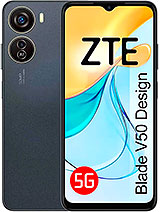
Blade V50 Design
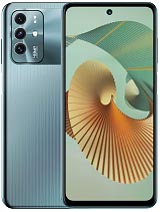
Blade V40

Blade V50 5G

Blade A75 5G
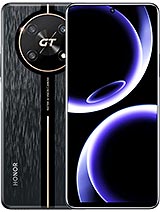
X40 GT Racing