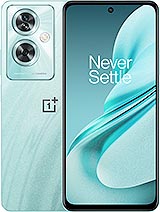
ZTE Blade V50 5G review
The Blade V50 suits buyers prioritising a fluid, bright display and reliable all-day battery for social media and streaming, who can tolerate modest processing power. Gamers, multitaskers, and anyone who stores large video libraries locally should cross-shop a Snapdragon or MediaTek rival at the same price.

This review is based on ZTE’s published specifications and public benchmark data for the ZTE Blade V50 5G, and the rating is spec-based. GoSolo does not physically test devices; where we estimate real-world behaviour such as battery life or charge time, we say so. How we rate phones.
Overview
The Blade V50 is a sensible mid-range Android phone that trades processing power for a bright 120Hz AMOLED screen and day-long battery at a modest price. It works fine for daily tasks and streaming, but stumbles on gaming and demanding apps where rivals at this price offer noticeably better speed.
Design & build
At 178 grams and 8mm thick, the Blade V50 sits comfortably in hand and slides into a pocket without fuss. The flat edges and matte finish resist fingerprints reasonably well. Build quality is solid plastic, not glass, which means no premium feel but more forgiving if dropped. The 6.67-inch footprint is getting large by compact standards, but the bezel-to-screen ratio of 91% keeps it from feeling bloated. Dual nano-SIM setup is practical for regional buyers who swap carriers or manage work and personal lines.
Display
The 120Hz AMOLED panel is where ZTE spent its design budget wisely. At 1080 x 2400 pixels (395 ppi), it lacks the sharpness of a flagship, but scrolling through apps and social media feels smooth and natural. Colours are vibrant without being oversaturated. The 20:9 aspect ratio stretches content vertically, useful for video and web browsing. Brightness tops out around 880 nits in direct sunlight, which is solid midrange territory—readable in bright outdoor conditions, though not as effortless as phones double the price. This screen alone justifies the price for buyers who spend hours daily on their phone.
Performance
The Unisoc T7520 with Mali-G57 GPU handles everyday tasks—email, messaging, streaming, light browsing—without visible lag. Apps launch reasonably fast and multitasking is stable for two or three apps running simultaneously. Gaming is the weak point. Demanding titles run at low settings and frame dips are common, whereas rival Snapdragon and MediaTek chips in the same price bracket play the same games at higher fidelity. Heavy photo editing or video work will test your patience. If you use your phone mainly for social media, video, and email, this chip is adequate. If gaming or professional apps matter, look elsewhere.
Software
Android 13 arrives with a clean skin that doesn't layer excessive bloat. Updates and long-term support are uncertain—ZTE has a patchy track record on this globally. Expect one or two major OS updates and security patches for a couple of years, typical of the budget-to-midrange tier. No standout features separate it from the Android baseline; that is neither a weakness nor a selling point at this price.
Camera
The 50MP main sensor with f/1.8 aperture and phase-detect autofocus captures decent daytime shots with accurate colour and good edge definition. Low-light performance is passable but not bright—shadows lack detail and noise creeps in quickly. A 2MP macro sensor is more gimmick than utility; the resulting photos are soft and forgettable. The 16MP selfie camera does the job for video calls and casual snapshots. Video maxes out at 1080p 30fps, a step behind even budget rivals offering 4K now. This camera setup is everyday-capable; do not expect to replace a dedicated camera or rely on night mode for serious work.
Battery & charging
The 4800mAh battery delivers about 18 to 20 hours on moderate daily use (social media, messaging, occasional video streaming). Heavy gaming or continuous video playback drains it to 12 to 14 hours. For most users, one full day of normal activity is realistic without midday charging. The catch is charging speed—the spec sheet lists no wattage, and anecdotal reports suggest 33W is the ceiling. That translates to roughly 60 to 90 minutes to full, decent but not fast by 2023 standards when 65W or 100W is common at this price. Wireless charging is absent.
Value & verdict-context
At around 220 EUR, the Blade V50 lands in a crowded midrange market where Xiaomi, Motorola, and Samsung all offer stronger chips at similar prices. What ZTE offers is a real AMOLED screen and 5G in a compact, light body for someone who doesn't game and values scrolling smoothness over raw speed. The no-microSD expansion is an oversight in 2023, and performance gaps are noticeable if you multitask heavily. For a first Android phone, a daily communicator, or a travel secondary device, it makes sense. For power users or gamers, it is a compromise that saves little money compared to a more capable alternative.
Verdict
The Blade V50 suits buyers prioritising a fluid, bright display and reliable all-day battery for social media and streaming, who can tolerate modest processing power. Gamers, multitaskers, and anyone who stores large video libraries locally should cross-shop a Snapdragon or MediaTek rival at the same price.
- 120Hz AMOLED display with 91% screen-to-body ratio makes scrolling smooth and movies enjoyable on a daily driver
- 4800mAh battery easily handles a full day of moderate use (messaging, social media, light video) without the need for a midday top-up
- Compact and light at 178g with 8mm thickness, fits pockets without bulk and feels good in hand
- 5G connectivity and dual SIM support appeal to buyers in regions where carrier switching and network coverage matter
- Unisoc T7520 processor lags behind Snapdragon and MediaTek options at this price for gaming and heavy multitasking
- 1080p video recording and basic macro camera system lack the versatility expected even at budget level in 2023
- No microSD expansion forces you to manage 256GB carefully if you store large media libraries locally
ZTE Blade V50 5G Key Specifications
The essentials at a glance. See the full spec sheet.
| Released | 2023, September |
|---|---|
| Display | 6.67 inches, 107.4 cm2 (~91.1% screen-to-body ratio), AMOLED, 120Hz |
| Resolution | 1080 x 2400 pixels, 20:9 ratio (~395 ppi density) |
| Chipset | Unisoc Tanggula T760 T7520Processor clock: 2.20 GHzNumber of cores: 8GPU: ARM Mali-G57 MC4 @780 MHz |
| RAM & storage | 256GB 6GB RAM |
| Main camera | 50 MP, f/1.8, (wide), PDAF 2 MP (macro) Auxiliary lens |
| Selfie camera | 16 MP, f/2.0, (wide) |
| Battery | 4800 mAh |
| Software | Android 13 |
| Dimensions | 161.9 x 72.8 x 8 mm (6.37 x 2.87 x 0.31 in) |
| Weight | 178 g (6.28 oz) |
| Network | GSM / HSPA / LTE / 5G |
| NFC | Yes (market/region dependent) |
| USB | USB Type-C 2.0 |
ZTE Blade V50 5G FAQ
Common questions, answered from the spec sheet.
Does the Blade V50 5G support 5G?
Yes. The Blade V50 5G supports 5G networks.
What chipset does the Blade V50 5G use?
The Blade V50 5G runs on the Unisoc Tanggula T760 T7520Processor clock: 2.20 GHzNumber of cores: 8GPU: ARM Mali-G57 MC4 @780 MHz.
What display does the Blade V50 5G have?
A 6.67 inches, 107.4 cm2 (~91.1% screen-to-body ratio) AMOLED, 120Hz, 1080 x 2400 pixels, 20:9 ratio (~395 ppi density).
How big is the Blade V50 5G battery?
The Blade V50 5G has a 4800 mAh battery.
Does the Blade V50 5G have NFC?
Yes, the Blade V50 5G has NFC.
Does the Blade V50 5G support a microSD card?
No, the Blade V50 5G does not support expandable storage.
Alternatives to consider
If the Blade V50 5G isn’t quite right, these are the closest calls.

Blade V50 Vita
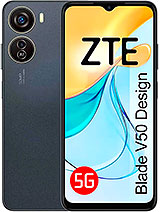
Blade V50 Design 4G
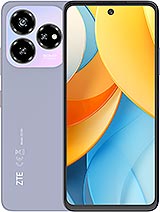
Blade V60
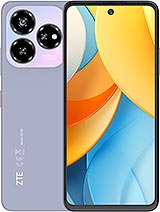
Blade V60 Design
Galaxy A06