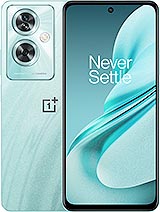
ZTE Blade V50 Vita review
The Blade V50 Vita suits someone in a price-sensitive market who needs all-day battery, a large screen for browsing, and storage room, and does not care about gaming or photo quality. Anyone who does photo work, plays games, or lives where €150 phones with sharper displays exist should skip it."
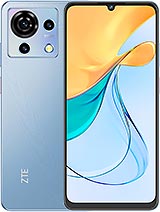
This review is based on ZTE’s published specifications and public benchmark data for the ZTE Blade V50 Vita, and the rating is spec-based. GoSolo does not physically test devices; where we estimate real-world behaviour such as battery life or charge time, we say so. How we rate phones.
Overview
The ZTE Blade V50 Vita is a large-screen budget phone built for all-day texting and social media on a shoestring budget, with a 5200mAh battery and clean Android 13. The Unisoc T606 chipset and 4GB RAM handle casual use smoothly but stall under gaming or heavy multitasking, and the 720p display's low pixel density makes it hard to read outdoors.
Design & Build
The Blade V50 Vita is a straightforward slab of plastic at 204g and 8.3mm thick. For a 6.75-inch display, the weight is reasonable and it feels sturdy enough in hand, though there is nothing refined about it. The dual-SIM setup and side-mounted fingerprint reader are sensible for the market, and the headphone jack and microSD slot show ZTE is still catering to users who need expandable storage and wired audio. The design is honest: this is not trying to mimic glass or metal flagships, just be a workhorse.
Display
The 6.75-inch IPS LCD with 90Hz refresh is roomy and scrolls fluidly, a real strength for a phone at this price. The problem is the 720p resolution crammed into that size: 260 ppi density means text and icons are visibly pixelated up close, and reading anything small requires squinting. Outdoor brightness is unstated in the spec sheet, and IPS panels of this vintage are typically dim in direct sunlight. For browsing social media and watching video, the size and refresh rate deliver, but fine-print reading and photo detail will disappoint. Buyers who care about sharpness should look elsewhere.
Performance
The Unisoc T606 and 4GB RAM are entry-level silicon. Calling, messaging, web browsing, and light social media apps run without stutter on Android 13. Demanding 3D games, video editing, and switching between many apps at once will slow it down noticeably. This is not a chip for multitasking heavyweights or anyone who treats their phone as a portable gaming device. For the use case—texting, calls, YouTube, Instagram—it is adequate and does not feel laggy. But there is no headroom, and demanding software updates will squeeze performance over time.
Software
Android 13 is current and receives standard security patches from ZTE, though update cadence is slower than at flagship brands. The UI is clean and bloatware is light, which is a real relief at this price point. Custom skins can bloat budget phones, but ZTE's approach here keeps things snappy relative to the hardware. Users should not expect Android 15 or beyond; this phone will likely max out at Android 14.
Camera
The 50MP main sensor with PDAF does decent work in daylight, capturing fine detail and handling close subjects well thanks to the autofocus. The 2MP macro and depth cameras are cosmetic additions that do not materially improve shots. In low light, the sensor's smaller pixel size means images turn soft and grainy—a weakness for a 50MP sensor that could have benefited from larger pixels for better light gathering. Video tops out at 1080p 30fps, which is passable but behind rivals that now offer 1080p 60fps or 4K. The 8MP selfie is ordinary. This is a daytime camera; do not expect clean night shots or cinematic video.
Battery & Charging
The 5200mAh battery delivers about one full day of mixed use—calls, messages, social media, light video—on a single charge, maybe reaching into a second day if usage is very light. That is solid for the chipset's efficiency and the 90Hz display. Charging at 18W takes roughly 2 to 2.5 hours from empty, which is slow by modern standards but not shocking for this tier. There is no wireless charging or fast-charging technology, so you are tethered to the cable for a while. For a phone marketed toward people on tight budgets, all-day stamina matters more than speed, and the V50 Vita delivers.
Value & Verdict Context
At around €110, the ZTE Blade V50 Vita occupies a crowded budget segment. The main appeal is the large 90Hz display, microSD expansion, headphone jack, and headroom in storage (256GB is generous at this price). The main cost is display sharpness, gaming performance, and camera versatility. Buyers in developing markets where durability and calling are priorities will find a competent daily driver. Anyone in a region with stronger phone competition—where €150 to €180 rivals offer sharper displays, faster chips, and better cameras—should shop around. This phone is not worth it for streaming, gaming, or photography, but for messaging and browsing, it is honest value.
Verdict
The Blade V50 Vita suits someone in a price-sensitive market who needs all-day battery, a large screen for browsing, and storage room, and does not care about gaming or photo quality. Anyone who does photo work, plays games, or lives where €150 phones with sharper displays exist should skip it."
- Large 6.75-inch 90Hz display is smooth and roomy for a budget phone
- All-day battery life on 5200mAh is reliable for the chipset and use case
- 256GB storage plus microSD slot gives real expandability, rare at this price
- Headphone jack and clean Android 13 with minimal bloat
- 720p resolution on 6.75 inches makes text and icons pixelated; outdoor readability is poor
- Unisoc T606 has no headroom for gaming, video editing, or heavy multitasking
- 18W charging is slow, taking 2 to 2.5 hours; low-light camera results are soft and grainy
ZTE Blade V50 Vita Key Specifications
The essentials at a glance. See the full spec sheet.
| Released | 2023, September |
|---|---|
| Display | 6.75 inches, 110.0 cm2 (~86.5% screen-to-body ratio), IPS LCD, 90Hz |
| Resolution | 720 x 1600 pixels, 20:9 ratio (~260 ppi density) |
| Chipset | Unisoc T606 (12 nm) |
| RAM & storage | 256GB 4GB RAM |
| Main camera | 50 MP, (wide), PDAF 2 MP (macro) Auxiliary lens |
| Selfie camera | 8 MP, (wide) |
| Battery | 5200 mAh |
| Charging | 18W wired |
| Software | Android 13 |
| Dimensions | 167.4 x 76 x 8.3 mm (6.59 x 2.99 x 0.33 in) |
| Weight | 204 g (7.20 oz) |
| Network | GSM / HSPA / LTE |
| NFC | Yes (market/region dependent) |
| USB | USB Type-C 2.0 |
ZTE Blade V50 Vita FAQ
Common questions, answered from the spec sheet.
Does the Blade V50 Vita support 5G?
No. The Blade V50 Vita tops out at GSM / HSPA / LTE, without 5G.
What chipset does the Blade V50 Vita use?
The Blade V50 Vita runs on the Unisoc T606 (12 nm).
What display does the Blade V50 Vita have?
A 6.75 inches, 110.0 cm2 (~86.5% screen-to-body ratio) IPS LCD, 90Hz, 720 x 1600 pixels, 20:9 ratio (~260 ppi density).
How big is the Blade V50 Vita battery?
The Blade V50 Vita has a 5200 mAh battery. Charging is rated at 18W wired.
Does the Blade V50 Vita have NFC?
Yes, the Blade V50 Vita has NFC.
Does the Blade V50 Vita support a microSD card?
Yes, the Blade V50 Vita supports expandable storage (microSDXC).
Does the Blade V50 Vita have a headphone jack?
Yes, the Blade V50 Vita has a 3.5mm headphone jack.
Alternatives to consider
If the Blade V50 Vita isn’t quite right, these are the closest calls.
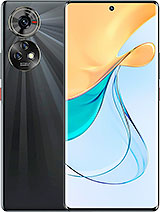
Blade V50 5G
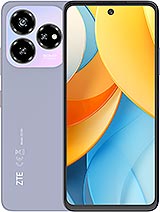
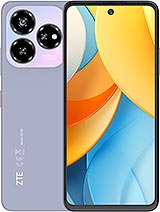
Blade V60
Blade V60 Design
Blade V70 Design
Galaxy A06