ZTE Blade V60 review
This phone suits people who value battery life and storage flexibility over display quality and performance, and who are happy to trade sharpness and smoothness for a phone that lasts two days without a charger. Anyone who spends time gaming, editing photos, or scrolling through high-resolution content should look elsewhere—the 720p screen and entry-level chip will frustrate you fast.
This review is based on ZTE’s published specifications and public benchmark data for the ZTE Blade V60, and the rating is spec-based. GoSolo does not physically test devices; where we estimate real-world behaviour such as battery life or charge time, we say so. How we rate phones.
Overview
The Blade V60 is a large, light phone built for all-day battery life and expandable storage at a budget price. It's honest about what it is: a no-frills workhorse with a low-res screen, entry-level chip, and 1080p video that does the basics well enough without pretending to be anything more.
Design & build
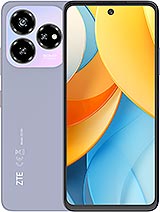
At 198 grams and 8.6mm thick, the Blade V60 sits at the lighter end for its screen size, which matters for extended one-handed use. The glass front and back with a plastic frame is standard budget fare—not durable but not flimsy. The phone feels compact enough for a 6.6-inch device, and the side-mounted fingerprint sensor is practical. Dual Nano-SIM slots add flexibility for work and travel, though the microSD slot shares the tray, forcing a choice between a second SIM and extra storage on some units.
Display
The 6.6-inch IPS LCD is where budget reality hits. At 720 x 1612 pixels and 267 ppi, it's noticeably soft for reading text, browsing fine details, or viewing photos—you can see individual pixels if you look. The 20:9 ratio is tall and useful for video and reading, but 90Hz on this resolution doesn't fix the underlying sharpness gap. Rivals at this price now often start at 1080p, and ZTE's choice to skimp here is a real step down. The upside is that a lower resolution screen sips power, directly feeding into the battery story.
Performance
The Unisoc T606 is an entry-level chip for 2024. It handles everyday tasks—messaging, social media, light browsing, YouTube—without strain. The 4GB or 6GB RAM variants make a real difference here: 4GB will feel cramped if you jump between several apps, while 6GB keeps things moving. Demanding games or heavy photo editing will slow you down noticeably. Video editing and multitasking-heavy workflows are not this phone's lane. For casual users and people who value battery life over speed, this is fine. Anything beyond that and you're fighting the hardware.
Camera
The 50MP main sensor with f/1.8 aperture and phase-detect autofocus is the phone's strength. In bright light, photos are sharp and color-accurate, and PDAF means faster focus than a budget phone of a few years ago. Low-light performance is decent for the class—the wide aperture helps, though noise starts creeping in past ISO 1000. The 8MP selfie camera is basic but adequate for video calls. The real limitation is 1080p video at 30fps: it's acceptable for social media but feels dated next to even mid-range competitors now shooting 4K. If you're mostly shooting stills, this camera punches above its price.
Battery & charging
The 5000 mAh battery is the phone's biggest draw. Combined with a 720p screen and an efficient chip, you'll stretch comfortably to 1.5 to 2 days of mixed use—light to moderate browsing, calls, messaging, some video. Heavy use of video or gaming will trim that, but even then you're looking at a full day plus. The spec sheet lists no fast charging figure, which hints at slower charging speeds typical of budget ZTE phones; expect a full charge in roughly 2 to 3 hours from a 10-15W charger. For the global south, where charging access is often limited and power costs matter, this battery life is a real asset.
Software
Android 13 out of the box is respectable for a mid-2024 budget phone, though don't expect rapid updates. ZTE's skin is light and doesn't bog things down. The side-mounted fingerprint sensor works quickly and reliably. Overall, software doesn't stand out or disappoint—it's stock Android with minor tweaks, which is fine at this price.
Value & verdict
At around 110 EUR, the Blade V60 is positioned squarely for buyers who prioritize battery endurance, storage flexibility, and sheer screen size over display sharpness and raw speed. It's not a flagship killer or a hidden gem; it's an honest budget phone. You get what you pay for: a device that works, lasts long, and doesn't try to punch above its weight. The 720p screen is the trade-off worth noting—for the same money, some rivals offer sharper displays. But if you spend most of your time on YouTube, messaging, and email, and you value not charging every day, this phone delivers. It's a phone for people who use phones, not enthusiasts who obsess over them.
Verdict
This phone suits people who value battery life and storage flexibility over display quality and performance, and who are happy to trade sharpness and smoothness for a phone that lasts two days without a charger. Anyone who spends time gaming, editing photos, or scrolling through high-resolution content should look elsewhere—the 720p screen and entry-level chip will frustrate you fast.
- 5000 mAh battery and modest display mean genuinely long battery life—likely 1.5 to 2 days of mixed use before charging
- Large 6.6-inch screen and light 198g weight make it comfortable to hold for hours without fatigue
- Dual SIM, microSD slot, FM radio, and 256GB built-in storage give real practical flexibility for travelers and offline users
- 50MP main camera with f/1.8 aperture and PDAF performs competently in daylight and low light for a budget phone
- 720p resolution on a 6.6-inch display (267 ppi) leaves text and images visibly soft compared to rivals at this price
- Unisoc T606 chip and up to 6GB RAM handle apps and video fine but will choke on demanding games or heavy multitasking
- 90Hz display on paper doesn't redeem the low pixel density, and scrolling still won't feel as smooth as mid-range phones from the past two years
ZTE Blade V60 Key Specifications
The essentials at a glance. See the full spec sheet.
| Released | 2024, June 11 |
|---|---|
| Display | 6.6 inches, 104.6 cm2 (~84.6% screen-to-body ratio), IPS LCD, 90Hz |
| Resolution | 720 x 1612 pixels, 20:9 ratio (~267 ppi density) |
| Chipset | Unisoc T606 (12 nm) |
| RAM & storage | 256GB 4GB RAM, 256GB 6GB RAM |
| Main camera | 50 MP, f/1.8, (wide), PDAF Auxiliary lens |
| Selfie camera | 8 MP, f/2.0, (wide) |
| Battery | 5000 mAh |
| Software | Android 13 |
| Dimensions | 164.2 x 75.3 x 8.6 mm (6.46 x 2.96 x 0.34 in) |
| Weight | 198 g (6.98 oz) |
| Build | Glass front, glass back, plastic frame |
| Network | GSM / HSPA / LTE |
| NFC | Yes (market/region dependent) |
| USB | USB Type-C 2.0 |
ZTE Blade V60 FAQ
Common questions, answered from the spec sheet.
Does the Blade V60 support 5G?
No. The Blade V60 tops out at GSM / HSPA / LTE, without 5G.
What chipset does the Blade V60 use?
The Blade V60 runs on the Unisoc T606 (12 nm).
What display does the Blade V60 have?
A 6.6 inches, 104.6 cm2 (~84.6% screen-to-body ratio) IPS LCD, 90Hz, 720 x 1612 pixels, 20:9 ratio (~267 ppi density).
How big is the Blade V60 battery?
The Blade V60 has a 5000 mAh battery.
Does the Blade V60 have NFC?
Yes, the Blade V60 has NFC.
Does the Blade V60 support a microSD card?
Yes, the Blade V60 supports expandable storage (microSDXC (uses shared SIM slot)).
Alternatives to consider
If the Blade V60 isn’t quite right, these are the closest calls.

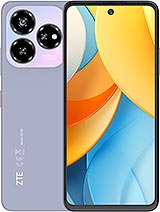
Blade V60 Smart
Blade V60 Design
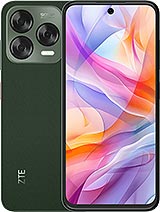
Blade V70 Design
Blade V70 Max
Galaxy M06 5G