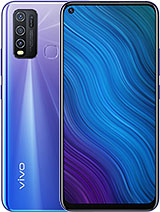
ZTE Blade V60 Design review
This phone suits buyers in LTE-only regions who value battery life and a headphone jack, and who use the phone for messaging, social media, and light browsing. Anyone prioritising speed, screen sharpness, or faster charging should spend a little more; the €20–30 premium elsewhere in the market pays real dividends here.
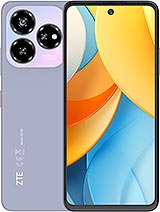
This review is based on ZTE’s published specifications and public benchmark data for the ZTE Blade V60 Design, and the rating is spec-based. GoSolo does not physically test devices; where we estimate real-world behaviour such as battery life or charge time, we say so. How we rate phones.
Overview
The Blade V60 Design is a €110 entry-level phone with a large 5000 mAh battery and headphone jack, but the 720p display looks soft and the Unisoc T606 chip struggles with anything beyond light browsing and messaging. It's honest budget work: you get longevity on a charge and no frills on the price, but processing power and screen quality lag behind rivals in the same range.
Design & build
The Blade V60 Design is a straightforward bar of plastic and glass: glass front and back, plastic frame, 198 grams, 8.6 mm thick. That weight is middle-of-the-road for a 6.6-inch phone, and the thinness sits in the comfortable zone where it doesn't feel cheap but doesn't make a fuss either. The dual nano-SIM slot and microSDXC expansion (sharing a slot with one SIM) are practical touches for users juggling multiple numbers or needing more than 256 GB. Three colours—Dark Blue, Champagne Gold, Sunrise Violet—are inoffensive. It's a phone that does not pretend to be anything other than what it costs.
Display
A 6.6-inch, 90 Hz IPS LCD at 720p sounds generous on paper until you hold it: 267 ppi means text and icons are visibly chunky at a normal reading distance. Photos and video look soft-edged compared to phones costing €20 or €30 more. The 90 Hz refresh does make scrolling feel smoother than a typical budget display locked at 60 Hz, which is where the small wins come from. The 84.6% screen-to-body ratio is solid. For messaging and social media, where most users spend their time, the screen is fine; anyone reading a lot of small text or looking at detail shots will notice the pixelation.
Performance
The Unisoc T606 paired with 4 GB or 6 GB of RAM is entry-level by design. Everyday tasks—messaging, browsing, social media, email—run without noticeable lag. Multitasking between a few apps feels stable. Heavy games will stutter, and demanding apps like video editors or large spreadsheets will slow down. The gap between this chipset and what rivals offer at the same price is real; the T606 is two generations behind what many €110 phones use now. If your day is light and routine, it will not hold you back. If you push it, you will feel the limits.
Software
Android 13 ships on the phone; ZTE's own customisation layer is light, which is refreshing. Updates will depend on regional support, and ZTE's track record on long-term commitments is spotty. For a phone at this price, the OS is clean enough to use without frustration, though longevity beyond two years is uncertain.
Camera
The 50 MP main sensor with f/1.8 aperture and PDAF sounds capable, and in daylight it does fine—detail is there, colours are generally accurate, and the wide aperture helps in moderate indoor light. The catch is that video stops at 1080p at 30 fps, and there is no optical zoom, no ultra-wide lens, no macro mode. The 8 MP selfie camera is adequate for video calls. In short: straightforward daylight photography works, but versatility and motion capture are limited. Video on most social platforms will look soft compared to 4 K clips.
Battery & charging
The 5000 mAh battery is one of the phone's genuine draws. With moderate daily use—browsing, messaging, a couple of hours of video—expect to need a charge every 1.5 to 2 days. Heavy streaming or gaming will eat into that. The 22.5 W charging speed is where ambition runs out: a full charge from empty takes roughly 90 to 120 minutes, which is slower than most rivals at this price point now hitting 65 W or more. You are trading charging speed for battery size, which is a trade some users accept and others resent.
Connectivity & value
There is no 5G here, just LTE, which matters if you live in a region rolling out 5G—file downloads and video streaming will be noticeably slower than on newer phones. Wi-Fi 5 is standard, Bluetooth 5.2 is current, and the headphone jack is a real plus for anyone with wired earbuds or headphones. NFC is present (region dependent). At roughly €110, the Blade V60 Design undercuts many rivals, but not by much. The question is not whether it is cheap; it is whether you would rather spend an extra €20 to €30 for faster charging, a better display, or a newer chip. For buyers in markets without 5G, or those who prioritise battery longevity and no fuss, the answer might be no. For everyone else, the gaps start to feel real.
Verdict
This phone suits buyers in LTE-only regions who value battery life and a headphone jack, and who use the phone for messaging, social media, and light browsing. Anyone prioritising speed, screen sharpness, or faster charging should spend a little more; the €20–30 premium elsewhere in the market pays real dividends here.
- 5000 mAh battery stretches to 1.5–2 days on moderate use, a genuine advantage over smaller rivals
- Headphone jack and FM radio are rare at this price, useful if you rely on wired audio
- 90 Hz display refresh smooths scrolling compared to standard 60 Hz budget phones
- microSDXC expansion and dual SIM are practical for users who need them
- 720p display at 6.6 inches is visibly soft; text and photos look pixelated next to competitors at the same price
- 22.5 W charging is slow; rivals now push 65–100 W, meaning this phone takes 90+ minutes for a full charge
- Unisoc T606 is two generations behind current entry-level chips, noticeably slower in demanding apps or heavy multitasking
ZTE Blade V60 Design Key Specifications
The essentials at a glance. See the full spec sheet.
| Released | 2024, June 11 |
|---|---|
| Display | 6.6 inches, 104.6 cm2 (~84.6% screen-to-body ratio), IPS LCD, 90Hz |
| Resolution | 720 x 1612 pixels, 20:9 ratio (~267 ppi density) |
| Chipset | Unisoc T606 (12 nm) |
| RAM & storage | 256GB 4GB RAM, 256GB 6GB RAM |
| Main camera | 50 MP, f/1.8, (wide), PDAF Auxiliary lens |
| Selfie camera | 8 MP, f/2.0, (wide) |
| Battery | 5000 mAh |
| Charging | 22.5W wired |
| Software | Android 13 |
| Dimensions | 164.2 x 75.3 x 8.6 mm (6.46 x 2.96 x 0.34 in) |
| Weight | 198 g (6.98 oz) |
| Build | Glass front, glass back, plastic frame |
| Network | GSM / HSPA / LTE |
| NFC | Yes (market/region dependent) |
| USB | USB Type-C 2.0 |
ZTE Blade V60 Design FAQ
Common questions, answered from the spec sheet.
Does the Blade V60 Design support 5G?
No. The Blade V60 Design tops out at GSM / HSPA / LTE, without 5G.
What chipset does the Blade V60 Design use?
The Blade V60 Design runs on the Unisoc T606 (12 nm).
What display does the Blade V60 Design have?
A 6.6 inches, 104.6 cm2 (~84.6% screen-to-body ratio) IPS LCD, 90Hz, 720 x 1612 pixels, 20:9 ratio (~267 ppi density).
How big is the Blade V60 Design battery?
The Blade V60 Design has a 5000 mAh battery. Charging is rated at 22.5W wired.
Does the Blade V60 Design have NFC?
Yes, the Blade V60 Design has NFC.
Does the Blade V60 Design support a microSD card?
Yes, the Blade V60 Design supports expandable storage (microSDXC (uses shared SIM slot)).
Does the Blade V60 Design have a headphone jack?
Yes, the Blade V60 Design has a 3.5mm headphone jack.
Alternatives to consider
If the Blade V60 Design isn’t quite right, these are the closest calls.
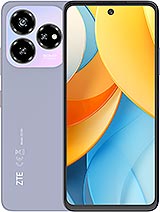
Blade V60
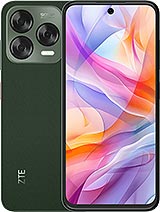
Blade V70 Design

Blade V60 Smart
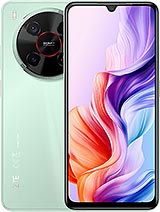
Blade V70 Max
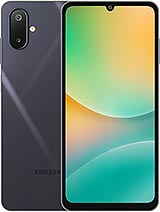
Galaxy M06 5G