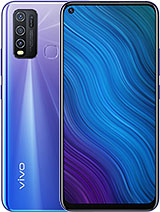
ZTE Blade V70 Design review
The Blade V70 Design suits buyers in cost-conscious markets who need all-day battery and a big screen for video and messaging, and who do not mind soft text or frame drops in games. Anyone expecting sharp visuals, quick performance, or fast charging should look elsewhere in the same price range.
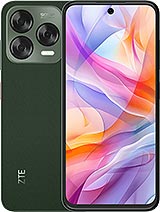
This review is based on ZTE’s published specifications and public benchmark data for the ZTE Blade V70 Design, and the rating is spec-based. GoSolo does not physically test devices; where we estimate real-world behaviour such as battery life or charge time, we say so. How we rate phones.
Overview
The Blade V70 Design is a value phone built around a 6.7-inch screen and 5000 mAh battery, trading sharp detail and brisk performance for size and endurance at €110. It suits buyers in cost-conscious markets who need a phone that lasts and screens, not one that races or impresses with cameras.
Design & build
At 206 grams and 8.2 mm thick, the Blade V70 Design is genuinely slim and light for a phone this size. The glass front and eco-leather back feel okay in hand, though the plastic frame betrays its budget. The thinness is a choice, not a flaw, but it means less rigidity and a softer display panel that picks up fingerprints easily. For this price and market, the trade-off of durability for thinness and weight is sensible; just don't expect it to survive drops without a case.
Display
The 6.7-inch IPS LCD is big and bright enough for everyday use, and 120Hz scrolling feels smooth and helps mask the low resolution. But 264 ppi across 720 pixels is visibly soft. Text at reading distance looks fuzzy, app icons lack crispness, and anything with fine detail suffers. A 1080p panel is now the floor at €110, so this is a real step backward compared to direct rivals. The 120Hz does help, and the large size suits video and messaging, but you will notice the softness within a week.
Performance
The Unisoc T606 is entry-level silicon and behaves like it. Messaging, social media, light browsing, and video playback work without complaint. Multitasking is fine as long as you are not juggling ten apps. But demanding mobile games show stuttering and frame drops, and opening a dozen Chrome tabs at once will cause visible lag. This is not a phone for users who game regularly or work heavily on their device. For simple daily tasks it is passable; for anything more, you will notice the limits quickly.
Software
Android 14 is current and the software should stay supported for a reasonable stretch. ZTE's skin is light enough not to bog things down, which helps on modest hardware. Nothing stands out, but nothing feels bloated either.
Camera
The 50 MP sensor with f/1.8 aperture and autofocus captures decent detail in good light and keeps low-light shots acceptably clear, a genuine strength for the price. 1080p video at 30 fps is entry-level, not a drawback unique to this phone. The 16 MP selfie is adequate. Do not expect range, computational trickery, or macro magic. What you get is a competent main camera that works in most conditions without the computational crutches found in higher tiers.
Battery & charging
The 5000 mAh battery is the phone's strongest card. On moderate daily use—calls, messaging, browsing—it easily stretches past 24 hours. Heavy video streaming drains it in under a day, but the baseline is generous. 22.5W charging, however, is slow by current standards. Rivals at €80 to €120 offer 60W or faster, so the 60 to 90 minute fill time is a real friction point if you need quick top-ups. The upside is lower heat during charging and less stress on the battery over time, but this is cold comfort if you are in a hurry.
Value & verdict
At €110, the Blade V70 Design is aimed squarely at buyers who prioritize battery life and screen space over processing power or image quality. It is competitive for its price in markets where LTE-only connectivity and a large display matter more than 5G and pixel density. The low resolution and weak processor are the real costs of admission. Compared to rivals in the same tier, it is not obviously the better choice, but it is not a trap either. It serves a simple, honest function: a phone that works for a day and does not demand much money.
Verdict
The Blade V70 Design suits buyers in cost-conscious markets who need all-day battery and a big screen for video and messaging, and who do not mind soft text or frame drops in games. Anyone expecting sharp visuals, quick performance, or fast charging should look elsewhere in the same price range.
- 5000 mAh battery easily lasts a full day of moderate use and beats the charge-multiple-times-daily routine at this price
- 6.7-inch screen with 120Hz refresh gives a spacious canvas for video and messaging, a real step up from smaller budget phones
- Bright f/1.8 main camera captures usable low-light shots and holds detail in daylight better than the sensor size alone suggests
- Dual SIM and microSD slot remain practical for markets where dual carriers or storage expansion still matter
- 720p resolution at 6.7 inches leaves text and icons visibly soft; a 1080p panel is now standard even at €100
- Unisoc T606 struggles visibly with demanding games and heavy multitasking, lagging behind the Snapdragon 4-series rivals at the same price
- 22.5W charging is slow by 2024 standards; competitors offer 60W+ and still cost less
ZTE Blade V70 Design Key Specifications
The essentials at a glance. See the full spec sheet.
| Released | 2024, November 22 |
|---|---|
| Display | 6.7 inches, 107.8 cm2 (~84.4% screen-to-body ratio), IPS LCD, 120Hz |
| Resolution | 720 x 1612 pixels, 20:9 ratio (~264 ppi density) |
| Chipset | Unisoc T606 (12 nm) |
| RAM & storage | 256GB 4GB RAM, 256GB 8GB RAM |
| Main camera | 50 MP, f/1.8, (wide), PDAF Auxiliary lens |
| Selfie camera | 16 MP |
| Battery | 5000 mAh |
| Charging | 22.5W wired |
| Software | Android 14 |
| Dimensions | 165.8 x 77.1 x 8.2 mm (6.53 x 3.04 x 0.32 in) |
| Weight | 206 g (7.27 oz) |
| Build | Glass front, plastic frame, glass back or silicone polymer (eco leather) back |
| Network | GSM / HSPA / LTE |
| NFC | Yes (market/region dependent) |
| USB | USB Type-C 2.0 |
ZTE Blade V70 Design FAQ
Common questions, answered from the spec sheet.
Does the Blade V70 Design support 5G?
No. The Blade V70 Design tops out at GSM / HSPA / LTE, without 5G.
What chipset does the Blade V70 Design use?
The Blade V70 Design runs on the Unisoc T606 (12 nm).
What display does the Blade V70 Design have?
A 6.7 inches, 107.8 cm2 (~84.4% screen-to-body ratio) IPS LCD, 120Hz, 720 x 1612 pixels, 20:9 ratio (~264 ppi density).
How big is the Blade V70 Design battery?
The Blade V70 Design has a 5000 mAh battery. Charging is rated at 22.5W wired.
Does the Blade V70 Design have NFC?
Yes, the Blade V70 Design has NFC.
Does the Blade V70 Design support a microSD card?
Yes, the Blade V70 Design supports expandable storage (microSDXC (uses shared SIM slot)).
Does the Blade V70 Design have a headphone jack?
Yes, the Blade V70 Design has a 3.5mm headphone jack.
Alternatives to consider
If the Blade V70 Design isn’t quite right, these are the closest calls.
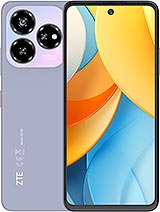
Blade V60 Design
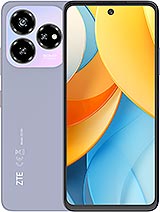
Blade V60

Blade V60 Smart
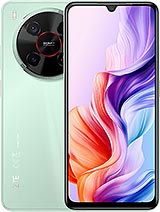
Blade V70 Max
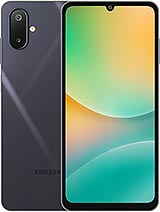
Galaxy M06 5G