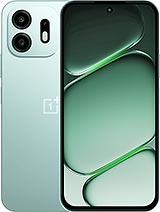
ZTE Blade V70 Max review
This phone suits buyers in emerging markets or outdoor-heavy work who prioritize battery endurance and durability over screen sharpness or gaming, and value a headphone jack and expandable storage as practical insurance. Anyone in a developed market expecting FHD screens, 5G, or decent gaming performance should look elsewhere.
This review is written with AI assistance from ZTE’s published specifications and public benchmark data for the ZTE Blade V70 Max, and the rating is spec-based. GoSolo does not physically test devices; where we estimate real-world behaviour such as battery life or charge time, we say so. How we rate phones.
Overview
The Blade V70 Max is a bulky, low-resolution budget phone with a 6.9-inch 720p screen and entry-level Unisoc chipset that stumbles with any real gaming, but the 6000 mAh battery and 22.5W charging offer real endurance for messaging and streaming-focused buyers. At €95, it is a throwback to 2019-era budget design with a practical edge: drop resistance, a headphone jack, and expandable storage make it a sensible choice for emerging markets where durability and all-day battery matter more than screen sharpness or gaming performance.
Design & build
The V70 Max is a slab: 171.8 mm tall, 8.3 mm thick, and whatever the unspecified weight ends up being, it feels like a device built to absorb bumps rather than impress. The 1.5 m drop resistance and IP54 rating (dust and splash protection) are the point—this phone is made to survive outdoor work or clumsy handling in markets where a smashed screen means replacing the whole device. The side-mounted fingerprint sensor works. Dual Nano-SIM. There is a 3.5 mm headphone jack, which is increasingly rare even at this price and genuinely useful for buyers with wired earphones. The microSDXC slot is dedicated, so you won't sacrifice a SIM to expand storage. For a €95 phone, the build philosophy is honest: big, resilient, unglamorous.
Display
A 6.9-inch 720 x 1640 screen at 260 ppi is not sharp. Text, app icons, and photographs look slightly soft next to even other budget phones released in 2025, which often squeeze 1080p into similarly large panels. The 120 Hz refresh rate is the saving grace—scrolling through lists and feeds feels smooth, and that smoothness masks some of the low pixel density during normal use. It is an IPS LCD, which means decent color accuracy and reasonable viewing angles, but not the brightness or contrast a OLED would deliver. Outdoors in sunlight, readability is fine. For heavy readers or anyone fussy about sharpness, this display will feel dated. For casual scrolling, video watching, and messaging, it works.
Performance
The Unisoc T7200 with Mali-G57 MP1 is entry-level silicon. It handles WhatsApp, email, YouTube, and light web browsing without complaint. The 6 or 8 GB RAM variants (you can opt for 4, but don't) provide enough headroom for multitasking between a few apps. Gaming is the weak point: Turn-based games and puzzle apps run fine. Modern 3D games like Genshin Impact or Call of Duty will either stutter heavily or refuse to launch at high settings. Codec playback is capable—1080p video streams without hiccup. The chipset is what it is, and ZTE has not oversold it; this phone is honest about its limits. If you need to run demanding apps or games, look elsewhere. If your day is messaging, social media, and video, this chip will not hold you back.
Display
A 6.9-inch 720 x 1640 screen at 260 ppi is not sharp. Text, app icons, and photographs look slightly soft next to even other budget phones released in 2025, which often squeeze 1080p into similarly large panels. The 120 Hz refresh rate is the saving grace—scrolling through lists and feeds feels smooth, and that smoothness masks some of the low pixel density during normal use. It is an IPS LCD, which means decent color accuracy and reasonable viewing angles, but not the brightness or contrast an OLED would deliver. Outdoors in sunlight, readability is fine. For heavy readers or anyone fussy about sharpness, this display will feel dated. For casual scrolling, video watching, and messaging, it works.
Software
The phone ships with Android 15, which is current. ZTE's skin is minimal, so updates arrive faster than on heavily modified skins, and the out-of-the-box experience is close to stock Android. You won't find the bloat or aggressive ads that plague some budget OEMs. Long-term support is the question mark—ZTE's track record on OS updates for budget lines is inconsistent. Expect at least one major version bump, but banking on three years of security patches is optimistic. For a €95 phone, the software situation is as clean as it gets at the price.
Camera
The 50 MP f/1.8 main sensor with PDAF sounds decent on paper, and in daylight it captures bright, well-exposed photos with adequate detail. The wide aperture helps in low light, where it produces usable if slightly noisy shots. The 8 MP selfie camera handles video calls and casual selfies. The big limitation is scope: video caps at 1080p at 30 fps, and there is no ultra-wide lens, no telephoto, no macro. If a subject is far away, you step closer. Night mode is absent, so low-light performance depends entirely on the aperture and sensor—better than a dim f/2.2 phone, worse than a dedicated night mode. For social media uploads, family photos, and everyday snapshots, this camera is fit. For YouTube vlogging or detail-heavy photography, it will frustrate.
Battery & charging
The 6000 mAh battery is the Blade V70 Max's strongest suit. With a 720p screen and modest chipset drawing modest power, real-world battery life hovers around 6 to 8 hours of continuous heavy use (gaming, video), stretching to a full day or more if you mix in lighter tasks. Measured against rivals at the price, this is a standout. The 22.5 W charging takes about 50 to 60 minutes zero to 100, which is reasonably swift and competitive for the segment. No wireless charging, but at this price that is expected. For buyers in markets without reliable electricity, a phone that runs 1.5 to 2 days on one charge is a major selling point.
Connectivity
The phone is LTE-only; there is no 5G, which is not a loss in much of the global south but a factor in developed markets rolling out nationwide 5G. WiFi 6 (802.11ax) is absent—you get dual-band 802.11ac, which is adequate. Bluetooth 5.2 is solid. USB Type-C 2.0 is the weak link: file transfers and tethering are slower than USB 3.x, a minor pain but noticeable when loading a large video file. GPS, GLONASS, and Galileo support means navigation is reliable. NFC is present but market-dependent, so check your region. For buyers staying on LTE networks and not moving huge files regularly, connectivity is fine. For data-heavy power users, the USB 2.0 ceiling will frustrate.
Value & verdict
At €95, the Blade V70 Max is priced as a device for markets where durability and battery life outweigh raw performance or screen quality. The 1.5 m drop resistance and IP54 rating give it practical longevity that rivals twice the price often lack. The headphone jack and expandable storage remove friction for buyers committed to those features. The 6000 mAh battery is a rare comfort in this segment. The downsides are real: the 720p screen looks soft, the chipset will not game, video caps at 1080p, and USB 2.0 is a bottleneck. This is not a phone for anyone expecting 2025 conveniences at 2019 prices—it is priced fairly for what it delivers. In emerging markets with high humidity, outdoor work, or unforgiving hands, this phone makes sense. In regions with fast 5G and where buyers expect FHD screens as baseline, the V70 Max will feel like a step backward.
Verdict
This phone suits buyers in emerging markets or outdoor-heavy work who prioritize battery endurance and durability over screen sharpness or gaming, and value a headphone jack and expandable storage as practical insurance. Anyone in a developed market expecting FHD screens, 5G, or decent gaming performance should look elsewhere.
- 6000 mAh battery with modest chip keeps the phone running 1.5 to 2 days, a rare comfort in the budget segment.
- IP54 durability and 1.5 m drop resistance for practical outdoor work and clumsy handling.
- Headphone jack and dedicated microSDXC slot—features increasingly rare even in budget lines.
- 22.5 W charging is reasonably swift for the price, reaching 100% in around 50 to 60 minutes.
- 720p display at 6.9 inches feels soft and pixelated compared to rivals at the same price, which often squeeze 1080p into similar sizes.
- Unisoc T7200 stumbles on any real gaming or heavy multitasking; modern 3D games are off limits.
- USB Type-C 2.0 slows file transfers and charging compared to USB 3.x, and the 1080p 30fps video cap limits creative use.
ZTE Blade V70 Max Key Specifications
The essentials at a glance. See the full spec sheet.
| Released | 2025, February 02 |
|---|---|
| Display | 6.9 inches, 113.1 cm2 (~83.9% screen-to-body ratio), IPS LCD, 120Hz |
| Resolution | 720 x 1640 pixels (~260 ppi density) |
| Chipset | Unisoc T7200 (12 nm) |
| RAM & storage | 128GB 4GB RAM, 128GB 6GB RAM, 128GB 8GB RAM, 256GB 4GB RAM |
| Main camera | 50 MP, f/1.8, (wide), PDAF Auxiliary lenses |
| Selfie camera | 8 MP |
| Battery | 6000 mAh |
| Charging | 22.5W wired |
| Software | Android 15 |
| Dimensions | 171.8 x 78.4 x 8.3 mm (6.76 x 3.09 x 0.33 in) |
| Durability | Drop resistant up to 1.5m IP54 dust protected and water resistant (water splashes) |
| Network | GSM / HSPA / LTE |
| NFC | Yes (market/region dependent) |
| USB | USB Type-C 2.0 |
ZTE Blade V70 Max FAQ
Common questions, answered from the spec sheet.
Does the Blade V70 Max support 5G?
No. The Blade V70 Max tops out at GSM / HSPA / LTE, without 5G.
What chipset does the Blade V70 Max use?
The Blade V70 Max runs on the Unisoc T7200 (12 nm).
What display does the Blade V70 Max have?
A 6.9 inches, 113.1 cm2 (~83.9% screen-to-body ratio) IPS LCD, 120Hz, 720 x 1640 pixels (~260 ppi density).
How big is the Blade V70 Max battery?
The Blade V70 Max has a 6000 mAh battery. Charging is rated at 22.5W wired.
Does the Blade V70 Max have NFC?
Yes, the Blade V70 Max has NFC.
Is the Blade V70 Max water resistant?
The Blade V70 Max carries a Drop resistant up to 1.5m IP54 dust protected and water resistant (water splashes) rating.
Does the Blade V70 Max support a microSD card?
Yes, the Blade V70 Max supports expandable storage (microSDXC (dedicated slot)).
Does the Blade V70 Max have a headphone jack?
Yes, the Blade V70 Max has a 3.5mm headphone jack.
Alternatives to consider
If the Blade V70 Max isn’t quite right, these are the closest calls.
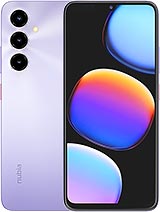
Blade V80 Max
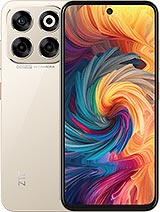
Blade V70
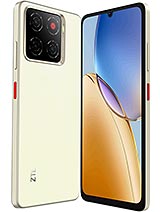
Blade A56
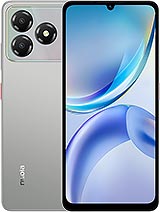
Blade A36
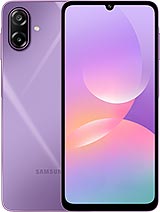
Galaxy M17e