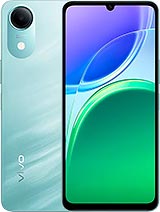
ZTE Blade X1001 review
Buy this only if you need a large-screen device for reading or video in a market where LTE tablets are still competitive and budget is tight. Anyone with a phone already or access to a 2025 mid-range tablet should look elsewhere—the weak processor and display make daily use frustrating beyond media consumption.
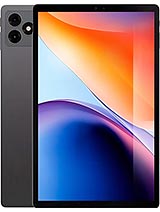
This review is written with AI assistance from ZTE’s published specifications and public benchmark data for the ZTE Blade X1001, and the rating is spec-based. GoSolo does not physically test devices; where we estimate real-world behaviour such as battery life or charge time, we say so. How we rate phones.
Overview
The ZTE Blade X1001 is a 10.1-inch budget tablet for reading, video, and light web use, held back by low-resolution display and weak processing power that stumbles under any real load. At 110 EUR it fills a price gap for LTE-only markets, but the soft 800×1280 screen and entry-level Unisoc chip make it a compromise device even by budget tablet standards.
Design & build
The Blade X1001 measures 238.4 x 148.4 x 8 mm, placing it at tablet size with a slim 8 mm profile that feels reasonably portable for a 10-inch device. The screen-to-body ratio of 83.6% is decent for a tablet, though the actual build materials are not specified, so we can only infer durability from the Mohs level 4 screen protection, which is basic—it will scratch easily and won't survive a serious drop. Dual Nano-SIM and USB Type-C are standard for 2026, and the industrial design carries no surprises or refinements; it reads as purely functional.
Display
The 10.1-inch IPS LCD with 800×1280 resolution is where budget tablets hurt. At 149 ppi, text is visibly soft at typical reading distance, and scrolling through web pages or apps feels less fluid than modern phones or even mid-range tablets. The 16:10 aspect ratio suits video and e-books, and IPS angles are fine, but the 60Hz refresh rate and low pixel density combine to make the screen feel dated compared to even budget Android phones shipping in 2026. Video playback and reading will be the main draws here; anything demanding sharpness or smoothness will disappoint.
Performance
The Unisoc T606 octa-core at 1.6 GHz with Mali-G57 MP1 graphics is entry-level silicon, and the 4GB RAM compounds the problem. Light browsing, messaging, video streaming, and basic productivity apps are fine, but heavy multitasking will cause stuttering, and gaming beyond simple 2D titles is off the table. Expect the system to force app closures if you switch rapidly between demanding apps. The 12 nm process keeps power consumption reasonable, but raw performance sits well below what even budget phones from the same period deliver. For a device aimed at reading and video, this is acceptable; for anything else, it is a bottleneck.
Software
Android 14 ships on the device, which is current for early 2026. ZTE does not publish detailed software support timelines for budget tablets, so expect one or two years of security updates at best, and a long tail of apps that gradually stop supporting older Android versions. The software experience is likely clean—no sign of heavy bloat in the specs—but this is a budget device and you should not expect rapid OS updates or long-term software support.
Camera
A 5 MP rear camera with autofocus and LED flash is frankly weak, and the 2 MP selfie adds little value. Video recording is listed as supported, but do not expect much: at this sensor size and megapixel count, video will be soft and struggle in low light. Cameras on budget tablets are rarely useful for anything but emergency documentation, and the Blade X1001 falls into that category. The specs suggest you should not factor this into your decision.
Battery & charging
The 6000 mAh battery is substantial and, paired with the low-power display and weak chipset, should deliver about 10 to 12 hours of mixed screen time per charge—or two days of light use. Charging wattage is not specified, which is a red flag: at this price point, slow charging is typical, and the absence of the figure likely means 5W or 10W, so expect several hours to a full charge. For a device you might leave plugged in overnight anyway, this is not a deal-breaker, but it is worth knowing you will not be charging quickly.
Connectivity & value
Dual SIM LTE, Wi-Fi 5 (802.11ac), Bluetooth 5.2, and GPS cover the essentials, but there is no 5G—and in early 2026, LTE-only hardware is outdated, even for a budget tablet. In markets where LTE networks are dominant or 5G rollout is slow, this is less of a concern; elsewhere, you are buying a device that was already behind on release day. At 110 EUR, the Blade X1001 undercuts most Wi-Fi-only tablets and some entry-level phones, but the weak display and processor make it feel like you are getting budget pricing with budget performance across the board. If you need a large screen for reading, video, or casual web browsing and your market does not have affordable 5G tablets yet, this is passable; otherwise, a 2025 mid-range tablet or a used flagship phone will give you better day-to-day experience for a similar price.
Verdict
Buy this only if you need a large-screen device for reading or video in a market where LTE tablets are still competitive and budget is tight. Anyone with a phone already or access to a 2025 mid-range tablet should look elsewhere—the weak processor and display make daily use frustrating beyond media consumption.
- 6000 mAh battery delivers about two days of light use or 10–12 hours of mixed screen time per charge
- Large 10.1-inch display is genuinely useful for reading and video, with 83.6% screen-to-body ratio
- Dual SIM and LTE bands cover most regions outside 5G-heavy markets
- Slim 8 mm profile makes a tablet-sized device reasonably portable
- Display resolution of 800×1280 at 149 ppi looks soft; text and scrolling feel dated even by budget standards
- Unisoc T606 with 4GB RAM stumbles under multitasking and cannot handle gaming or heavy apps
- No 5G, slow charging (wattage unspecified), and basic 5 MP camera with no real utility
ZTE Blade X1001 Key Specifications
The essentials at a glance. See the full spec sheet.
| Released | 2026, February |
|---|---|
| Display | 10.1 inches, 295.8 cm2 (~83.6% screen-to-body ratio), IPS LCD |
| Resolution | 800 x 1280 pixels, 16:10 ratio (~149 ppi density) |
| Chipset | Unisoc T606 (12 nm) |
| RAM & storage | 64GB 4GB RAM |
| Main camera | 5 MP, AF |
| Selfie camera | 2 MP |
| Battery | 6000 mAh |
| Software | Android 14 |
| Dimensions | 238.4 x 148.4 x 8 mm (9.39 x 5.84 x 0.31 in) |
| Network | GSM / HSPA / LTE |
| NFC | No |
| USB | USB Type-C |
ZTE Blade X1001 FAQ
Common questions, answered from the spec sheet.
Does the Blade X1001 support 5G?
No. The Blade X1001 tops out at GSM / HSPA / LTE, without 5G.
What chipset does the Blade X1001 use?
The Blade X1001 runs on the Unisoc T606 (12 nm).
What display does the Blade X1001 have?
A 10.1 inches, 295.8 cm2 (~83.6% screen-to-body ratio) IPS LCD, 800 x 1280 pixels, 16:10 ratio (~149 ppi density).
How big is the Blade X1001 battery?
The Blade X1001 has a 6000 mAh battery.
Does the Blade X1001 have NFC?
No, the Blade X1001 does not list NFC support.
Does the Blade X1001 support a microSD card?
Yes, the Blade X1001 supports expandable storage (Unspecified).
Alternatives to consider
If the Blade X1001 isn’t quite right, these are the closest calls.

Blade A56
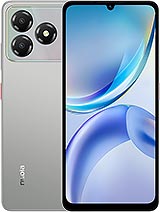
Blade A36

Blade X1101

Blade V70 Vita

Play20A