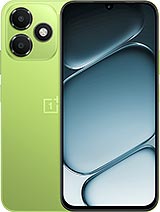
ZTE nubia A77 review
The A77 suits users in countries with 5G coverage who prioritize battery stamina and sim flexibility over screen quality or speed, and are willing to live with lag. Anyone in a market where rivals like Xiaomi Redmi or Motorola offer 1080p screens and faster chips at the same price should look elsewhere.

This review is written with AI assistance from ZTE’s published specifications and public benchmark data for the ZTE nubia A77, and the rating is spec-based. GoSolo does not physically test devices; where we estimate real-world behaviour such as battery life or charge time, we say so. How we rate phones.
Overview
The A77 is a large, light budget phone with a 5000 mAh battery and 5G, but its 720p screen and entry-level chip make it feel more like a value hold than a compelling buy at €240. It's honest about what it is—a simple daily driver with decent stamina—but lacks the visual pop or snappy feel rivals offer at the same price.
Design & build
The A77 feels like a stripped-back slab: glass front, plastic frame and back, 193 grams, 8.3 mm thick. That lightness is a genuine win for a phone this large—holding a 6.75-inch screen feels almost effortless, and the narrow profile makes it easier to pocket than heavier rivals. IP64 protection (dust-tight, splash-resistant) is standard now and welcome here. The trade is durability; plastic backs and frames are less durable than aluminum over time, and there is no Gorilla Glass mentioned, so the screen will scratch easily. At €240, that is the honest split: weight and thinness versus longevity.
Display
Here is where the A77 stumbles hardest. A 6.75-inch screen at 720 x 1640 pixels (~265 ppi) is sharp enough on paper, but the real problem is the panel itself: IPS LCD at this density is visibly dim and flat compared to 1080p IPS or AMOLED panels on rivals at the same price. Scrolling web pages and reading text feel grainy. The 120 Hz refresh rate is a nice touch and smooths the experience, but it cannot hide the resolution deficit. In 2026, when €250 phones regularly ship with 1080p or AMOLED, 720p feels like a corner cut in exactly the wrong place—the thing you stare at for hours every day.
Performance
The Unisoc T8300 is a budget chip, and you will feel it. It is not slow enough to be unusable, but app launches, switching between tasks, and loading social media will show stutters a Snapdragon 4 Gen or MediaTek competitor would smooth over. Gaming is possible but not pleasant; casual apps are fine. For checking email, messaging, and light browsing, the chip is adequate. Heavier work—photo editing, video playback, or having many apps open at once—reveals the ceiling quickly. The 6 GB RAM helps, but it cannot fix a fundamentally entry-level processor. This is a phone for basic use, not someone who multitasks or wants their phone to feel quick.
Software
Android 16 is current and modern. ZTE typically layers a clean skin, which is a relief compared to bloat-heavy alternatives in this price bracket. Performance will be hampered by the hardware, not the software, so this is not a complaint, just context.
Camera
The 50 MP main sensor with f/1.8 aperture and phase-detect autofocus is the A77's visual anchor. In daylight, it captures sharp, well-exposed stills with good color. The f/1.8 aperture is kind in dim indoor light, though night mode will be grainy because the small pixel size and weak GPU cannot process computational photography aggressively. The 1080p video limit is dated—rivals in this class offer 4K now, even if it is not essential. The 8 MP selfie camera is functional; don't expect detail. Overall, the main camera is credible for a budget phone, but it is not a reason to pick the A77 over rivals that offer the same sensor with faster processors and better night mode.
Battery & charging
The 5000 mAh battery is a genuine strength. Paired with the light weight and modest display, the A77 will easily hit a full day of use, and many users will stretch it to 1.5 days. However, 23W charging is painfully slow by 2026 standards; a full top-up takes well over an hour, and rivals at €240 now routinely ship with 60W, 80W, or faster. This is a grating omission in the era of quick charge. The trade is battery size, but 5000 mAh is commonplace enough that competitors manage both size and speed.
Value & verdict-context
At €240, the A77 is a honest, no-frills phone aimed squarely at users who want a large screen, long battery life, and minimal complexity. The 720p display, entry-level chip, and slow charging are genuine trade-offs a buyer in this price tier will notice immediately. The phone is not broken—it works, it lasts, and it will handle daily tasks without drama—but it feels dated in a market where €240 now buys sharper screens and snappier processors from Xiaomi, Motorola, or TCL. The 5G and dual SIM are nice tokens, and the camera is solid, but they do not offset the core experience deficit. This is a phone for someone who prioritizes battery life and simplicity over a pleasant screen or responsive performance, or for a second device. Buyers in most global-south markets with faster networks and a budget under €250 should cross-shop Snapdragon competitors first; the performance gap will feel real every day.
Verdict
The A77 suits users in countries with 5G coverage who prioritize battery stamina and sim flexibility over screen quality or speed, and are willing to live with lag. Anyone in a market where rivals like Xiaomi Redmi or Motorola offer 1080p screens and faster chips at the same price should look elsewhere.
- 5000 mAh battery with light 193 g weight means real all-day stamina without fatigue
- 5G and dual SIM in a phone under €250
- 50 MP main camera with f/1.8 aperture and phase-detect autofocus is solid for stills in good light
- 8.3 mm thickness and IP64 dust/splash resistance for a budget phone
- 720p IPS LCD at 6.75 inches is genuinely dim and soft compared to 1080p rivals at this price
- Unisoc T8300 is entry-level; day-to-day lag in apps and multitasking will be noticeable against Snapdragon 4 Gen competitors
- 23W charging (per spec) is slow—rivals routinely hit 60W or more at €240, meaning a full charge takes over an hour
ZTE nubia A77 Key Specifications
The essentials at a glance. See the full spec sheet.
| Released | 2026, August 14 |
|---|---|
| Display | 6.75 inches, 108.2 cm2 (~83.6% screen-to-body ratio), IPS LCD, 120Hz |
| Resolution | 720 x 1640 pixels (~265 ppi density) |
| Chipset | Unisoc T8300 (6 nm) |
| RAM & storage | 128GB 6GB RAM |
| Main camera | 50 MP, f/1.8, (wide), PDAF Auxiliary lenses |
| Selfie camera | 8 MP |
| Battery | 5000 mAh |
| Software | Android 16 |
| Dimensions | 168 x 77 x 8.3 mm (6.61 x 3.03 x 0.33 in) |
| Weight | 193 g (6.81 oz) |
| Build | Glass front, plastic frame, plastic back |
| Durability | IP64 dust tight and water resistant (water splashes) |
| Network | GSM / HSPA / LTE / 5G |
| NFC | Yes (market/region dependent) |
| USB | USB Type-C 2.0 |
ZTE nubia A77 FAQ
Common questions, answered from the spec sheet.
Does the nubia A77 support 5G?
Yes. The nubia A77 supports 5G networks.
What chipset does the nubia A77 use?
The nubia A77 runs on the Unisoc T8300 (6 nm).
What display does the nubia A77 have?
A 6.75 inches, 108.2 cm2 (~83.6% screen-to-body ratio) IPS LCD, 120Hz, 720 x 1640 pixels (~265 ppi density).
How big is the nubia A77 battery?
The nubia A77 has a 5000 mAh battery.
Does the nubia A77 have NFC?
Yes, the nubia A77 has NFC.
Is the nubia A77 water resistant?
The nubia A77 carries a IP64 dust tight and water resistant (water splashes) rating.
Does the nubia A77 support a microSD card?
Yes, the nubia A77 supports expandable storage (microSDXC).
Alternatives to consider
If the nubia A77 isn’t quite right, these are the closest calls.

nubia A77 4G

nubia A57
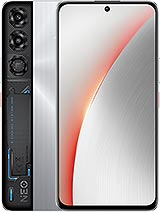
nubia Neo 5 Max
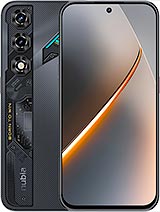
nubia Neo 5
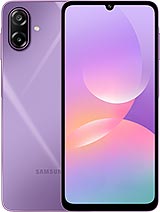
Galaxy M17e