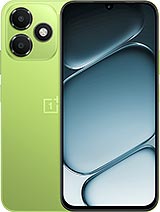
ZTE nubia Neo 3 review
The nubia Neo 3 makes sense for budget-conscious buyers in markets with 5G coverage who prioritise display smoothness and battery endurance over gaming or multimedia work. Anyone planning to do demanding 3D games, edit video, or expect long-term software support should look elsewhere in the 200+ EUR segment.
This review is written with AI assistance from ZTE’s published specifications and public benchmark data for the ZTE nubia Neo 3, and the rating is spec-based. GoSolo does not physically test devices; where we estimate real-world behaviour such as battery life or charge time, we say so. How we rate phones.
Overview
The nubia Neo 3 is a budget 5G phone with a bright 6.6-inch 120Hz LCD display and solid battery life, built around an entry-level Unisoc T820 chip. It's a sensible choice for someone who wants smooth scrolling and all-day power in a light-use scenario, but the processor and video capability are genuinely limited for anything more demanding.
Design & build
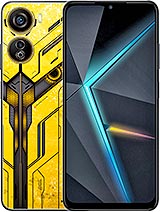
The nubia Neo 3 sits at a comfortable 192g with an 8mm thickness, light enough to pocket without fatigue and lean enough for one-handed use despite the 6.6-inch footprint. The dual Nano-SIM setup and side-mounted fingerprint sensor are practical choices for this tier. You get RGB lighting on the back and pressure-sensitive gaming triggers, which feels more ambitious than the typical budget device but is honestly gimmicky in execution—the triggers are a novelty most users will ignore. No official word on glass or Gorilla Glass protection, so assume basic plastic or unspecified coating; it's a scratch magnet at this price.
Display
The 6.6-inch IPS LCD pushes 1080×2408 at roughly 400ppi, and the 120Hz refresh rate is the real draw here. For a budget phone, 120Hz scrolling makes a tangible difference in how snappy the interface feels, especially next to 60Hz rivals. The brightness isn't specified, but typical for this generation of IPS means it'll struggle in direct sunlight compared to brighter OLEDs you'd find a few hundred euros up. The 20:9 ratio and 85.5% screen-to-body ratio are decent proportions, neither stretched nor stubby. Colour accuracy at this price is not a selling point, and you shouldn't expect it to be.
Performance
The Unisoc T820 is entry-level silicon, even for 2023. It handles everyday tasks—messaging, social media, browsing, light productivity—without lag. The 8GB RAM ensures the interface stays smooth for normal use. However, anything demanding exposes its limits fast: demanding 3D games will drop to choppy framerates on higher settings, and heavy multitasking with many background apps will cause stutters. This is not a phone for mobile gamers or power users. It's honest about what it is, and for light to moderate daily use in a budget segment, it's adequate. The Mali-G57 GPU compounds the weakness; it's simply not made for sustained gaming load.
Software
Android 13 out of the box is a year old at launch, but that's normal for this tier. ZTE's skin appears light based on the spec sheet (no mention of aggressive bloat), though customisation details are thin. Security patches on budget Unisoc phones can lag, so expect slower updates than you'd get from a Samsung or Xiaomi equivalent—factor that in if you care about regular patches. The OS itself is stable enough for everyday work; you're not buying this for cutting-edge features.
Camera
The 50MP main sensor with f/1.8 and phase-detect autofocus punches above its price in daylight: shutter speed is fast thanks to the wide aperture, and PDAF keeps focusing snappy. You'll get sharp, detailed shots in good light and respectable performance in indoor scenes. The 8MP selfie camera is purely functional, useful for video calls but uninspired. Where the camera falls short is video: 1080p@30fps is entry-level even for a 50MP sensor, and the lack of 4K or high-frame-rate options severely limits creative use. Night mode isn't listed, so low-light video will be noisy. For a user who only shoots photos, this works. For anyone wanting video flexibility, it's a clear compromise.
Battery & charging
The 4500mAh capacity is modest for a 6.6-inch 120Hz display, but in practice it delivers solid all-day endurance for moderate use—expect roughly 6 to 8 hours of heavy screen time, or a full day plus some reserve if you're lighter on the screen. The 33W wired charger tops it up from empty in around 50 to 70 minutes, which is respectable and faster than many rivals at this price. Bypass Charging is mentioned, which helps manage heat during gaming, a thoughtful inclusion. Wireless charging is absent, standard for this tier but worth noting if you prefer cable-free top-ups.
Value & verdict-context
At around 180 EUR, the Neo 3 competes squarely with budget Xiaomi and Samsung devices from the same era. It doesn't attempt to be a flagship in miniature; instead, it does the basics—display, battery, and basic photography—competently. The Unisoc T820 is its honest weakness; rivals at this price sometimes use Snapdragon 6 Gen 1 or similar, which offer noticeably better sustained performance. The 120Hz display is a genuine differentiator for scrolling comfort, and the battery life is real. This is a phone for someone content with light use who values a smooth, responsive interface over raw power or video capability. If you need gaming performance or 4K video, spend another 50 to 100 EUR and step up to a Snapdragon chip. For messaging, social media, browsing, and photography, the Neo 3 delivers without drama.
Verdict
The nubia Neo 3 makes sense for budget-conscious buyers in markets with 5G coverage who prioritise display smoothness and battery endurance over gaming or multimedia work. Anyone planning to do demanding 3D games, edit video, or expect long-term software support should look elsewhere in the 200+ EUR segment.
- 120Hz LCD display is bright and responsive for its price tier, making everyday scrolling and reading feel smooth
- 4500mAh battery with 33W charging delivers real all-day endurance and tops up in roughly an hour
- 50MP main camera with f/1.8 aperture and PDAF handles sharp daylight shots better than typical at this price
- 5G and dual Nano-SIM support give connectivity flexibility for this generation
- Unisoc T820 is entry-level even for budget phones in 2023; struggles visibly with demanding 3D games and heavy multitasking
- 1080p@30fps video is basic for a 50MP camera and lacks slow-motion or 4K capture options
- No microSD expansion leaves you fixed at 256GB, and no charger in the box is standard but still a friction point at this price
ZTE nubia Neo 3 Key Specifications
The essentials at a glance. See the full spec sheet.
| Released | 2023, June |
|---|---|
| Display | 6.6 inches, 104.9 cm2 (~85.5% screen-to-body ratio), IPS LCD, 120Hz |
| Resolution | 1080 x 2408 pixels, 20:9 ratio (~400 ppi density) |
| Chipset | Unisoc T820 (6 nm) |
| RAM & storage | 256GB 8GB RAM |
| Main camera | 50 MP, f/1.8, 26mm (wide), PDAF Auxiliary lens |
| Selfie camera | 8 MP, f/2.0, (wide) |
| Battery | 4500 mAh |
| Charging | 33W wiredBypass Charging |
| Software | Android 13 |
| Dimensions | 163.7 x 75 x 8 mm (6.44 x 2.95 x 0.31 in) |
| Weight | 192 g (6.77 oz) |
| Durability | Pressure sensitive zones (Gaming triggers)RGB light (on the back) |
| Network | GSM / HSPA / LTE / 5G |
| NFC | Yes |
| USB | USB Type-C 2.0, OTG |
ZTE nubia Neo 3 FAQ
Common questions, answered from the spec sheet.
Does the nubia Neo 3 support 5G?
Yes. The nubia Neo 3 supports 5G networks.
What chipset does the nubia Neo 3 use?
The nubia Neo 3 runs on the Unisoc T820 (6 nm).
What display does the nubia Neo 3 have?
A 6.6 inches, 104.9 cm2 (~85.5% screen-to-body ratio) IPS LCD, 120Hz, 1080 x 2408 pixels, 20:9 ratio (~400 ppi density).
How big is the nubia Neo 3 battery?
The nubia Neo 3 has a 4500 mAh battery. Charging is rated at 33W wiredBypass Charging.
Does the nubia Neo 3 have NFC?
Yes, the nubia Neo 3 has NFC.
Is the nubia Neo 3 water resistant?
The nubia Neo 3 carries a Pressure sensitive zones (Gaming triggers)RGB light (on the back) rating.
Does the nubia Neo 3 support a microSD card?
Yes, the nubia Neo 3 supports expandable storage (Unspecified).
Does the nubia Neo 3 have a headphone jack?
No, the nubia Neo 3 does not have a 3.5mm headphone jack.
Alternatives to consider
If the nubia Neo 3 isn’t quite right, these are the closest calls.
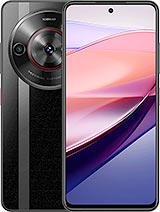
nubia Focus 2
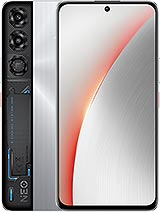
nubia Neo 5 Max
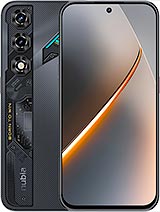
nubia Neo 5
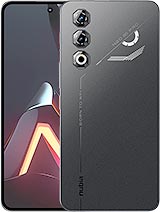
nubia Neo 5 Pro
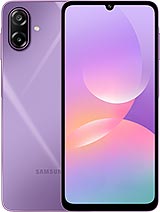
Galaxy M17e