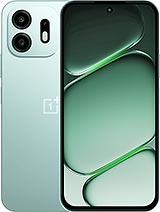
ZTE nubia Neo 5 review
This phone suits budget buyers in emerging markets who want a big screen and 5G coverage without much else to ask. Anyone expecting fast performance or a versatile camera, or comparing it to mid-range rivals with faster chips, will find themselves disappointed by how sluggish the Unisoc feels and how limiting a single-lens setup is in 2026.
This review is written with AI assistance from ZTE’s published specifications and public benchmark data for the ZTE nubia Neo 5, and the rating is spec-based. GoSolo does not physically test devices; where we estimate real-world behaviour such as battery life or charge time, we say so. How we rate phones.
Overview
The ZTE nubia Neo 5 is a large-screen 5G phone built around a modest Unisoc chip and a mid-range 50MP camera setup—a phone that bets on screen size and battery capacity over processing power. It is an okay value for the budget-conscious who want 5G and size, but it will feel slow compared to rivals using faster chips at similar prices.
Display
The 6.8-inch IPS LCD is large and bright, hitting 1000 nits in peak mode, which matters in daylight where many mid-range phones fade. Refresh rate tops at 120Hz, keeping scrolling smooth enough for a budget device. The real catch is resolution: 900 x 1940 at 19.5:9 yields only 314 ppi, which is noticeably grainy if you hold it at a normal distance. Text and icons lack the crispness of rivals packing 400+ ppi at this screen diagonal. For video and maps it is fine; for reading or detail work, the low pixel density becomes apparent. This is the trade-off ZTE made to keep cost down while pushing screen real estate.
Performance
The Unisoc T9300 is the weak link. It is a 6nm octa-core chip with modest Cortex-A78 cores clocked at 2.4 GHz and a Mali-G57 GPU. On paper, cores and nanometers sound competent, but in practice this processor sits well below what Snapdragon 7-series or MediaTek Dimensity equivalents deliver. App launches are slower, multitasking stutters under load, and demanding games struggle. For everyday tasks like messaging, browsing, and video playback, it muddles through, but side by side with a phone using a Snapdragon 778G+ or similar, the gap becomes obvious. ZTE cut silicon costs here, and users will feel it daily.
Camera
A single 50MP main sensor with PDAF and LED flash, paired with a 16MP selfie, is minimalist for 2026. No ultrawide, no telephoto, no macro. The wide camera should handle daylight decently thanks to the MP count, but there is no second lens to offer perspective or zoom. Video maxes out at 4K30fps, which is flat and soft by current standards. Low-light performance will be mediocre; the absence of a secondary lens means no Night mode or computational fallback. For casual snapshots and social media, it is adequate. For anything requiring range or sophistication, this setup leaves you short.
Software & Features
Android 16 out of the box is a tick in the right box, putting the Neo 5 on the latest OS. ZTE's skin is typically lean and responsive, though long-term update support from ZTE has been inconsistent in some markets. The phone includes GPS, GLONASS, Galileo, and BDS, which is thorough for navigation. NFC is present but region-dependent. Side-mounted fingerprint, IP64 water and dust resistance, and 550Hz pressure-sensitive zones suggest ZTE paid attention to practical features. The RGB light on the back is cosmetic and a novelty at best.
Battery & Charging
The 6050 mAh battery is substantial and will comfortably last a day of moderate use, possibly longer on lighter workloads. The Unisoc chip's modest power draw helps here. Charging speed is listed as 45W, which is adequate but not cutting-edge; rivals at this price often hit 65–100W by 2026. There is no charging time specified, so a full charge likely takes 45–60 minutes, which is unremarkable. The large capacity is the real strength; paired with low-end silicon, it is a safe bet for all-day endurance.
Value & Context
The ZTE nubia Neo 5 is a big-screen, long-battery 5G phone aimed at budget shoppers who prioritize size and connectivity over speed or camera range. In 2026, when faster chips are becoming standard across the board, the Unisoc T9300 is a cost-cutting move that will age poorly. The 314 ppi display is also a sting that harder-to-excuse: larger phones are now expected to hold pixel density. For markets rolling out 5G where a simple, no-frills large phone at low cost is the draw, it lands okay. For anyone comparing specs and performance side by side with a Snapdragon 6 Gen 1 or Dimensity 6020 device at the same price, the Neo 5 will feel behind almost immediately.
Verdict
This phone suits budget buyers in emerging markets who want a big screen and 5G coverage without much else to ask. Anyone expecting fast performance or a versatile camera, or comparing it to mid-range rivals with faster chips, will find themselves disappointed by how sluggish the Unisoc feels and how limiting a single-lens setup is in 2026.
- Large 6.8-inch display with 120Hz refresh and solid 1000 nits peak brightness, good for outdoor visibility
- 6050 mAh battery with room to expand storage via microSD
- 5G connectivity across multiple bands, IP64 rating for dust and splash resistance
- Reasonably priced entry to 5G for markets where network coverage is rolling out
- Unisoc T9300 is underpowered for 2026; rivals in this price band now use faster Snapdragon or MediaTek chips that handle apps and games noticeably better
- 314 ppi pixel density on a 6.8-inch screen is sparse; text and icons look softer than phones with denser panels at this size
- 50MP camera is a solo shooter with no ultrawide or telephoto; weak in low light and video is capped at 4K30
ZTE nubia Neo 5 Key Specifications
The essentials at a glance. See the full spec sheet.
| Released | 2026, March 03 |
|---|---|
| Display | 6.8 inches, 113.9 cm2, IPS LCD, 120Hz, 1000 nits (HBM) |
| Resolution | 900 x 1940 pixels, 19.5:9 ratio (~314 ppi density) |
| Chipset | Unisoc T9300 (6 nm) |
| RAM & storage | 256GB 8GB RAM |
| Main camera | 50 MP, (wide), PDAF Auxiliary lens |
| Selfie camera | 16 MP |
| Battery | 6050 mAh |
| Software | Android 16 |
| Durability | IP64 dust tight and water resistant (water splashes) Pressure sensitive zones (550Hz touch-sensing) RGB light (on the back) |
| Network | GSM / HSPA / LTE / 5G |
| NFC | Yes (market/region dependent) |
| USB | USB Type-C |
ZTE nubia Neo 5 FAQ
Common questions, answered from the spec sheet.
Does the nubia Neo 5 support 5G?
Yes. The nubia Neo 5 supports 5G networks.
What chipset does the nubia Neo 5 use?
The nubia Neo 5 runs on the Unisoc T9300 (6 nm).
What display does the nubia Neo 5 have?
A 6.8 inches, 113.9 cm2 IPS LCD, 120Hz, 1000 nits (HBM), 900 x 1940 pixels, 19.5:9 ratio (~314 ppi density).
How big is the nubia Neo 5 battery?
The nubia Neo 5 has a 6050 mAh battery.
Does the nubia Neo 5 have NFC?
Yes, the nubia Neo 5 has NFC.
Is the nubia Neo 5 water resistant?
The nubia Neo 5 carries a IP64 dust tight and water resistant (water splashes) Pressure sensitive zones (550Hz touch-sensing) RGB light (on the back) rating.
Does the nubia Neo 5 support a microSD card?
Yes, the nubia Neo 5 supports expandable storage (microSDXC).
Alternatives to consider
If the nubia Neo 5 isn’t quite right, these are the closest calls.
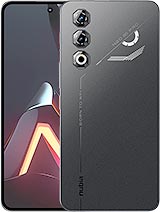
nubia Neo 5 Pro
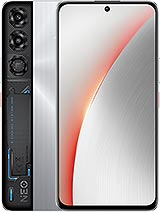
nubia Neo 5 Max
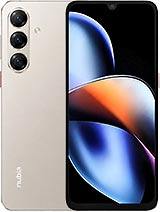
nubia A77 4G

nubia A57
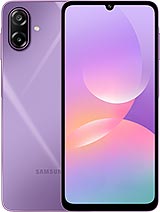
Galaxy M17e