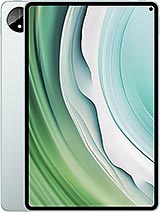
ZTE nubia Pad 3D review
The nubia Pad 3D makes sense only for buyers who specifically want a large Wi-Fi tablet for home use and are willing to pay a premium for the novelty of a 3D screen. Everyone else should look at iPad Air, Samsung Galaxy Tab S9, or Lenovo Tab P12 for better value and practical features at the same or lower price."
This review is based on ZTE’s published specifications and public benchmark data for the ZTE nubia Pad 3D, and the rating is spec-based. GoSolo does not physically test devices; where we estimate real-world behaviour such as battery life or charge time, we say so. How we rate phones.
Overview
The nubia Pad 3D is a large Wi-Fi tablet built around a 2021-era flagship chipset and a novel 3D LCD screen, but it falls short of rivals with flat performance, weak cameras, and no cellular connectivity. The 3D gimmick rarely justifies the €1300 price, and by 2023 there were cheaper alternatives with better everyday speed and more practical feature sets.
Design & Build
The nubia Pad 3D is thin and light for a 12.4-inch tablet at 8.5 mm and 780 g. Glass front, aluminum frame, and aluminum back feel sturdy, though the glass may attract fingerprints. The 82% screen-to-body ratio leaves visible bezels top and bottom—not unusual for 2023, but rivals have worked harder to shrink them. The magnetic connector and USB Type-C 3.1 with video output are practical touches. Build quality is solid, though the tablet offers nothing here that would explain its price over competing models.
Display
The 12.4-inch IPS LCD with 1600×2560 resolution and 120Hz refresh delivers sharp text and smooth scrolling. At 243 ppi, pixel density is plenty for most users on a tablet screen. The real party piece is the 3D lightfield display, which promises real-time conversion of 2D content to stereoscopic 3D without glasses. In practice, this novelty rarely translates to usable content. Apps and media on Android tablets do not natively support 3D output, and the conversion quality varies wildly. For everyday reading, video, and web browsing—what most tablet buyers actually do—the 3D feature sits dormant. The display itself is competent, but you are paying a significant premium for a gimmick.
Performance
The Snapdragon 888 5G was a flagship chip in 2021, so it handles everyday apps, web browsing, YouTube, and light gaming without breaking a sweat. The Adreno 660 GPU keeps 2D workloads buttery smooth and manages modest 3D games acceptably. With 8 GB of RAM and UFS 3.1 storage, file transfers and app switching are quick. That said, by early 2023, the 888 was no longer cutting-edge. Competing tablets at similar and lower prices used the newer Snapdragon Gen 1 and MediaTek flagships, which offered better battery efficiency and sustained performance in heavy workloads. For streaming and office use, the 888 is more than sufficient; for video editing or demanding gaming, rivals had already moved past it.
Software
Android 12L runs smoothly on the hardware. ZTE's tablet focuses the OS around larger screens with multi-window and dex-style features. The 12L variant is designed for tablets and handles landscape and portrait gracefully. Updates are a question mark—ZTE's track record with long-term software support is uneven, and a €1300 device in 2023 should come with a credible promise of several years of patches. The system itself is clean, but the lack of cellular means you are entirely Wi-Fi dependent, which eliminates emergency connectivity and tethering via LTE modem.
Camera
A 16 MP f/1.9 main sensor and 8 MP f/2.2 ultrawide front camera are adequate for casual snapshots and video calls. The fast aperture helps in low light, and the AI 3D capture mode can create stereoscopic photos for the 3D display. In reality, tablet photography is an afterthought for most users, and this camera confirms it. 1200p video at 30 fps falls short of what flagship tablets were delivering by 2023—expect flat colors, limited dynamic range, and no 4K option. If you plan to shoot anything beyond quick memos, bring a phone.
Battery & Charging
The 9070 mAh battery is generous and delivers about 12–14 hours of mixed use, easily lasting a full day of reading, streaming, and browsing. Charging at 33W takes roughly 1.5 hours to refill, which is slow for the capacity but entirely acceptable if you top up overnight. For a 12-inch tablet, this is solid endurance, and you will not feel tethered to a charger during normal use.
Value & Verdict
At €1300, the nubia Pad 3D is expensive. You are paying flagship money for a device with a 2021-era chipset, entry-level cameras, no cellular connectivity, and a gimmicky 3D display that has almost no software ecosystem to support it. By 2023, iPad Pros and high-end Samsung Galaxy Tab S models offered faster chips, better cameras, and either LTE or more practical feature sets at competitive or lower prices. The 3D feature is a curiosity, not a reason to choose this tablet. Build quality and battery life are genuinely good, and the 120Hz screen is smooth, but those strengths alone do not bridge the value gap. This tablet suits someone who wants a large, smooth Wi-Fi device for media consumption and light work, without any need for cellular or the latest performance—but even then, there are cheaper routes to the same goal.
Verdict
The nubia Pad 3D makes sense only for buyers who specifically want a large Wi-Fi tablet for home use and are willing to pay a premium for the novelty of a 3D screen. Everyone else should look at iPad Air, Samsung Galaxy Tab S9, or Lenovo Tab P12 for better value and practical features at the same or lower price."
- 12.4-inch 120Hz IPS LCD is smooth for reading and video, with good brightness for a tablet in this era
- Snapdragon 888 and 9GB of RAM handle daily apps, browsing, and media playback without stuttering
- 9070 mAh battery easily lasts 12–14 hours of mixed use; 33W charging is leisurely but acceptable overnight
- Stereo 4-speaker setup delivers decent audio for watching shows and music
- No cellular connectivity in a €1300 tablet limits its utility outside home and office Wi-Fi
- 16MP camera with 1200p video and no telephoto is well below what rivals offer at this price in 2023
- 3D lightfield display is a novelty with minimal content support; real-world benefit does not justify the cost premium
ZTE nubia Pad 3D Key Specifications
The essentials at a glance. See the full spec sheet.
| Released | 2023, February 28 |
|---|---|
| Display | 12.4 inches, 445.8 cm2 (~82.3% screen-to-body ratio), IPS LCD, 120Hz |
| Resolution | 1600 x 2560 pixels, 16:10 ratio (~243 ppi density) |
| Chipset | Qualcomm SM8350 Snapdragon 888 5G (5 nm) |
| RAM & storage | 128GB 8GB RAM, 256GB 8GB RAM |
| Main camera | 16 MP, f/1.9, 27mm (wide), AF 16 MP, f/1.9, 27mm (wide), AF |
| Selfie camera | 8 MP, f.2,2, 105˚ (ultrawide) 8 MP, f.2,2, 105˚ (ultrawide) |
| Battery | 9070 mAh |
| Charging | 33W wired |
| Software | Android 12L |
| Dimensions | 285 x 190 x 8.5 mm (11.22 x 7.48 x 0.33 in) |
| Weight | 780 g (1.72 lb) |
| Build | Glass front, aluminum frame, aluminum back |
| Network | No cellular connectivity |
| NFC | No |
| USB | USB Type-C 3.1, OTG, magnetic connector, video output |
ZTE nubia Pad 3D FAQ
Common questions, answered from the spec sheet.
Does the nubia Pad 3D support 5G?
No. The nubia Pad 3D tops out at No cellular connectivity, without 5G.
What chipset does the nubia Pad 3D use?
The nubia Pad 3D runs on the Qualcomm SM8350 Snapdragon 888 5G (5 nm).
What display does the nubia Pad 3D have?
A 12.4 inches, 445.8 cm2 (~82.3% screen-to-body ratio) IPS LCD, 120Hz, 1600 x 2560 pixels, 16:10 ratio (~243 ppi density).
How big is the nubia Pad 3D battery?
The nubia Pad 3D has a 9070 mAh battery. Charging is rated at 33W wired.
Does the nubia Pad 3D have NFC?
No, the nubia Pad 3D does not list NFC support.
Does the nubia Pad 3D support a microSD card?
Yes, the nubia Pad 3D supports expandable storage (microSDXC (dedicated slot)).
Does the nubia Pad 3D have a headphone jack?
No, the nubia Pad 3D does not have a 3.5mm headphone jack.
Alternatives to consider
If the nubia Pad 3D isn’t quite right, these are the closest calls.
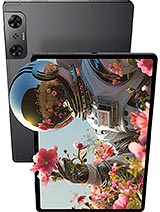
nubia Pad 3D II
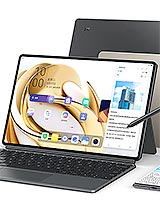
Axon Pad
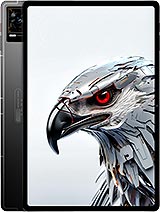
nubia RedMagic Tablet
Pad 2
Pad Air