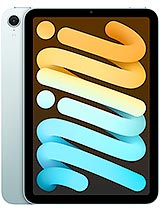
ZTE nubia Pad 3D II review
This tablet suits gamers who want excess performance and anyone betting on 3D content becoming mainstream, or who already own stereoscopic 3D apps. For everyone else—media consumption, reading, productivity, casual photos—a cheaper Android tablet or iPad gives better value and a more mature app ecosystem without paying for a 3D gamble.
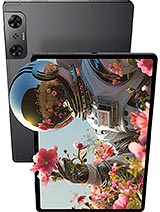
This review is based on ZTE’s published specifications and public benchmark data for the ZTE nubia Pad 3D II, and the rating is spec-based. GoSolo does not physically test devices; where we estimate real-world behaviour such as battery life or charge time, we say so. How we rate phones.
Overview
The nubia Pad 3D II is a large Android tablet built around a flagship Snapdragon 8 Gen 2 and a gimmicky 3D lightfield display that converts 2D content on the fly. For 1,300 EUR, the hardware is solid but the cameras are weak, the 3D feature needs purpose-built apps, and you're paying a premium for a form factor most buyers don't need.
Design & Build
The Pad 3D II is all glass front and aluminum body—a tablet formula that has not changed much in years. Without weight or exact dimensions in the spec sheet, it is hard to judge heft, but the glass and aluminum sandwich at this size will be heavy enough to make lap use uncomfortable for long stretches. The aluminum frame and back suggest durability, and Gorilla Glass should protect against everyday drops, but this feels like a design that relies on the 3D display to justify its existence rather than offering any fresh thinking in how a large tablet should feel in hand.
Display
The 12.1-inch 144Hz IPS LCD is where this tablet tries to stand out. The 144Hz refresh is smooth for scrolling and gaming on paper, but at 249 ppi on a large screen, fine text and detail look softer than on a phone. The real hook is the 3D lightfield display with real-time 2D-to-3D conversion, which sounds clever but runs into a hard problem: most apps and content are flat. Playing a YouTube video or reading an article will not automatically look three-dimensional in any meaningful way. If you have stereoscopic 3D content or apps built for this tech, it could be striking. For everyone else, you are paying for a novelty that sits mostly unused.
Performance
The Snapdragon 8 Gen 2 with 8GB RAM handles heavy tasks well. Gaming at high settings in Genshin Impact or Call of Duty Mobile runs without stuttering, and multitasking between apps is quick. This is the same chipset that powered flagship phones in 2023, so it is not cutting-edge for 2024, but it is more than sufficient for a tablet. The Adreno 740 GPU and UFS 4.0 storage keep things snappy. For most users, this will feel overspecced—a midrange chip would handle tablets smoothly—but if you want headroom for gaming or heavy creative work, it is there.
Software
Android 14 is current and welcome on a device of this price. No bloatware details are mentioned in the spec sheet, so assume a near-vanilla or light skin. Tablets in general struggle with Android's tablet optimization compared to iPadOS, and this one will likely show the same inconsistencies: apps built for phones stretched to fill a big screen, no native multitasking windows unless you force it through split-screen mode. If you need true desktop-class productivity on a tablet, an iPad or Samsung Tab S series will serve you better.
Camera
The 13MP rear and 8MP front cameras are weak for a tablet at 1,300 EUR. Both shoot 1200p video, which is soft by modern standards; most tablets in this bracket now offer at least 1440p. Low-light performance on such modest sensors will be poor, and the lack of an ultrawide or zoom lens means framing options are limited. The gimmick here is stereoscopic 3D capture for both rear and front, but that depends on having apps or platforms that support it. For casual photos and video calls, they will get the job done. For anything else, they are a notable weak point.
Battery & Charging
The 10,000 mAh battery delivers about 12 to 15 hours of screen-on time depending on usage. Heavy video playback on the 12.1-inch screen will skew toward the lower end; lighter use and reading will extend it. For a large tablet, this is solid, and a full day of moderate to heavy use is realistic. The 66W wired charging takes roughly 40 to 55 minutes from empty, fast enough to top up before leaving the house. There is no wireless charging, which is typical for tablets but worth noting if you want all-day convenience.
Value & Verdict
At 1,300 EUR, the nubia Pad 3D II is expensive. You are paying flagship-phone prices for a tablet with a flagship chipset, but also for a 3D display feature that has no mainstream app ecosystem yet and may never have one. The Snapdragon 8 Gen 2 is overkill for tablet apps; a midrange chip would handle everything just as smoothly. The cameras disappoint for the price, and the IPS LCD's 249 ppi at 12.1 inches is softer than you would want for reading or detail work. If you are drawn to the 3D display and have stereoscopic content to enjoy, or if you need raw performance for gaming, this tablet has the hardware. But for most buyers, this is a lot of money for form factor, excess performance, and a gimmick. A cheaper standard Android tablet or iPad would serve everyday needs better.
Verdict
This tablet suits gamers who want excess performance and anyone betting on 3D content becoming mainstream, or who already own stereoscopic 3D apps. For everyone else—media consumption, reading, productivity, casual photos—a cheaper Android tablet or iPad gives better value and a more mature app ecosystem without paying for a 3D gamble.
- Flagship Snapdragon 8 Gen 2 handles demanding games and heavy multitasking without lag, with plenty of headroom for future apps
- 144Hz IPS LCD keeps scrolling and gaming smooth, though the ppi is soft by phone standards
- 10,000 mAh battery delivers a full day of moderate to heavy use; 66W charging refuels in under an hour
- 3D lightfield display is a novelty without mass ecosystem support; most content stays flat, so you pay premium for tech you will not use daily
- 13MP rear and 8MP front cameras with 1200p video are weak for the price and class; no zoom or ultrawide to expand framing options
- At 1,300 EUR, the price is difficult to justify when a midrange chip would handle tablets smoothly and cheaper tablets cover most use cases
ZTE nubia Pad 3D II Key Specifications
The essentials at a glance. See the full spec sheet.
| Released | 2024, February 28 |
|---|---|
| Display | 12.1 inches, 424.5 cm2, IPS LCD, 144Hz |
| Resolution | 1600 x 2560 pixels, 16:10 ratio (~249 ppi density) |
| Chipset | Qualcomm SM8550-AB Snapdragon 8 Gen 2 (4 nm) |
| RAM & storage | 256GB 8GB RAM, 512GB 8GB RAM |
| Main camera | 13 MP, (wide), AF 13 MP, (wide), AF |
| Selfie camera | 8 MP, f.2,2, 105˚ (ultrawide) 8 MP, f.2,2, 105˚ (ultrawide) |
| Battery | 10000 mAh |
| Charging | 66W wired |
| Software | Android 14 |
| Build | Glass front, aluminum frame, aluminum back |
| Network | 5G |
| NFC | No |
| USB | USB Type-C 3.1, OTG, magnetic connector, video output |
ZTE nubia Pad 3D II FAQ
Common questions, answered from the spec sheet.
Does the nubia Pad 3D II support 5G?
Yes. The nubia Pad 3D II supports 5G networks.
What chipset does the nubia Pad 3D II use?
The nubia Pad 3D II runs on the Qualcomm SM8550-AB Snapdragon 8 Gen 2 (4 nm).
What display does the nubia Pad 3D II have?
A 12.1 inches, 424.5 cm2 IPS LCD, 144Hz, 1600 x 2560 pixels, 16:10 ratio (~249 ppi density).
How big is the nubia Pad 3D II battery?
The nubia Pad 3D II has a 10000 mAh battery. Charging is rated at 66W wired.
Does the nubia Pad 3D II have NFC?
No, the nubia Pad 3D II does not list NFC support.
Does the nubia Pad 3D II support a microSD card?
Yes, the nubia Pad 3D II supports expandable storage (microSDXC (dedicated slot)).
Does the nubia Pad 3D II have a headphone jack?
No, the nubia Pad 3D II does not have a 3.5mm headphone jack.
Alternatives to consider
If the nubia Pad 3D II isn’t quite right, these are the closest calls.
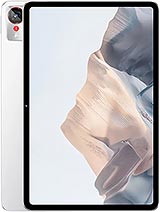
nubia Pad Pro
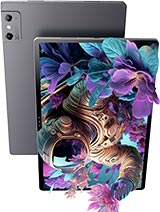
nubia Pad 3D
Axon Pad
nubia RedMagic Tablet
Galaxy Tab S10+