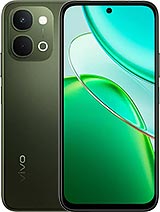
Acer Iconia Duo S12 review
The Duo S12 suits someone who wants a large, stylus-enabled canvas for reading, note-taking, and light media at home or in the office, and who is content to stay tethered to WiFi. Anyone who expects to travel with it, record video or photos, or use it as a secondary communications device should look elsewhere."
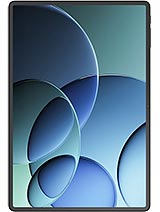
This review is written with AI assistance from Acer’s published specifications and public benchmark data for the Acer Iconia Duo S12, and the rating is spec-based. GoSolo does not physically test devices; where we estimate real-world behaviour such as battery life or charge time, we say so. How we rate phones.
Overview
The Iconia Duo S12 is a home-bound note-taking and media tablet with a smooth 120Hz OLED display and stylus support, but the WiFi-only design, modest 13MP camera, and mid-range Dimensity 7400 mean it cannot pull double duty as a travel device or productivity workhorse. For someone anchored to a desk or sofa and willing to leave their phone behind, the battery life and screen are solid; anyone expecting phone-grade versatility will find it too limited.
Design and build
At 560 grams and just 6.5mm thick, the Duo S12 is light and slim for a 12.2-inch device, making it easy to tuck into a bag. The glass front, aluminum frame, and aluminum back feel inert and industrial rather than luxurious, which suits a tablet designed to sit in your lap more than a hand-held display. The tradeoff is obvious: glass scratches and cracks without warning, and the lack of an IP rating means spilled coffee or a dropped tablet near a puddle is a real risk. For a wireless-only device pitched at home and office use, the omission of any water resistance feels shortsighted.
Display
The 12.2-inch OLED panel at 280 ppi is sharp enough for reading text and viewing photos up close, and the 120Hz refresh rate makes scrolling and stylus input feel fluid rather than sticky. Brightness at 600 nits is adequate in typical indoor lighting and sufficient to read in bright rooms, but falls short of the glare-dominance you see on high-end tablets or laptop screens; direct sunlight will still wash out contrast. The aspect ratio leans tall (1840x2880), which favors reading and note-taking over watching widescreen video. For its intended role, the screen is the strongest hardware feature.
Performance
The Mediatek Dimensity 7400 with Mali-G615 GPU sits in the capable middle ground: it runs Android 16 smoothly, handles web browsing, email, and office apps without lag, and will not choke on video playback or light multitasking. Demanding games, video editing with effects, and photo processing at large scales will hit performance ceilings, but a buyer shopping a stationary tablet is unlikely to push those boundaries daily. For note-taking, reading, and casual consumption, this chipset is sufficient; it is not a chip for someone who wants to edit 4K footage or run three heavy apps in parallel.
Software and storage
Android 16 is the latest, and a dedicated microSDXC slot means you can expand storage without sacrificing internal space—a practical advantage that many modern tablets omit. The 256GB base capacity holds several hundred apps, thousands of PDFs and documents, and hours of video before you feel squeezed. USB Type-C 2.0 is slow for large file transfers compared to USB 3 seen on many rivals, but for a WiFi-first device that is rarely connected to a desktop, the practical impact is minimal.
Camera
The 13MP main camera and 5MP front are basic. 1080p video at 30fps is what you would expect from a budget phone in 2020, not a 2026 tablet. Photos in good light are acceptable for casual snaps and sharing, but the sensor lacks resolution and the lack of any ultra-wide option means you cannot capture wide scenes. In low light, results will be murky and soft. Video calls over WiFi will work fine, but anyone planning to record talks, presentations, or content should plan on an external device.
Battery and charging
The 8000 mAh battery should deliver about 10 to 12 hours of moderate screen time on the 12.2-inch OLED—easy to hit a full day if you are reading, taking notes, or browsing without constant video. The spec sheet does not list charging wattage or time, which is a red flag; wireless tablets can take hours to recharge from empty, and slow wired charging is worse. For a device meant to sit on a desk or table most of the time, battery life matters more than speed, but the silence on charging specs suggests Acer may not be proud of that number.
Value and verdict
A WiFi-only tablet with no cellular modem and no 5G antenna is inherently static—it cannot be your communication device away from a network, so you must carry a phone anyway. That is the core constraint. Within that niche, the Duo S12 offers genuine strengths: a smooth OLED screen, stylus support, a dedicated microSD slot, and full-day battery for stationary reading and note-taking. The modest 13MP camera and mid-range processor are not dealbreakers for someone who is not editing photos or rendering video. The missing water resistance and reliance on 600 nits brightness in bright rooms are small friction points. For the right buyer—someone who wants a premium note-taking canvas for home or office, tethered to WiFi—this is coherent. For anyone expecting this to double as a travel tablet or replace a laptop for creative work, the wireless-only design and camera limits will frustrate.
Verdict
The Duo S12 suits someone who wants a large, stylus-enabled canvas for reading, note-taking, and light media at home or in the office, and who is content to stay tethered to WiFi. Anyone who expects to travel with it, record video or photos, or use it as a secondary communications device should look elsewhere."
- Smooth 120Hz OLED display and stylus support make note-taking and reading fluid and responsive
- 8000mAh battery delivers roughly a full day of moderate use without reaching for a charger
- Dedicated microSD slot lets you expand storage for media without eating into the 256GB internal pool
- Thin (6.5mm) and light (560g) for a 12.2-inch tablet, practical to carry or rest in your lap
- WiFi-only design means it cannot function without a network connection, so you still need a phone for calls and messages away from home
- No charging wattage or time specified; risk of glacial recharge speeds on a battery this large
- 13MP camera and 1080p video are stale for 2026; unsuitable for recording content or travel documentation
Acer Iconia Duo S12 Key Specifications
The essentials at a glance. See the full spec sheet.
| Released | 2026, June 03 |
|---|---|
| Display | 12.2 inches, 435.7 cm2, OLED, 120Hz, 600 nits |
| Resolution | 1840 x 2880 pixels (~280 ppi density) |
| Chipset | Mediatek Dimensity 7400 (4 nm) |
| RAM & storage | 256GB 8GB RAM |
| Main camera | 13 MP, (wide), AF |
| Selfie camera | 5 MP |
| Battery | 8000 mAh |
| Software | Android 16 |
| Dimensions | 6.5 mm thickness |
| Weight | 560 g (1.23 lb) |
| Build | Glass front, aluminum frame, aluminum back |
| Durability | Stylus support |
| Network | No cellular connectivity |
| NFC | No |
| USB | USB Type-C 2.0 |
Acer Iconia Duo S12 FAQ
Common questions, answered from the spec sheet.
Does the Iconia Duo S12 support 5G?
No. The Iconia Duo S12 tops out at No cellular connectivity, without 5G.
What chipset does the Iconia Duo S12 use?
The Iconia Duo S12 runs on the Mediatek Dimensity 7400 (4 nm).
What display does the Iconia Duo S12 have?
A 12.2 inches, 435.7 cm2 OLED, 120Hz, 600 nits, 1840 x 2880 pixels (~280 ppi density).
How big is the Iconia Duo S12 battery?
The Iconia Duo S12 has a 8000 mAh battery.
Does the Iconia Duo S12 have NFC?
No, the Iconia Duo S12 does not list NFC support.
Is the Iconia Duo S12 water resistant?
The Iconia Duo S12 carries a Stylus support rating.
Does the Iconia Duo S12 support a microSD card?
Yes, the Iconia Duo S12 supports expandable storage (microSDXC (dedicated slot)).
Alternatives to consider
If the Iconia Duo S12 isn’t quite right, these are the closest calls.

Iconia Duo S14
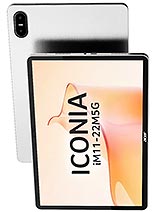
Iconia iM11-22M5G
Iconia iM11
Iconia Duo D12
Nord CE6 Lite