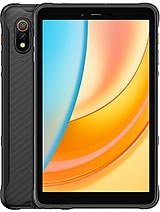
Amazon Alexa Tablet 11 (2026) review
This tablet makes sense only if you are already embedded in Amazon's Alexa ecosystem and want a convenient household companion rather than a serious portable device. Otherwise, the dated processor and stripped-down cameras make it a hard sell against broader Android alternatives at the same cost.
This review is based on Amazon’s published specifications and public benchmark data for the Amazon Alexa Tablet 11 (2026), and the rating is spec-based. GoSolo does not physically test devices; where we estimate real-world behaviour such as battery life or charge time, we say so. How we rate phones.
Overview
Amazon's 11-inch tablet is a straightforward mid-range device pitched at Alexa users and casual content consumption, held back by a dated chipset, basic cameras, and sparse software features that don't justify the price against Android tablets already on the market.
Design & build
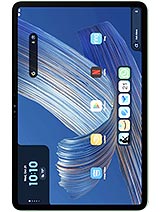
The Alexa Tablet 11 is competently made. At 446 grams, it sits comfortably in the lightweight end for an 11-inch slate, and the glass-front-with-aluminum-frame construction feels assured without fussiness. The three finish options—Graphite, Amethyst, Matcha—offer some visual flavor at an entry price point. Stylus support bundled in is a small but useful touch, particularly for a household device where light note-taking or annotation might happen casually. None of this is exceptional, but it shows Amazon isn't cutting corners on tactile quality.
Display
The 11-inch IPS LCD runs 2560×1600 pixels in 16:10, delivering roughly 274 ppi density. That is a sharp, well-composed display for reading, web browsing, and video streaming. The 90Hz refresh adds a smooth feel when scrolling, which is noticeable and appreciated on a tablet where your hand is constantly in motion. For a €300 device, this is one of the genuine strengths. It is not OLED and colors won't pop with the vividness of pricier tablets, but brightness and sharpness are solid for everyday use.
Performance
The MediaTek Kompanio 540, a 6nm chip, is a handicap for 2026. This processor was designed for budget tablets three years ago and feels dated against the faster mid-range mobile chips now standard at this price. Combined with 8GB of RAM, it will handle light productivity, messaging, and video consumption without stuttering, but heavier app launches, gaming, and multitasking will expose its limits. For a tablet asked to do schoolwork or run design apps, this chipset is a step below what you should expect for the money in 2026. Battery-draining inefficiency is also a risk with older silicon.
Software
Android 16 is current, and Amazon layers its Alexa integration, Fire Store apps, and Echo ecosystem tie-ins on top. The question is not whether it runs Android well but whether Amazon's customization adds or subtracts value for you. If you live deep in the Alexa ecosystem—smart home control, voice shopping, Amazon Music—this tablet feels natural. If you do not, the software is just Android with unnecessary Alexa buttons and Amazon services taking up mental real estate. The Fire Store app catalog is also narrower than Google Play, which matters if you rely on specific apps. This is a tablet built first for Amazon's ecosystem, second for general Android users.
Camera
8MP on both sides with 1080p video is unremarkable in 2026. For quick reference shots or video calls to family, it works. For anything beyond that—creating content, capturing detail, or recording events—these cameras are a serious limitation. The rear camera lacks autofocus nuance, and the front-facing module will look soft in video calls. Most rivals at €300 ship with at least a 13MP main sensor and higher video bitrate. This is one area where Amazon clearly cut costs.
Battery & charging
The 6500mAh battery should deliver about a full day of moderate to heavy use, which is in line for an 11-inch tablet. Real-world runtime will depend on the Kompanio 540's efficiency—older chips tend to drain faster than contemporary alternatives. Charging specs are not listed in the available data, so actual recharge speed and whether 18W refers to input or output remains unclear; this is information Amazon should clarify before release. For a tablet positioned as a living-room or desk device, battery endurance matters less than for a portable one, but faster charging would be welcome at this price.
Value & verdict
At approximately €300, this tablet occupies an awkward position. It is too expensive to be a budget clearance and too underpowered to feel like a smart choice in 2026. The display is genuinely good, the build is solid, and stylus support is a nice inclusion, but the combination of a 2023-era chipset, basic cameras, and no expandable storage reads as cost-cutting rather than thoughtful design. For Alexa loyalists who want a household display that doubles as a media tablet, the ecosystem tie-in might justify it. For everyone else, you can find Android tablets from more mainstream makers that offer faster processors, better cameras, or more storage at the same price. This is a device for a narrower audience than Amazon likely intends to reach.
Verdict
This tablet makes sense only if you are already embedded in Amazon's Alexa ecosystem and want a convenient household companion rather than a serious portable device. Otherwise, the dated processor and stripped-down cameras make it a hard sell against broader Android alternatives at the same cost.
- Bright, crisp 11-inch 2560×1600 IPS display at 274 ppi with 90Hz refresh is genuinely pleasant for reading and streaming
- Lightweight aluminum and glass build at 446g feels solid for the size
- Stylus support out of the box, useful for note-taking or sketching without extra purchase
- Wi-Fi 6 and Bluetooth 5.3 are current for 2026
- MediaTek Kompanio 540 is a budget tablet chipset from 2023; rivals now ship with faster processors and this will feel sluggish with heavy apps or multitasking
- Bare 8MP cameras front and back with 1080p video limit practicality for video calls or any creative work
- No expandable storage and only 64GB base option is tight for a €300 tablet when competitors offer more
Amazon Alexa Tablet 11 (2026) Key Specifications
The essentials at a glance. See the full spec sheet.
| Released | 2026, October 09 |
|---|---|
| Display | 11.0 inches, 350.9 cm2, IPS LCD, 90Hz |
| Resolution | 2560 x 1600 pixels, 16:10 ratio (~274 ppi density) |
| Chipset | MediaTek Kompanio 540 (6 nm) |
| RAM & storage | 64GB 8GB RAM, 128GB 8GB RAM |
| Main camera | 8 MP, AF |
| Selfie camera | 8 MP |
| Battery | 6500 mAh |
| Software | Android 16 |
| Weight | 446 g (15.73 oz) |
| Build | Glass front, aluminum frame, aluminum back |
| Durability | Stylus support |
| Network | No cellular connectivity |
| NFC | No |
| USB | USB Type-C 2.0 |
Amazon Alexa Tablet 11 (2026) FAQ
Common questions, answered from the spec sheet.
Does the Alexa Tablet 11 (2026) support 5G?
No. The Alexa Tablet 11 (2026) tops out at No cellular connectivity, without 5G.
What chipset does the Alexa Tablet 11 (2026) use?
The Alexa Tablet 11 (2026) runs on the MediaTek Kompanio 540 (6 nm).
What display does the Alexa Tablet 11 (2026) have?
A 11.0 inches, 350.9 cm2 IPS LCD, 90Hz, 2560 x 1600 pixels, 16:10 ratio (~274 ppi density).
How big is the Alexa Tablet 11 (2026) battery?
The Alexa Tablet 11 (2026) has a 6500 mAh battery.
Does the Alexa Tablet 11 (2026) have NFC?
No, the Alexa Tablet 11 (2026) does not list NFC support.
Is the Alexa Tablet 11 (2026) water resistant?
The Alexa Tablet 11 (2026) carries a Stylus support rating.
Does the Alexa Tablet 11 (2026) support a microSD card?
No, the Alexa Tablet 11 (2026) does not support expandable storage.
Alternatives to consider
If the Alexa Tablet 11 (2026) isn’t quite right, these are the closest calls.
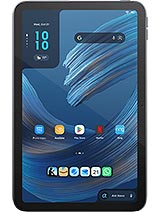
Alexa Tablet 8 (2026)
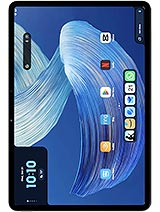
Alexa Tablet 12 Pro (2026)

MatePad Air Z
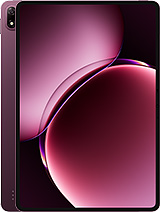
Pad 9 Pro Max
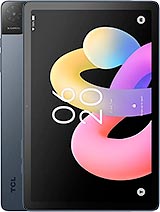
Tab 10L Gen 4