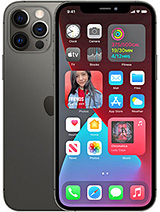
Apple iPhone 12 Pro review
The iPhone 12 Pro is a competent phone for a buyer in 2026 only if you find it used at a sharp discount and value its compact size, software longevity, and camera zoom. Otherwise, newer phones at this price offer larger batteries, faster chips, and quicker charging that matter more in daily life.
This review is written with AI assistance from Apple’s published specifications and public benchmark data for the Apple iPhone 12 Pro, and the rating is spec-based. GoSolo does not physically test devices; where we estimate real-world behaviour such as battery life or charge time, we say so. How we rate phones.
Overview
The iPhone 12 Pro is a 2020 flagship that remains capable for everyday use and photography, held back today by a smaller battery, older A14 chip, and modest single-zoom optics compared to what newer rivals now offer at similar prices. It is worth considering only as a discounted second-hand buy or for those deeply embedded in Apple's ecosystem who prioritize software longevity and compact size.
Design & build
The 12 Pro remains one of Apple's most balanced phones. At 189 grams and 7.4mm thin, it fits one-handed and slides into pockets without bulk. The flat stainless steel edges feel premium but are slippery; the Ceramic Shield front glass is tougher than standard Gorilla Glass but not immune to scratches or cracks from hard drops. IP68 rating (immersible to 6m for 30 minutes) is standard for flagship phones today, yet the 12 Pro still delivers it without compromise. The glass back and metal frame make it feel expensive, though they also attract fingerprints.
Display
The 6.1-inch OLED panel is one of the phone's genuine strengths. It hits 1200 nits peak brightness, which translates to readable text and images even under direct sunlight; typical brightness peaks at 800 nits, plenty for indoor and shaded outdoor use. The 460 ppi density keeps text sharp, though it is not so dense that individual pixels vanish—neither a con nor a standout at this size. HDR10 and Dolby Vision support means streaming video and Apple-optimized apps render with richer tones. Compared to mid-range OLED panels of the same era, this one is genuinely brighter and more color-accurate.
Performance
The A14 Bionic earned its reputation in 2020 as the fastest phone chip by far, but it is now four years old. A 596k AnTuTu score sounds respectable until you check what current flagships and mid-range phones score. Day-to-day work—email, messaging, social media, browsing—runs without lag. Apps open quickly, and multitasking is smooth. Demanding games like Genshin Impact or Call of Duty Mobile will request lower graphics settings or show frame dips on high detail; the GPU simply cannot keep up with what newer silicon handles. For a buyer in 2026, this chip is adequate but no longer impressive, and it will age faster than a current flagship would.
Camera
The camera system leans on solid fundamentals rather than headline megapixels. The 26mm main lens is f/1.6, wider than many rivals, which helps in low light and gives that shallow-depth feel. Dual pixel autofocus and OIS are practical assets for handheld video and tracking moving subjects. The 52mm telephoto with 2x optical zoom is the system's best card: it lets you frame distant subjects without cropping and losing sharpness, something many rivals only achieve by cropping a wide sensor. The 120-degree ultrawide is less thrilling—f/2.4 is modest, and ultrawide distortion is visible—but it captures groups and architecture without the fish-eye oddities of earlier designs. The LiDAR scanner aids depth sensing in low light, mainly useful for portrait mode and AR. Video tops out at 4K 60fps with 10-bit HDR and Dolby Vision, which is solid for 2020 but now entry-level. The 12MP sensor size is dated; newer phones use 48MP or higher sensors with pixel-binning to extract more detail. Night mode works reliably, though a newer phone with a larger main sensor will pull more light and recover shadow detail.
Battery & charging
The 2815 mAh battery is the 12 Pro's most glaring weakness in 2026. Apple optimizes software efficiency to extend runtime, so real endurance sits around 6 to 8 hours of heavy use (streaming, gaming, photography). Light use—browsing, messaging—can stretch to a full day, but that is a narrow window. Any user accustomed to modern batteries (4000 mAh and up) will notice frequent charging. The 20W wired charger reaches 50% in about 30 minutes and 100% in 50 to 60 minutes. That was competitive in 2020. Today, rivals at similar prices often deliver 60W to 100W, halving charge time. Wireless charging (15W MagSafe or Qi) exists but remains a convenience gimmick for most users. The small battery combined with slow charging makes this phone less suited to travelers or heavy users who cannot visit a plug during the day.
Software
iOS 14.1 at launch, upgradable to iOS 26.5, is a rare advantage. Apple commits to roughly 5 to 6 years of major OS updates, meaning the 12 Pro will see security patches and features long after most Android phones are abandoned. The software is locked down compared to Android—no custom launchers, file system access, or sideloading without tools—but that also means fewer malware vectors and less fragmentation. The trade-off is a closed ecosystem: if you switch to Android later, photos, notes, and habits built around iCloud will not migrate smoothly. For first-time iPhone buyers or those already in the Apple fold, this is not a concern. For others, the lock-in is real.
Value & verdict
At its original £219-$256 price from late 2020, the 12 Pro was a strong choice. In 2026, at that same price point, it is no longer competitive new. You are paying for four-year-old hardware: a dated chip, a small battery, and slow charging. However, as a second-hand or discounted buy—say, £100-150 or less—it becomes more interesting. The compact size, reliable camera system, and promise of years of software support appeal to specific buyers: those who want a smaller phone than modern flagships, users already committed to iCloud and Apple services, or photographers on a tight budget who value the 2x zoom without wanting the larger Pro Max. Anyone else should look at current mid-range iPhones (iPhone SE, iPhone 15) or Android rivals with newer chips and larger batteries at the same price.
Verdict
The iPhone 12 Pro is a competent phone for a buyer in 2026 only if you find it used at a sharp discount and value its compact size, software longevity, and camera zoom. Otherwise, newer phones at this price offer larger batteries, faster chips, and quicker charging that matter more in daily life.
- Compact 6.1-inch body with excellent build quality—glass and stainless steel frame feel solid and it is IP68 water-resistant to 6 meters
- Bright 1200-nit peak OLED display is sharp at 460 ppi and handles outdoor visibility well
- Dual optical zoom on the telephoto lens (52mm, 2x) avoids the digital crop quality loss rivals often impose at that focal length
- Will receive iOS updates for years—iOS 26.5 support is a rarity in the Android world
- 2815 mAh battery is undersized even for 2020; realistically 6 to 8 hours of heavy use, forcing a midday charge
- A14 chip is now four years old; demanding games and newer heavy apps show frame dips or need reduced settings
- 20W charging is slow by 2026 standards—rivals at this price point routinely hit 60W or faster, cutting charge time in half
Apple iPhone 12 Pro Key Specifications
The essentials at a glance. See the full spec sheet.
| Released | 2020, October 13 |
|---|---|
| Display | 6.1 inches, 90.2 cm2 (~86.0% screen-to-body ratio), Super Retina XDR OLED, HDR10, Dolby Vision, 800 nits (HBM), 1200 nits (peak) |
| Resolution | 1170 x 2532 pixels, 19.5:9 ratio (~460 ppi density) |
| Chipset | Apple A14 Bionic (5 nm) |
| RAM & storage | 128GB 6GB RAM, 256GB 6GB RAM, 512GB 6GB RAM |
| Main camera | 12 MP, f/1.6, 26mm (wide), 1/2.55", 1.4µm, dual pixel PDAF, OIS 12 MP, f/2.0, 52mm (telephoto), 1/3.4", 1.0µm, PDAF, OIS, 2x optical zoom 12 MP, f/2.4, 13mm, 120˚ (ultrawide), 1/3.4", 1.0µm TOF 3D LiDAR scanner (depth) |
| Selfie camera | 12 MP, f/2.2, 23mm (wide), 1/3.6", 1.0µm SL 3D, (depth/biometrics sensor) |
| Battery | 2815 mAh |
| Charging | Wired, PD2.0, 50% in 30 min15W wireless (MagSafe)15W wireless (Qi2) - requires iOS 17.4 update |
| Software | iOS 14.1, upgradable to iOS 26.5 |
| Dimensions | 146.7 x 71.5 x 7.4 mm (5.78 x 2.81 x 0.29 in) |
| Weight | 189 g (6.67 oz) |
| Build | Glass front, glass back, stainless steel frame |
| Durability | IP68 dust tight and water resistant (immersible up to 6m for 30 min) Apple Pay (Visa, MasterCard, AMEX certified) |
| Network | GSM / CDMA / HSPA / EVDO / LTE / 5G |
| NFC | Yes |
| USB | Lightning, USB 2.0 |
Apple iPhone 12 Pro FAQ
Common questions, answered from the spec sheet.
Does the iPhone 12 Pro support 5G?
Yes. The iPhone 12 Pro supports 5G networks.
What chipset does the iPhone 12 Pro use?
The iPhone 12 Pro runs on the Apple A14 Bionic (5 nm).
What display does the iPhone 12 Pro have?
A 6.1 inches, 90.2 cm2 (~86.0% screen-to-body ratio) Super Retina XDR OLED, HDR10, Dolby Vision, 800 nits (HBM), 1200 nits (peak), 1170 x 2532 pixels, 19.5:9 ratio (~460 ppi density).
How big is the iPhone 12 Pro battery?
The iPhone 12 Pro has a 2815 mAh battery. Charging is rated at Wired, PD2.0, 50% in 30 min15W wireless (MagSafe)15W wireless (Qi2) - requires iOS 17.4 update.
Does the iPhone 12 Pro have NFC?
Yes, the iPhone 12 Pro has NFC.
Is the iPhone 12 Pro water resistant?
The iPhone 12 Pro carries a IP68 dust tight and water resistant (immersible up to 6m for 30 min) Apple Pay (Visa, MasterCard, AMEX certified) rating.
Does the iPhone 12 Pro support a microSD card?
No, the iPhone 12 Pro does not support expandable storage.
Does the iPhone 12 Pro have a headphone jack?
No, the iPhone 12 Pro does not have a 3.5mm headphone jack.
Alternatives to consider
If the iPhone 12 Pro isn’t quite right, these are the closest calls.
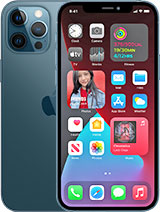
iPhone 12 Pro Max
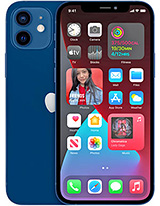
iPhone 12
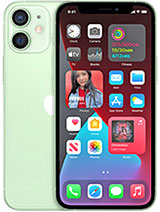
iPhone 12 mini
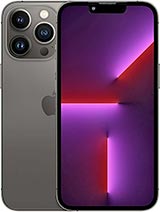
iPhone 13 Pro
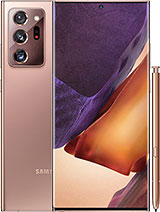
Galaxy Note 20 Ultra