Apple iPhone 16 review
Buy the iPhone 16 if you want a compact, reliable flagship that prioritizes build quality and iOS ecosystem consistency over raw specs. Skip it if you've owned an iPhone 15, value faster charging or larger battery, or are willing to accept Android to get more camera range and battery capacity at the same price.
This review is based on Apple’s published specifications and public benchmark data for the Apple iPhone 16, and the rating is spec-based. GoSolo does not physically test devices; where we estimate real-world behaviour such as battery life or charge time, we say so. How we rate phones.
Overview
The iPhone 16 delivers straightforward flagship performance in a compact frame: fast A18 chip, solid OLED display, and capable cameras with real optical stabilization. It's a mature, reliable phone that does nothing badly but offers no major leap over last year's 15—you're mostly paying for iOS and durability rather than breakthrough features.
Design & build
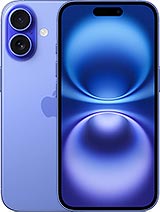
The iPhone 16 weighs 170 grams and measures 7.8mm thick, making it one of the few flagship-class phones that doesn't demand two hands to hold comfortably. The frame is aluminum with glass front and back, both protected by Ceramic Shield on both surfaces—the 2024 generation rated to Mohs level 4, which does mean less scratching in a pocket with keys. IP68 rating covers 6 meters of water immersion for 30 minutes, so accidental pool dunks and rain are not a crisis. This is a phone built to take casual abuse without flinching. Against competitors in the $600 range, the compact form factor stands out; most Android flagships at this price are larger and heavier, which matters if you actually want to use it one-handed or fit it into smaller bags.
Display
The 6.1-inch Super Retina XDR OLED delivers 1179×2556 pixels at 460 ppi—sharp enough that you won't see individual pixels at arm's length. The 1000 nits typical brightness handles direct sunlight without washing out, and the 2000-nit peak in HDR mode (used for videos and bright images in compatible apps) makes a real visual difference for watching filmed content or editing photos outdoors. The 19.5:9 aspect ratio is tall and narrow, which cramped the screen's width before Apple's notch receded further, but this was Apple's compromise and hasn't budged. Compared to Android rivals, OLED quality here is mature—color accuracy is fine, blacks are true, and response time is fast enough for gaming. Nothing stands out as exceptional, but nothing falls short of what you expect at this price.
Performance
The A18 is a flagship-class chip built on 3 nanometers with a hexa-core CPU split between two high-performance cores at 4.04 GHz and four efficiency cores at 2.20 GHz, plus a 5-core GPU. The AnTuTu score of 1.7 million places it at the top tier for its generation. In practice, this handles everything—modern games run at high settings without stutter, video editing apps open instantly, multitasking never causes lag, and machine learning features (Apple's on-device AI tools) run smoothly. Eight gigabytes of RAM is standard for the tier and sufficient for heavy use. The real limitation is that the A18 is not a generational jump over last year's A17 Pro in the iPhone 15—performance gains are incremental, which matters if you already own a 15. For new buyers, this is flagship capability; for upgrade seekers, the performance story is thin.
Software
iOS 18 comes standard, with promised updates through iOS 26.5 according to the spec sheet (though the exact endpoint of support typically extends years into the future beyond what's listed). Apple's closed ecosystem means consistent security patches, predictable software behavior, and tight hardware-software integration—all of which appeal to users who prefer simplicity and don't want to chase the latest Android security layer or deal with skin fragmentation. The trade-off is less customization than Android; you accept Apple's design choices rather than bending the OS to your preferences. For someone migrating from Android, the learning curve is real but short.
Camera
The dual rear setup is unbalanced: the 48MP main lens with f/1.6 aperture, 1/1.56-inch sensor, and sensor-shift optical stabilization is genuinely strong, capturing sharp handheld shots in moderate light and keeping video rock-steady without a tripod. Dual-pixel PDAF ensures fast autofocus. The 12MP ultrawide at f/2.2 with a 120-degree field of view is noticeably weak—the narrower aperture and smaller sensor mean less light and more noise in dim conditions, making group shots and landscapes feel undercooked compared to the main camera's output. The selfie is a 12MP f/1.9 lens with face detection, good enough for video calls and portraits but unremarkable. Video ranges from 4K up to 60fps with Dolby Vision HDR and 1080p at up to 240fps for slow-motion. The disparity between the main and ultrawide is the real camera story here: you get one very good lens and one adequate one. Competitors at this price often split the difference with more balanced camera systems.
Battery & charging
The 3561 mAh battery yields an active use score of 15 hours 42 minutes. That translates to roughly a full day on moderate use—social media, messaging, streaming, casual calls. Heavy workdays (heavy navigation, constant video calls, intensive gaming) will drain it faster and might require an evening top-up. Against Android flagships at the same price, which often pack 5000+ mAh, this feels small. Charging maxes at 25W wired (50% in 30 minutes via USB-C Power Delivery 2.0) and 15W wireless via MagSafe or Qi2. Both figures are respectable but no longer competitive; Android rivals now commonly hit 60W to 100W, meaning a 15-minute full charge is routine elsewhere. The tradeoff is slightly slower refueling in exchange for a compact phone, though that's a choice Apple made rather than a technical necessity.
Value & verdict-context
At $589 USD (€595, £510), the iPhone 16 occupies a familiar position: it's the compact, familiar iPhone at the non-Pro price tier. Upgrade appeal from last year's 15 is minimal—same size, same display resolution, same camera megapixel counts, same processor tier. The A18 is faster in practice, but not in a way that changes your daily experience. The real audience is either new to iPhone (switching from Android or an older model) or someone who values iOS reliability, compact form, and strong build quality enough to ignore that rivals offer faster charging, larger batteries, and more impressive camera specs at the same money. For Global South markets where electricity is pricey or unreliable, the smaller battery and slower charging are more painful trade-offs than they are in regions with abundant outlets. If you've held an iPhone 15, you've already experienced what the 16 is; the upgrade isn't about new capabilities—it's about a newer chip and subtle polish.
Verdict
Buy the iPhone 16 if you want a compact, reliable flagship that prioritizes build quality and iOS ecosystem consistency over raw specs. Skip it if you've owned an iPhone 15, value faster charging or larger battery, or are willing to accept Android to get more camera range and battery capacity at the same price.
- Compact 6.1-inch design at 170g, smaller than most Android flagships at the same price
- 48MP main camera with f/1.6 aperture and sensor-shift stabilization outperforms the ultrawide setup (12MP, f/2.2 is notably weak)
- Super Retina XDR OLED reaches 2000 nits in HDR, genuinely bright for outdoor viewing and video work
- 25W charging gets to 50% in 30 minutes; full day of moderate use without fussing over battery
- 25W wired and 15W wireless charging lag behind Android rivals at the same price, which now routinely offer 60-100W
- 3561 mAh battery sits below flagships from competitors; survives a day only on moderate use, not heavy workdays
- No meaningful upgrade from the iPhone 15—same display size and camera module count, same processor class, minimal spec gains
Apple iPhone 16 Key Specifications
The essentials at a glance. See the full spec sheet.
| Released | 2024, September 09 |
|---|---|
| Display | 6.1 inches, 91.7 cm2 (~86.8% screen-to-body ratio), Super Retina XDR OLED, HDR10, Dolby Vision, 1000 nits (typ), 2000 nits (HBM) |
| Resolution | 1179 x 2556 pixels, 19.5:9 ratio (~460 ppi density) |
| Chipset | Apple A18 (3 nm) |
| RAM & storage | 128GB 8GB RAM, 256GB 8GB RAM, 512GB 8GB RAM |
| Main camera | 48 MP, f/1.6, 26mm (wide), 1/1.56", 1.0µm, dual pixel PDAF, sensor-shift OIS 12 MP, f/2.2, 13mm, 120˚ (ultrawide), 0.7µm, dual pixel PDAF |
| Selfie camera | 12 MP, f/1.9, 23mm (wide), 1/3.6", 1.0µm, PDAF SL 3D, (depth/biometrics sensor) |
| Battery | 3561 mAh |
| Charging | Wired, PD2.0, 50% in 30 min25W wireless (MagSafe), 15W wireless (China only)15W wireless (Qi2)4.5W reverse wired |
| Software | iOS 18, upgradable to iOS 26.5 |
| Dimensions | 147.6 x 71.6 x 7.8 mm (5.81 x 2.82 x 0.31 in) |
| Weight | 170 g (6.00 oz) |
| Build | Glass front (Ceramic Shield), glass back, aluminum frame |
| Durability | IP68 dust tight and water resistant (immersible up to 6m for 30 min) Apple Pay (Visa, MasterCard, AMEX certified) |
| Network | GSM / CDMA / HSPA / EVDO / LTE / 5G |
| NFC | Yes |
| USB | USB Type-C 2.0, DisplayPort |
Apple iPhone 16 FAQ
Common questions, answered from the spec sheet.
Does the iPhone 16 support 5G?
Yes. The iPhone 16 supports 5G networks.
What chipset does the iPhone 16 use?
The iPhone 16 runs on the Apple A18 (3 nm).
What display does the iPhone 16 have?
A 6.1 inches, 91.7 cm2 (~86.8% screen-to-body ratio) Super Retina XDR OLED, HDR10, Dolby Vision, 1000 nits (typ), 2000 nits (HBM), 1179 x 2556 pixels, 19.5:9 ratio (~460 ppi density).
How big is the iPhone 16 battery?
The iPhone 16 has a 3561 mAh battery. Charging is rated at Wired, PD2.0, 50% in 30 min25W wireless (MagSafe), 15W wireless (China only)15W wireless (Qi2)4.5W reverse wired.
Does the iPhone 16 have NFC?
Yes, the iPhone 16 has NFC.
Is the iPhone 16 water resistant?
The iPhone 16 carries a IP68 dust tight and water resistant (immersible up to 6m for 30 min) Apple Pay (Visa, MasterCard, AMEX certified) rating.
Does the iPhone 16 support a microSD card?
No, the iPhone 16 does not support expandable storage.
Does the iPhone 16 have a headphone jack?
No, the iPhone 16 does not have a 3.5mm headphone jack.
Alternatives to consider
If the iPhone 16 isn’t quite right, these are the closest calls.
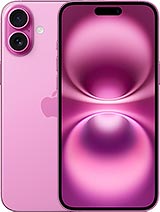
iPhone 16 Plus
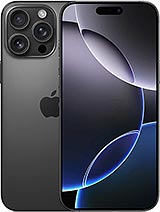
iPhone 16 Pro Max
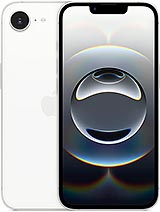
iPhone 16e
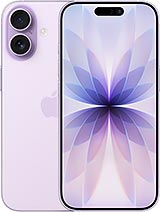
iPhone 17
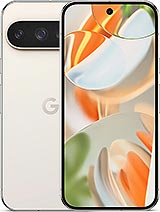
Pixel 9 Pro