Apple iPhone 17 review
The iPhone 17 suits people who value a bright, smooth screen and reliable performance over raw specs and charging speed. If you switch phones frequently, prioritize battery endurance, or want a zoom lens, look elsewhere.

This review is written with AI assistance from Apple’s published specifications and public benchmark data for the Apple iPhone 17, and the rating is spec-based. GoSolo does not physically test devices; where we estimate real-world behaviour such as battery life or charge time, we say so. How we rate phones.
Overview
The iPhone 17 is a well-built 6.3-inch flagship with a bright 120Hz OLED screen and a capable A19 chip, but it's held back by modest battery capacity and 25W charging that feels incremental for 2025. For the price, it delivers a solid everyday experience without any standout advantage.
Design & Build
The iPhone 17 is a compact, familiar design: 177 grams, 8mm thick, glass front and back with an aluminum frame. Ceramic Shield 2 claims Mohs 5 hardness, which is better than ordinary glass but still prone to microabrasions. The phone feels solid and fits one-handed—a genuine advantage over the sprawling 6.7-inch models. Build quality is Apple's standard: precise seams, no creaks, and a weightless feel in the palm. IP68 waterproofing to 6 meters for 30 minutes covers accidental submersion and is in line with the market norm.
Display
A 6.3-inch Super Retina XDR OLED at 3000 nits peak is genuinely usable in bright sunlight without squinting—most rivals in this class manage 1500–2000 nits and struggle outdoors. Resolution is 1206×2622 pixels (460 ppi), which is sharp enough at arm's length but not startling; you won't notice the pixel grid in normal use. The 120Hz LTPO refresh is where the display shines: scrolling through lists, swiping between apps, and panning photos all feel buttery compared to 60Hz alternatives. The anti-reflective coating reduces glare, and Dolby Vision support is nice if you watch HDR content, though few platforms take full advantage. Overall, this is one of the iPhone 17's genuine strong points—it's the kind of screen that justifies staring at your phone for hours.
Performance
The A19 is a top-tier flagship chip for 2025, and the numbers prove it: AnTuTu 2.1 million, GeekBench single-core 9360. Real-world performance is smooth. Apps launch instantly, multitasking is lag-free, and graphically demanding games like Genshin Impact run at high settings without stutter. The hexa-core CPU splits work between two performance cores (4.26 GHz) and four efficiency cores (2.60 GHz), so everyday tasks sip power while heavy workloads wake the fast cores. The 5-core GPU is not cutting-edge, but it's sufficient for the workloads this phone sees. One caveat: sustained gaming sessions (20+ minutes of intense load) can trigger thermal throttling as the frame dips slightly, a quirk Apple hasn't fully solved despite the efficient 3nm node. For typical use—messaging, browsing, casual gaming, video—you won't notice a ceiling.
Software
iOS 26 is current at launch and upgradeable to iOS 26.5 within the review window. Apple's ecosystem remains tight: seamless handoff between devices, iCloud integration baked in, and a curated App Store that limits choices but reduces malware risk. The downside is familiarity: iOS has changed little in its core structure for years. If you've used an iPhone, you know exactly what to expect. New features are evolutionary, not revolutionary, and personalization is limited compared to Android. Sideloading is still not officially supported, which narrows app options for power users. For those locked into Apple's world, iOS is reliable; for everyone else, it's a walled garden.
Camera
The dual rear cameras are both 48 megapixels, and the specs are respectable: f/1.6 wide (26mm, sensor-shift OIS) and f/2.2 ultrawide (120°). In daylight, the wide camera captures crisp, detailed photos with natural color and minimal smearing at edges. The f/1.6 aperture makes a measurable difference in dim indoor light—portraits retain detail where f/1.8 rivals soften. Optical stabilization keeps handheld shots steady, and dual-pixel PDAF nails focus fast. The ultrawide is where compromises show: f/2.2 is not bright, and the 120° field is tighter than some competitors, limiting dramatic landscapes. There is no telephoto, which is a real gap for a phone at this price—rivals often include 2x or 3x zoom in this class. Video is strong: 4K up to 60fps with Dolby Vision HDR and stereo sound, stabilized by either OIS or EIS. The 18MP front camera handles video calls and selfies competently with face-adaptive lighting.
Battery & Charging
The 3692 mAh cell is modest for a 2025 flagship—most rivals at this price jump to 4000+ mAh. Apple's efficiency buys you about 17–18 hours of mixed use before you hit zero, or roughly a full day if you're moderate with screen time and avoid constant 5G. Heavy users will drain it by evening. Wired charging is rated 25W and claims 50 percent in 20 minutes, which is respectable in absolute terms but feels behind: rivals are shipping 50W, 65W, even 100W at this price. Full charge takes roughly 40 minutes from empty, assuming a proper USB-C PD charger. Wireless MagSafe is 15W (25W in certain markets) and slower at 30 minutes to 50 percent—convenient but not urgent. Reverse wired is 4.5W, a novelty that is too slow to meaningfully top up an accessory.
Value & Verdict
At roughly $640 USD (€752 EUR), the iPhone 17 sits in the mainstream flagship bracket. For the price, you get a capable A19 chip, a genuinely excellent 120Hz OLED screen, solid build, and reliable iOS. The shortcomings are real: charging is pedestrian for 2025, battery is small for the class, and the camera lacks a telephoto option. It is a phone that does everything competently but excels at display and everyday performance. Competitors offer more battery capacity, faster charging, or camera zoom for similar money. The iPhone 17 is not an obvious best buy—it's a steady, familiar choice for someone already in the Apple ecosystem or willing to pay for design consistency and software polish.
Verdict
The iPhone 17 suits people who value a bright, smooth screen and reliable performance over raw specs and charging speed. If you switch phones frequently, prioritize battery endurance, or want a zoom lens, look elsewhere.
- 120Hz LTPO OLED display with 3000 nits peak brightness makes scrolling smooth and outdoor visibility excellent
- Dual 48MP camera system with f/1.6 wide aperture and sensor-shift OIS performs well in low light
- A19 chip handles demanding tasks and gaming without stuttering, though sustained load may warm the device
- IP68 durability and Ceramic Shield 2 offer solid protection from water and drops
- 25W wired charging is slow compared to rivals hitting 50W+ at this price point
- 3692 mAh battery barely lasts a full day with moderate to heavy use, especially on 5G
- No camera telephoto lens—ultrawide is f/2.2 and narrow, limiting composition options
Apple iPhone 17 Key Specifications
The essentials at a glance. See the full spec sheet.
| Released | 2025, September 09 |
|---|---|
| Display | 6.3 inches, 96.4 cm2 (~90.1% screen-to-body ratio), LTPO Super Retina XDR OLED, 120Hz, HDR10, Dolby Vision, 1000 nits (typ), 1600 nits (HBM), 3000 nits (peak) |
| Resolution | 1206 x 2622 pixels, 19.5:9 ratio (~460 ppi density) |
| Chipset | Apple A19 (3 nm) |
| RAM & storage | 256GB 8GB RAM, 512GB 8GB RAM |
| Main camera | 48 MP, f/1.6, 26mm (wide), 1/1.56", 1.0µm, dual pixel PDAF, sensor-shift OIS 48 MP, f/2.2, 13mm, 120˚ (ultrawide), 1/2.55", 0.7µm, PDAF |
| Selfie camera | 18 MP multi-aspect, f/1.9, 20mm (ultrawide), PDAF SL 3D, (depth/biometrics sensor) |
| Battery | 3692 mAh |
| Charging | Wired, PD3.2, AVS, 50% in 20 min25W wireless MagSafe/Qi2, 50% in 30 min (15W - China)4.5W reverse wired |
| Software | iOS 26, upgradable to iOS 26.5 |
| Dimensions | 149.6 x 71.5 x 8 mm (5.89 x 2.81 x 0.31 in) |
| Weight | 177 g (6.24 oz) |
| Build | Glass front (Ceramic Shield 2), aluminum frame, glass back |
| Durability | IP68 dust tight and water resistant (immersible up to 6m for 30 min) Apple Pay (Visa, MasterCard, AMEX certified) |
| Network | GSM / CDMA / HSPA / EVDO / LTE / 5G |
| NFC | Yes |
| USB | USB Type-C 2.0, DisplayPort |
Apple iPhone 17 FAQ
Common questions, answered from the spec sheet.
Does the iPhone 17 support 5G?
Yes. The iPhone 17 supports 5G networks.
What chipset does the iPhone 17 use?
The iPhone 17 runs on the Apple A19 (3 nm).
What display does the iPhone 17 have?
A 6.3 inches, 96.4 cm2 (~90.1% screen-to-body ratio) LTPO Super Retina XDR OLED, 120Hz, HDR10, Dolby Vision, 1000 nits (typ), 1600 nits (HBM), 3000 nits (peak), 1206 x 2622 pixels, 19.5:9 ratio (~460 ppi density).
How big is the iPhone 17 battery?
The iPhone 17 has a 3692 mAh battery. Charging is rated at Wired, PD3.2, AVS, 50% in 20 min25W wireless MagSafe/Qi2, 50% in 30 min (15W - China)4.5W reverse wired.
Does the iPhone 17 have NFC?
Yes, the iPhone 17 has NFC.
Is the iPhone 17 water resistant?
The iPhone 17 carries a IP68 dust tight and water resistant (immersible up to 6m for 30 min) Apple Pay (Visa, MasterCard, AMEX certified) rating.
Does the iPhone 17 support a microSD card?
No, the iPhone 17 does not support expandable storage.
Does the iPhone 17 have a headphone jack?
No, the iPhone 17 does not have a 3.5mm headphone jack.
Alternatives to consider
If the iPhone 17 isn’t quite right, these are the closest calls.

iPhone 17e

iPhone Air
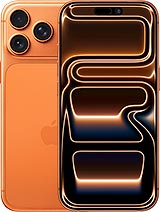
iPhone 17 Pro Max
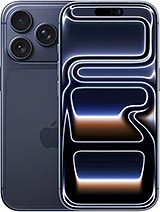
iPhone 17 Pro
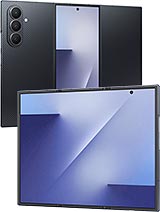
Galaxy Z TriFold