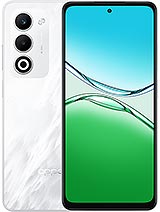
Blackview Shark 9 review
The Shark 9 suits users in the global south who prioritize a long-lasting battery and large screen over performance or camera quality, and who can accept slow charging as a trade-off. Anyone expecting gaming performance, quick charge times, or compelling photography should look at a Xiaomi Redmi Note or Realme device at the same price point.
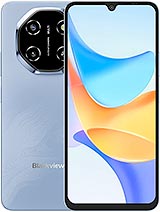
This review is based on Blackview’s published specifications and public benchmark data for the Blackview Shark 9, and the rating is spec-based. GoSolo does not physically test devices; where we estimate real-world behaviour such as battery life or charge time, we say so. How we rate phones.
Overview
The Blackview Shark 9 is a budget 5G phone with a spacious 6.88-inch screen and 5000mAh battery that can stretch through a day of normal use, but it's hampered by slow 18W charging and a weak Unisoc chipset that handles daily tasks without drama but won't impress anyone who plays games or edits media. At €110 it's honest value for the global south where large screens and battery capacity matter more than performance headroom.
Design & build
At 210g and 8.5mm thick, the Shark 9 feels solid in hand and sits in that comfortable spot between pocketable and spacious. The frame-and-back design is plain but not cheap-feeling. 5G connectivity, stereo speakers, and NFC all work. What's practical is the dedicated microSD slot—you won't sacrifice a SIM to expand storage. The side-mounted fingerprint sensor is fast enough for daily unlock. Nothing flashy, nothing flimsy. It is a phone built to last a year or two of normal use, and the colours (Phantom Black, Glacier Blue, Mint Green) at least break the monotony of grey-and-silver budget phones.
Display
The 6.88-inch IPS LCD gives you real estate for video, reading, and text without zoom. At 260 ppi, the pixel grid becomes visible if you hold it close and stare—text edges don't have the sharpness you'd get from a 1440p screen, but for daily thumb-distance reading and browsing it's acceptable. The 120Hz refresh rate is a welcome pace boost for scrolling, and 450 nits brightness keeps the screen legible in direct sun, though it won't blow you away on a beach. This is a workhorse display, not a showcase one.
Performance
The Unisoc T8100 is entry-level silicon that handles WhatsApp, email, light web browsing, and YouTube without stutters or app crashes. The 4GB or 8GB RAM variant determines smoothness under load—go 8GB if you juggle many apps. Gaming is a mixed story: casual puzzle games and light titles run fine, but anything demanding (PUBG, Genshin Impact, Diablo Immortal) will either choke or demand the lowest graphics settings and still see frame drops. This chip is 2024 tech but punches below the weight of rivals at this price from Xiaomi or Realme, which often pair a mid-range Snapdragon with faster GPU cores. If you're not gaming, you won't notice the gap; if you are, this phone will frustrate you.
Software
Android 15 with DokeOS 4.2 (Blackview's own skin) keeps the phone responsive out of the box. DokeOS is light compared to MIUI or OxygenOS, and it doesn't load you with bloat. Updates are not guaranteed to flow as regularly as they would from a major brand, so security patches may lag; that's the trade-off of boutique OEM support. The phone should stay usable for two years, but don't expect five-year OS support.
Camera
The 16MP main shooter captures bright daylight photos with reasonable detail and colour balance, and 4K video at 30fps is a bonus at this price. The auxiliary lens (likely macro focus) doesn't add much real-world value because the sensor size and lack of optical zoom already limit close-up versatility. The 8MP selfie is adequate for video calls and casual shots. Night mode is absent, so low-light results are flat and noisy. Zoom, zoom-in crops, or astrophotography are off the table. This is a camera that handles 'look, I'm here' moments, not artistic ambition.
Battery & charging
The 5000mAh cell will comfortably get you through a moderate day—email, calls, messaging, some video—and into the evening before the battery hits red. Heavy use or video streaming will demand a charge by late afternoon. Where the Shark 9 stumbles is charging speed: 18W means roughly 2.5 to 3 hours from empty to full. In an era when rivals offer 65W or 120W fast charging, even at budget prices, this feels slow. You'll need to plug in overnight or accept a morning top-up ritual. The upside is that slower charging is gentler on long-term battery health, but most buyers at this price would trade longevity for a quick lunch-break refill.
Value & verdict-context
At around €110, the Shark 9 targets buyers in emerging markets where a 5000mAh battery and large screen matter more than benchmark scores. The dedicated microSD slot and stereo speakers add practicality. Against competitors like the Xiaomi Redmi Note or Realme C-series at similar prices, the Shark 9's slower charging, weaker chip, and basic camera are disadvantages—you could get faster performance or better image quality for the same money. However, if you prioritize battery life, screen size, and all-day endurance over gaming or photography, and you live where 5G is rolled out, the Shark 9 makes sense. It's honest gear, not impressive gear.
Verdict
The Shark 9 suits users in the global south who prioritize a long-lasting battery and large screen over performance or camera quality, and who can accept slow charging as a trade-off. Anyone expecting gaming performance, quick charge times, or compelling photography should look at a Xiaomi Redmi Note or Realme device at the same price point.
- 5000mAh battery easily lasts a full day of moderate use
- 6.88-inch screen is genuinely useful for reading, video, and browsing without feeling cramped
- Dedicated microSD slot lets you expand storage without sacrificing a SIM
- Full 5G connectivity at a budget price, plus stereo speakers and NFC
- 18W charging is slow by 2025 standards; expect 2.5 to 3 hours to full charge
- Unisoc T8100 chipset lags rivals at this price in gaming and heavy multitasking
- Basic 16MP camera and 260 ppi display both show their limits in demanding use
Blackview Shark 9 Key Specifications
The essentials at a glance. See the full spec sheet.
| Released | 2025, September |
|---|---|
| Display | 6.88 inches, 112.4 cm2 (~84.6% screen-to-body ratio), IPS LCD, 120Hz, 450 nits |
| Resolution | 720 x 1640 pixels (~260 ppi density) |
| Chipset | Unisoc T8100 (6 nm) |
| RAM & storage | 128GB 4GB RAM, 128GB 8GB RAM |
| Main camera | 16 MP, (wide), AF Auxiliary lens |
| Selfie camera | 8 MP, (wide) |
| Battery | 5000 mAh |
| Charging | 18W wired |
| Software | Android 15, DokeOS 4.2 |
| Dimensions | 171.1 x 77.7 x 8.5 mm (6.74 x 3.06 x 0.33 in) |
| Weight | 210.5 g (7.44 oz) |
| Network | GSM / HSPA / LTE / 5G |
| NFC | Yes |
| USB | USB Type-C |
Blackview Shark 9 FAQ
Common questions, answered from the spec sheet.
Does the Shark 9 support 5G?
Yes. The Shark 9 supports 5G networks.
What chipset does the Shark 9 use?
The Shark 9 runs on the Unisoc T8100 (6 nm).
What display does the Shark 9 have?
A 6.88 inches, 112.4 cm2 (~84.6% screen-to-body ratio) IPS LCD, 120Hz, 450 nits, 720 x 1640 pixels (~260 ppi density).
How big is the Shark 9 battery?
The Shark 9 has a 5000 mAh battery. Charging is rated at 18W wired.
Does the Shark 9 have NFC?
Yes, the Shark 9 has NFC.
Does the Shark 9 support a microSD card?
Yes, the Shark 9 supports expandable storage (microSDXC (dedicated slot)).
Does the Shark 9 have a headphone jack?
Yes, the Shark 9 has a 3.5mm headphone jack.
Alternatives to consider
If the Shark 9 isn’t quite right, these are the closest calls.
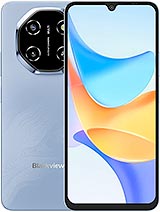
Shark 6
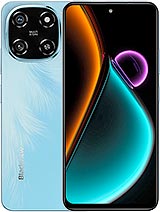
Color 8
Mega 1
BL7000
Galaxy M16 5G