Doogee Blade 10 Ultra review
If you work outdoors, need a phone that survives rough conditions, or rely on dual SIM for global mobility, this phone does the job honestly and affordably. Anyone else—office workers, gamers, content creators—will find the display too dim, the performance too basic, and the camera disappointing for the money.
This review is based on Doogee’s published specifications and public benchmark data for the Doogee Blade 10 Ultra, and the rating is spec-based. GoSolo does not physically test devices; where we estimate real-world behaviour such as battery life or charge time, we say so. How we rate phones.
Overview
The Blade 10 Ultra is a rugged workhorse for rough terrain and outdoor work, not a phone for gaming or heavy apps. At €230, it trades screen brightness and processing grunt for genuine waterproofing and dual SIM, making it a sensible choice for anyone who needs a phone that survives the site—not one that impresses in the shop.
Design & Build
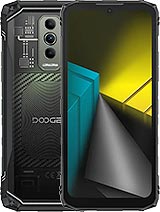
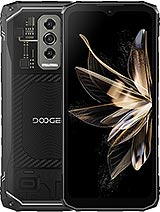
At 295 grams and 10.7 mm thick, the Blade 10 Ultra is built like a tool, not a fashion accessory. The IP68/IP69K rating means it survives dust, saltwater, and high-pressure jets—immersible to 1.5 meters for 30 minutes—and meets MIL-STD-810H durability specs, so it can handle drops and vibration. The 6.56-inch body is chunky by modern standards, but that weight and thickness are deliberate: they signal a reinforced frame and sealed internals. For someone working outdoors, on a farm, or in construction, this is a phone that won't crumble. The Mohs level 5 screen protection is modest by today's standards (most flagships now use Corning's tougher glass), so expect scratches over time, but the phone itself will survive conditions that would kill most rivals.
Display
The 6.56-inch IPS LCD runs at 720p resolution—a decision that feels dated for the size. At 269 ppi density, pixels are visible if you look close, and fine text can be fuzzy. The 90Hz refresh smooths scrolling and navigation, which matters for daily use, but the screen is dim: around 400 nits, which is barely usable in direct sunlight without squinting. For a phone positioned as rugged outdoor gear, a brighter panel would have been a practical upgrade. The 74.8% screen-to-body ratio is tight, typical of phones that prioritize durability over bezel minimalism. If you spend most of your day outdoors or in variable lighting, this display will frustrate you; if you mainly use it in shade or indoors, it is adequate.
Performance
The Unisoc T7250 is entry-level silicon. Its octa-core setup (two faster cores at 1.8 GHz, six efficiency cores at 1.6 GHz) handles messaging, browsing, video streaming, and light productivity without lag. Heavy multitasking, modern games, and apps that demand real compute power will stumble. The Mali-G57 MP1 GPU is basic, so do not expect smooth frame rates in demanding titles. With 8 GB of RAM and 256 GB storage, you have breathing room for everyday apps and files, and the dedicated microSD slot lets you expand later if needed. This is a phone for people who use their device for calls, maps, photos, and emails—not someone chasing performance. It is honest about its limits, and the price reflects that.
Software
Android 15 ships fresh out of the box, which is welcome. Doogee's customizations on top are typically light, so the software experience should stay close to stock Android. Updates on budget rugged phones can be slow or sparse, so manage expectations: you may not see the next major version for months, if at all. The side-mounted fingerprint sensor is responsive and practical for gloved hands or wet conditions, a smarter choice than relying on face unlock alone in outdoor scenarios.
Camera
The 64 MP main camera with f/1.8 aperture and PDAF sounds generous on paper but delivers modest results in practice. The sensor likely lacks the size and quality of processing needed to translate that pixel count into detail or low-light performance. Video tops out at 1080p@30fps, which is fine for documentation or social clips but not for cinematic work. The 8 MP front camera is purely functional for video calls and selfies. For a phone this price and purpose, the camera is a genuine weakness—not a selling point. Most rivals at €230 do better with more modest megapixel counts but better overall image quality.
Battery & Charging
The 6150 mAh battery is generous and should deliver a full day with moderate to heavy use. The spec sheet lists 18W charging, which is slow by modern standards—rivals at this price often hit 30W or higher—meaning a full recharge will take around 90 minutes or more. No charger is included in the box, a cost-cutting move that stings. If you rely on your phone for work or emergency calls, the large capacity and day-long endurance are genuine assets; if you are the type who tops up every hour, the slow charging will add friction to your routine.
Value & Verdict
At €230, the Blade 10 Ultra is positioned against budget and entry-midrange rivals. Its core appeal is ruggedness and dual SIM, not performance or display quality. Compared to typical mainstream phones at this price, you are trading screen brightness, refresh fluidity, processing power, and camera quality for IP68/IP69K waterproofing and a build that can absorb punishment. That trade is fair if you work outdoors or need a phone that doubles as outdoor gear. If you spend your time in an office or at home, a non-rugged phone will give you a brighter screen and snappier performance for the same money. There is no 5G, a limitation if you are in a new 5G market, but the solid LTE coverage and dual SIM make it practical for global work or travel.
Verdict
If you work outdoors, need a phone that survives rough conditions, or rely on dual SIM for global mobility, this phone does the job honestly and affordably. Anyone else—office workers, gamers, content creators—will find the display too dim, the performance too basic, and the camera disappointing for the money.
- IP68/IP69K waterproofing and MIL-STD-810H durability mean it survives genuine abuse—dust, salt, immersion, high-pressure jets—without complaint.
- 6150 mAh battery lasts a full day and handles long gaps between charges, crucial for outdoor or remote work.
- Dual SIM and broad LTE band support work globally, and the dedicated microSD slot gives you easy storage expansion later.
- Display is dim (around 400 nits) and low-res (720p) for the 6.56-inch size, making it hard to use in sunlight and fuzzy for text.
- 18W charging is slow for 2025, and no charger included, so you will need to hunt one down and wait 90 minutes for a full charge.
- Entry-level Unisoc chipset and basic camera struggle with demanding apps and deliver only modest photo quality for the megapixel count.
Doogee Blade 10 Ultra Key Specifications
The essentials at a glance. See the full spec sheet.
| Released | 2025 |
|---|---|
| Display | 6.56 inches, 103.4 cm2 (~74.8% screen-to-body ratio), IPS LCD, 90Hz |
| Resolution | 720 x 1612 pixels, 20:9 ratio (~269 ppi density) |
| Chipset | Unisoc T7250 (12 nm) |
| RAM & storage | 256GB 8GB RAM |
| Main camera | 64 MP, f/1.8, (wide), PDAF |
| Selfie camera | 8 MP, f/2.2, (wide) |
| Battery | 6150 mAh |
| Software | Android 15 |
| Dimensions | 172.7 x 80 x 10.7 mm (6.80 x 3.15 x 0.42 in) |
| Weight | 295 g (10.41 oz) |
| Durability | IP68/IP69K dust tight and water resistant (high pressure water jets; immersible up to 1.5m for 30 min) MIL-STD-810H compliant |
| Network | GSM / HSPA / LTE |
| NFC | Yes |
| USB | USB Type-C |
Doogee Blade 10 Ultra FAQ
Common questions, answered from the spec sheet.
Does the Blade 10 Ultra support 5G?
No. The Blade 10 Ultra tops out at GSM / HSPA / LTE, without 5G.
What chipset does the Blade 10 Ultra use?
The Blade 10 Ultra runs on the Unisoc T7250 (12 nm).
What display does the Blade 10 Ultra have?
A 6.56 inches, 103.4 cm2 (~74.8% screen-to-body ratio) IPS LCD, 90Hz, 720 x 1612 pixels, 20:9 ratio (~269 ppi density).
How big is the Blade 10 Ultra battery?
The Blade 10 Ultra has a 6150 mAh battery.
Does the Blade 10 Ultra have NFC?
Yes, the Blade 10 Ultra has NFC.
Is the Blade 10 Ultra water resistant?
The Blade 10 Ultra carries a IP68/IP69K dust tight and water resistant (high pressure water jets; immersible up to 1.5m for 30 min) MIL-STD-810H compliant rating.
Does the Blade 10 Ultra support a microSD card?
Yes, the Blade 10 Ultra supports expandable storage (microSDXC (dedicated slot)).
Alternatives to consider
If the Blade 10 Ultra isn’t quite right, these are the closest calls.
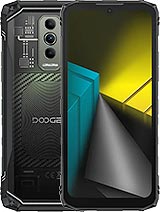
Blade 10 Ultra Energy
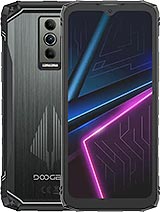
Blade 10 Pro
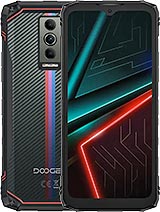
Blade 10
Blade10 Ultra
Galaxy M16 5G