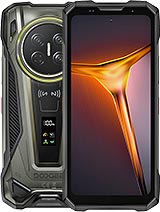
Doogee V Max 2 review
Buy this if you work outdoors, travel to remote areas, or have a pattern of damaging phones—the battery, IR night vision, and rugged build will pay for themselves. Everyone else should pick a lighter, thinner flagship with a better display; this phone is not trying to be a daily driver for typical users.
This review is written with AI assistance from Doogee’s published specifications and public benchmark data for the Doogee V Max 2, and the rating is spec-based. GoSolo does not physically test devices; where we estimate real-world behaviour such as battery life or charge time, we say so. How we rate phones.
Overview
The V Max 2 is a rugged phone built for extremes—IP68/IP69K certified, drop-resistant, and bristling with survival specs like infrared night vision and a 1000-lumen flashlight. It carries a massive 22,000 mAh battery and a respectable mid-flagship chipset, but the 1080p display and lack of charging watts in the spec sheet temper its appeal for anyone outside the outdoor/industrial niche.
Design & Build
This is a phone engineered for survival, not style. At 635 grams and nearly 3 cm thick, the V Max 2 is bulkier than any mainstream flagship, but the trade-off is deliberate: full IP68/IP69K certification (high-pressure jets, 1.5 m submersion), MIL-STD-810H compliance, and a 1.5 m drop rating give it fortress-grade durability. The rear RGB ambient light and flood flashlight (1000 lumens) are genuine tools rather than gimmicks—one for notifications in the field, one for emergencies. Dual Nano-SIM and a dedicated microSD slot round out the ruggedness philosophy. This is a phone for outdoor workers, travelers in rough terrain, and people who have lost too many devices to water. For office use, it is simply too heavy and thick to be comfortable, and the industrial aesthetic will polarize.
Display
The 6.78-inch IPS LCD running 1080 x 2460 pixels at 120 Hz is the V Max 2's biggest everyday compromise. At 396 ppi, the pixel density is acceptable but soft—text, icons, and photos lack the sharpness and vibrancy of mid-range AMOLED or QHD rivals at similar or lower price points. The 120 Hz refresh is smooth, but IPS colors look muted beside OLED alternatives, and the panel's brightness is not detailed in the spec. For fieldwork and outdoor visibility, an LCD's lower power draw is an asset; for media consumption or photo review, you will notice the gap. The Mohs level 6 glass provides basic scratch resistance but is not flagship-grade protection.
Performance
The Dimensity 8300 is a capable mid-to-high chipset built on 4 nm, with a balanced octa-core setup (one fast P-core, three balanced A715 cores, four efficiency cores) that handles everyday apps, gaming, and multitasking without strain. For a 2026 release, this lands solidly below the absolute flagship tier—think fast enough for 99% of real use, not the bleeding edge. Gaming and video editing will run smoothly, but demand heavy workloads and you will not see flagship-level headroom. The Mali G615-MC6 GPU is paired with 16 GB of RAM, which is more than sufficient for this CPU and Android 16's demands. Storage maxes at 512 GB on the main drive with microSD expansion, a rare luxury in 2026.
Software
Android 16 is current and should receive a reasonable update cycle, though Doogee's track record on timely patches is mixed. Expect a close-to-stock experience; Doogee has not historically layered heavy custom skins. The integration of the IR night vision and flashlight controls into quick settings would be essential, but the spec sheet does not detail the software story. For a device positioned in the rugged niche, usability in the field matters more than feature depth, and that alignment is likely there—but it is not obvious from the hardware alone.
Camera
The triple rear setup pairs a 200 MP main sensor (f/1.8, 1/1.3", PDAF) with a dedicated 64 MP night vision module and 8 MP ultrawide. The megapixel count is marketing; real performance depends on sensor binning, lens tuning, and processing. A 1/1.3" sensor is large for the main camera, supporting detail capture and low-light performance, but the f/1.8 aperture is only middling by 2026 standards. The standout is the infrared night vision sensor with four dedicated LEDs—it genuinely lets you shoot in darkness where optical night mode would struggle, invaluable for rescue, security, or nocturnal fieldwork. The 119° ultrawide is typical width but f/2.2 is slower than rivals. Video maxes at 4K 30 fps, modest by flagship measure. The 32 MP selfie on paper looks standard, but processing and computational photography would determine real-world quality.
Battery & Charging
A 22,000 mAh battery is among the largest in any smartphone, and capacity alone suggests 3 to 4 days of moderate use, or a full week in standby. For people working remote sites, traveling, or simply living through rural power outages, this is a meaningful edge over conventional flagships (typically 5,000–6,000 mAh). The charging wattage is not specified in the available data—a glaring omission for a phone this large. If it supports the 120W figure mentioned in the spec highlights, it would reach full charge in about 20 to 25 minutes; if lower, recharge time could stretch to an hour or more, a real friction point for an adventure or work phone. Clarification from Doogee is essential before purchase.
Value & Verdict Context
At €699 / £510, the V Max 2 is pitched as a premium rugged phone, and it has the durability chops to back that positioning. For construction workers, field engineers, emergency responders, and outdoor enthusiasts who lose phones to water, drops, and dirt, the ruggedness is not overengineered—it is a necessity. The 22,000 mAh battery and infrared night vision address real gaps in standard flagships for those users. However, if you are a regular consumer who wants a flagship experience with toughness as a bonus, the 1080p display, unknown charging speed, brick-like weight, and industrial design will feel like compromises rather than features. Compare it not against mainstream flagships but against purpose-built rugged rivals and the mains-powered battery banks people on job sites already carry. In that context, the V Max 2 makes sense.
Verdict
Buy this if you work outdoors, travel to remote areas, or have a pattern of damaging phones—the battery, IR night vision, and rugged build will pay for themselves. Everyone else should pick a lighter, thinner flagship with a better display; this phone is not trying to be a daily driver for typical users.
- 22,000 mAh battery—one of the largest in any current phone; realistic multi-day runtime in the field or off-grid
- Infrared night vision with dedicated 64 MP sensor and 4 LEDs: genuinely useful for dark environments, not just marketing
- Rugged spec set (IP68/IP69K, MIL-STD-810H, 1.5m drop rating, 1000-lumen flashlight) built for work and adventure, not just splash resistance
- 512 GB storage with microSD expansion in a market where many flagships ditch expandability
- 1080p LCD on a 6.78-inch screen leaves text and detail softer than rivals' AMOLED or QHD panels at this price; a noticeable step back for everyday use
- Charging wattage missing from spec sheet; unclear whether it matches the battery's size or lags behind 100W+ rivals
- 635 g weight and 29.4 mm thickness make it a brick—fine for a tool, cumbersome as a daily driver
Doogee V Max 2 Key Specifications
The essentials at a glance. See the full spec sheet.
| Released | 2026 |
|---|---|
| Display | 6.78 inches, 109.2 cm2 (~69.8% screen-to-body ratio), IPS LCD, 120Hz |
| Resolution | 1080 x 2460 pixels (~396 ppi density) |
| Chipset | Mediatek Dimensity 8300 (4 nm) |
| RAM & storage | 512GB 16GB RAM |
| Main camera | 200 MP, f/1.8, (wide), 1/1.3", PDAF 64 MP, f/1.8, (night vision), 4 infrared night vision lights 8 MP, f/2.2, 119˚ (ultrawide) |
| Selfie camera | 32 MP, f/2.3, (wide), 1/2.8", 0.8µm |
| Battery | 22000 mAh |
| Software | Android 16 |
| Dimensions | 184.9 x 84.6 x 29.4 mm (7.28 x 3.33 x 1.16 in) |
| Weight | 635 g (1.40 lb) |
| Durability | IP68/IP69K dust tight and water resistant (high pressure water jets; immersible up to 1.5m for 30 min) Drop resistant up to 1.5m MIL-STD-810H compliant Flood flashlight (1000 lumens) Rear display RGB ambient lightning |
| Network | GSM / HSPA / LTE / 5G |
| NFC | Yes |
| USB | USB Type-C 2.0, OTG |
Doogee V Max 2 FAQ
Common questions, answered from the spec sheet.
Does the V Max 2 support 5G?
Yes. The V Max 2 supports 5G networks.
What chipset does the V Max 2 use?
The V Max 2 runs on the Mediatek Dimensity 8300 (4 nm).
What display does the V Max 2 have?
A 6.78 inches, 109.2 cm2 (~69.8% screen-to-body ratio) IPS LCD, 120Hz, 1080 x 2460 pixels (~396 ppi density).
How big is the V Max 2 battery?
The V Max 2 has a 22000 mAh battery.
Does the V Max 2 have NFC?
Yes, the V Max 2 has NFC.
Is the V Max 2 water resistant?
The V Max 2 carries a IP68/IP69K dust tight and water resistant (high pressure water jets; immersible up to 1.5m for 30 min) Drop resistant up to 1.5m MIL-STD-810H compliant Flood flashlight (1000 lumens) Rear display RGB ambient lightning rating.
Does the V Max 2 support a microSD card?
Yes, the V Max 2 supports expandable storage (microSDXC (dedicated slot)).
Alternatives to consider
If the V Max 2 isn’t quite right, these are the closest calls.
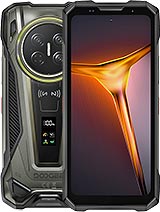
V Max 2 Pro
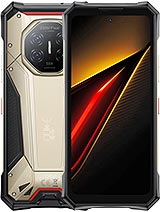
S300 Pro
V Max Play
V Max LR
Galaxy A57