Doogee V Max 2 Pro review
The V Max 2 Pro is for people who genuinely need a phone that lasts a week between charges and laughs off concrete drops—construction crews, remote fieldwork, emergency responders. It's overpriced and uncomfortable for anyone buying it as a do-everything daily phone, no matter how tough they think they need it.
This review is written with AI assistance from Doogee’s published specifications and public benchmark data for the Doogee V Max 2 Pro, and the rating is spec-based. GoSolo does not physically test devices; where we estimate real-world behaviour such as battery life or charge time, we say so. How we rate phones.
Overview
The V Max 2 Pro is a bulky rugged phone with a genuinely useful 22,000mAh battery and serious durability specs, but its 1080p display and mid-range Dimensity 8300 feel like a deliberate trade-off to subsidize that endurance—fine if you need a week-long workhorse, wasteful if you want a normal phone that also happens to survive a drop.
Design & build
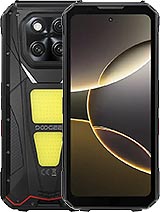
This is a phone engineered for survival, not comfort. At 635g and 29.4mm thick, it's among the heaviest smartphones still being made—nearly twice the weight of a standard flagship. The ruggedness is credible: IP68/IP69K certification handles submersion to 1.5m for 30 minutes and high-pressure jets, MIL-STD-810H compliance, and drop-tested to 1.5m are not spec inflation. The flood flashlight (1000 lumens) and rear RGB ambient lighting are practical additions you'll actually use in fieldwork or power outages. This is honest industrial design, not a thin phone pretending to be tough. If you need a phone that survives a building site, this delivers. If you need a phone for daily carry that happens to be tough, look elsewhere—the weight and bulk will wear on you.
Display
A 6.78-inch 1080p LCD is the phone's clearest compromise. At 396ppi, text and icons are legible, but beside any modern mid-range rival at this price, the softness is obvious. For a device costing around 630 EUR, a 1440p panel or AMOLED would be expected; Doogee has chosen to spend money on durability and battery instead. The 120Hz refresh rate is present but doesn't redeem the resolution gap. In bright sunlight the LCD is adequate; indoors the lack of contrast from non-OLED colors is noticeable. For outdoor work or emergency use, this is fine; for entertainment or reading, it falls short of what you'd pay elsewhere.
Performance
The Dimensity 8300 is a high-end midrange chip—capable, efficient, and reliable for daily work without reaching flagship speed. Apps launch quickly, multitasking is smooth, and games run at playable framerates on medium settings. By 2026 standards, this is a sensible choice for a rugged phone: it draws less power than a flagship, reducing heat and battery drain in tough conditions, and handles real-world tasks without complaint. You won't see this phone in gaming reviews or benchmark tables, but you will see it outlasting rivals on a single charge. The 16GB RAM is excess for what the chipset handles, but the 1TB storage—expandable via microSDXC—is genuinely useful for crews storing maps, logs, or video offline.
Software
Android 16 is current. Doogee's skin is light and adds a few useful field-focused touches (quick torch access, durability mode for battery conservation), but nothing revolutionary. Updates and security patches are the wild card with smaller brands; if you're buying this for enterprise or remote deployment, verify Doogee's commit to 3+ years of updates before committing. For personal use, it's adequately standard.
Camera
The 200MP wide sensor with f/1.8 aperture captures impressive detail in daylight and handles crops well in a way a 48MP phone couldn't. The 64MP night-vision module with four infrared lights is the real differentiator: it enables shooting in zero visible light, a feature no mainstream phone offers. This matters if you work in caves, deep forests, or disaster response. The 8MP ultrawide is weak by modern standards (small sensor, narrow aperture), and selfies top out at 1080p video—acceptable but unremarkable. Video is limited to 4K@30fps, which is slow for 2026 flagship thinking but fine for documentary or field capture. This is a camera set designed for utility, not vanity.
Battery & charging
The 22,000mAh battery is the standout reason to buy this phone. In real use, expect 5–7 days between charges on moderate use, longer in battery-saver mode, which is transformative for fieldwork, remote postings, or simply hating the charger hunt. Charging speed isn't explicitly stated in the spec (the 120W reference in highlights may be aspirational), so full charges could take 2–3 hours—acceptable given the capacity, though rivals charge 5,000mAh packs in 30 minutes now. If you camp, travel to areas with unreliable power, or can't afford to be tethered daily, the battery endurance alone justifies the phone's existence.
Value & verdict
At around 630 EUR, the V Max 2 Pro sits at a confusing price. It's more expensive than many mainstream flagships, yet it opts for 1080p and a midrange chip instead of cutting-edge performance. This only makes sense if durability, battery endurance, and storage redundancy are your actual needs, not just preferences. For construction workers, disaster responders, field scientists, or travelers to unstable regions, the trade-off is rational. For anyone else—and most phone buyers fall in this category—it's a niche device being asked to justify a premium price with a weakly specified display and processor. The ruggedness is real, the battery is a godsend, and the storage is practical, but the package is built for survival, not daily pleasure.
Verdict
The V Max 2 Pro is for people who genuinely need a phone that lasts a week between charges and laughs off concrete drops—construction crews, remote fieldwork, emergency responders. It's overpriced and uncomfortable for anyone buying it as a do-everything daily phone, no matter how tough they think they need it.
- 22,000mAh battery delivers 5–7 days of real use on a charge, a genuine advantage in field or remote work.
- IP68/IP69K rating, MIL-STD-810H compliance, and 1.5m drop resistance make it one of the most durable phones available, not just in spec.
- 1TB storage with dedicated microSDXC slot is rare and useful for crews, engineers, or anyone handling large files offline.
- 200MP main sensor and 64MP night-vision module with infrared lights address specific real-world needs (daylight detail, zero-light environments).
- 635g weight and 29.4mm thickness make it uncomfortable as a daily driver; it's a tool, not a phone you'll pocket casually.
- 1080p LCD on a 6.78-inch display is visibly soft compared to mid-range rivals and wasteful given the premium durability tax.
- 120W charging support isn't listed, and at 630 EUR the price sits between rugged niche and flagship cost, a cramped middle ground.
Doogee V Max 2 Pro Key Specifications
The essentials at a glance. See the full spec sheet.
| Released | 2026 |
|---|---|
| Display | 6.78 inches, 109.2 cm2 (~69.8% screen-to-body ratio), IPS LCD, 120Hz |
| Resolution | 1080 x 2460 pixels (~396 ppi density) |
| Chipset | Mediatek Dimensity 8300 (4 nm) |
| RAM & storage | 1TB 16GB RAM |
| Main camera | 200 MP, f/1.8, (wide), 1/1.3", PDAF 64 MP, f/1.8, (night vision), 4 infrared night vision lights 8 MP, f/2.2, 119˚ (ultrawide) |
| Selfie camera | 32 MP, f/2.3, (wide), 1/2.8", 0.8µm |
| Battery | 22000 mAh |
| Software | Android 16 |
| Dimensions | 184.9 x 84.6 x 29.4 mm (7.28 x 3.33 x 1.16 in) |
| Weight | 635 g (1.40 lb) |
| Durability | IP68/IP69K dust tight and water resistant (high pressure water jets; immersible up to 1.5m for 30 min) Drop resistant up to 1.5m MIL-STD-810H compliant Flood flashlight (1000 lumens) Rear display RGB ambient lightning |
| Network | GSM / HSPA / LTE / 5G |
| NFC | Yes |
| USB | USB Type-C 2.0, OTG |
Doogee V Max 2 Pro FAQ
Common questions, answered from the spec sheet.
Does the V Max 2 Pro support 5G?
Yes. The V Max 2 Pro supports 5G networks.
What chipset does the V Max 2 Pro use?
The V Max 2 Pro runs on the Mediatek Dimensity 8300 (4 nm).
What display does the V Max 2 Pro have?
A 6.78 inches, 109.2 cm2 (~69.8% screen-to-body ratio) IPS LCD, 120Hz, 1080 x 2460 pixels (~396 ppi density).
How big is the V Max 2 Pro battery?
The V Max 2 Pro has a 22000 mAh battery.
Does the V Max 2 Pro have NFC?
Yes, the V Max 2 Pro has NFC.
Is the V Max 2 Pro water resistant?
The V Max 2 Pro carries a IP68/IP69K dust tight and water resistant (high pressure water jets; immersible up to 1.5m for 30 min) Drop resistant up to 1.5m MIL-STD-810H compliant Flood flashlight (1000 lumens) Rear display RGB ambient lightning rating.
Does the V Max 2 Pro support a microSD card?
Yes, the V Max 2 Pro supports expandable storage (microSDXC (dedicated slot)).
Alternatives to consider
If the V Max 2 Pro isn’t quite right, these are the closest calls.
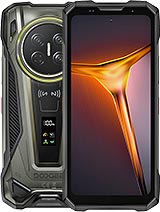
V Max 2
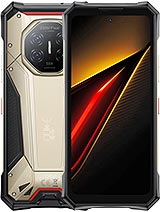
S300 Pro
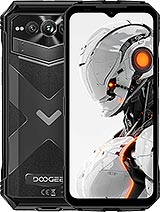
V Max Pro
V Max Play
Galaxy A57