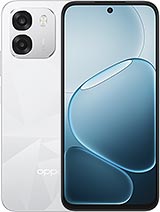
HMD Crest Max review
The Crest Max suits buyers who repair their own phones, live far from good repair shops, or value hardware durability over performance and camera polish. Anyone prioritising speed, camera quality, or fast charging should look at the dozens of faster, shinier mid-rangers at the same price—though they will all be sealed and glued.
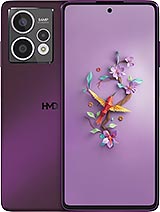
This review is based on HMD’s published specifications and public benchmark data for the HMD Crest Max, and the rating is spec-based. GoSolo does not physically test devices; where we estimate real-world behaviour such as battery life or charge time, we say so. How we rate phones.
Overview
The Crest Max is a repair-friendly mid-ranger with a user-replaceable battery, a 3.5mm jack, and an OLED screen, but the Unisoc T760 chipset holds it back for anything beyond casual apps and the 1080p video cap is limiting. For about 180 EUR in a market where most rivals have moved on from repairable hardware, it's a solid choice only if you prioritize repairability and battery longevity over raw performance and future-proofing.
Design & build
The Crest Max is thin and light at 8.4mm and 205g, though not exceptionally so by mid-2024 standards. What sets it apart is the entire philosophy: the screen, back cover, battery, and charging port are designed to come apart with basic tools, no dealer required. This is a deliberate choice HMD made, and it matters if you live where repair services are far away or expensive. The phone is dust and splash resistant but not formally IP-rated for submersion, so it handles a splash from a coffee spill but do not dunk it. Nano-SIM and microSDXC storage via a shared slot keeps things compact.
Display
The 6.67-inch OLED panel is the standout feature at this price. At 1080 x 2400 pixels and 395ppi, text is crisp enough for comfortable reading at normal arm's length, and OLED's contrast and blacks beat LCD easily. You do not get the ultra-fine pixel density of a flagship 1440p screen, but this is a genuine strength for the tier. Colours are vibrant and the screen stays responsive in sunlight. For streaming video and web browsing, it punches well above the price.
Performance
The Unisoc T760 is an entry-level chip and behaves like one. With 8GB RAM, everyday apps—email, messaging, social media, web browsing—run smoothly and lag-free. Light games and video playback are fine. Intensive games at high settings will stutter, and multitasking under load reveals the limits quickly. This is not a performance phone and should not be mistaken for one. It will handle daily use for most people, but power users and mobile gamers should look elsewhere. Android 14 is current but the T760 is already dated for its release window in mid-2024; rivals at this price often ship faster chips, though rarely with repairability in mind.
Software
Android 14 is clean and up-to-date. HMD has historically avoided heavy skins, so the experience should be close to stock Android with minimal bloat. Long-term update support is a question mark for HMD—the company's track record on software longevity is mixed—so assume you get security patches for 2-3 years but may not see major OS upgrades beyond one or two.
Camera
The 64MP main camera captures daylight shots with good detail and colour balance thanks to the autofocus. The 5MP ultrawide is predictably soft and low-detail, but it handles group photos and landscapes when you need the width. The 2MP macro sensor is cosmetic and rarely useful. Video maxes out at 1080p 30fps—no 4K, no slow-motion, no high frame rates. For social media clips and casual recording, it is adequate; for anything more ambitious, you will hit the ceiling fast. The 50MP selfie is decent for video calls and portraits.
Battery & charging
The 5000mAh cell is user-replaceable, which is the headline feature. You get roughly one full day of heavy use or 1.5 days of moderate use before the battery drains, and then you can swap in a fresh one yourself for under 30 EUR instead of waiting for a repair shop. This is a huge practical advantage in regions where battery degradation is felt keenly and official repairs are slow or pricey. The 33W charger fills the battery in approximately 45-60 minutes from dead, which is reasonable but not fast compared to rivals who now offer 65-100W at this price. You will need to bring your own charger; none is bundled.
Value & verdict-context
At about 180 EUR, the Crest Max competes in a crowded segment. Its genuine strengths—OLED screen, user-replaceable battery, 3.5mm jack, repairability for display and charging port, 5G on some bands—are real but niche. The Unisoc T760, 33W charging, and 1080p video are the trade-offs. You are essentially trading raw performance and camera polish for hardware longevity and repairability. In a market where most competitors chase speed and camera pixels and accept sealed designs, the Crest Max bets on a different buyer: one who keeps phones longer, values repair skills, and lives where a local technician feels like a luxury. For that person, the math works. For everyone else chasing the fastest chip or best camera at this price, you will find faster and shinier phones for the same money.
Verdict
The Crest Max suits buyers who repair their own phones, live far from good repair shops, or value hardware durability over performance and camera polish. Anyone prioritising speed, camera quality, or fast charging should look at the dozens of faster, shinier mid-rangers at the same price—though they will all be sealed and glued.
- OLED display with solid colour and contrast at 1080p, far better than LCD rivals in this price range
- User-replaceable battery and repairable display and charging port—genuinely useful in regions where repairs are slow or expensive
- Includes 3.5mm headphone jack and microSDXC expansion, features many rivals have ditched
- 5G radio and dual SIM for flexibility
- Unisoc T760 is entry-level even for mid-2024; rivals at this price have moved to faster chips, limiting longevity and demanding app performance
- 33W charging is slow by current standards; most competitors at this tier now hit 65-100W
- Video capped at 1080p 30fps with no 4K or slow-motion, limiting creative use
HMD Crest Max Key Specifications
The essentials at a glance. See the full spec sheet.
| Released | 2024, July 25 |
|---|---|
| Display | 6.67 inches, 107.4 cm2 (~85.8% screen-to-body ratio), OLED |
| Resolution | 1080 x 2400 pixels, 20:9 ratio (~395 ppi density) |
| Chipset | Unisoc T760 (6 nm) |
| RAM & storage | 256GB 8GB RAM |
| Main camera | 64 MP, (wide), AF 5 MP, (ultrawide) 2 MP (macro) |
| Selfie camera | 50 MP |
| Battery | 5000 mAh |
| Charging | 33W wired |
| Software | Android 14 |
| Dimensions | 163.9 x 76.4 x 8.4 mm (6.45 x 3.01 x 0.33 in) |
| Weight | 205 g (7.23 oz) |
| Durability | Repair-it-yourself capable (display, back cover, battery and charging port repairs) Dust and splash resistant |
| Network | GSM / HSPA / LTE / 5G |
| NFC | No |
| USB | USB Type-C |
HMD Crest Max FAQ
Common questions, answered from the spec sheet.
Does the Crest Max support 5G?
Yes. The Crest Max supports 5G networks.
What chipset does the Crest Max use?
The Crest Max runs on the Unisoc T760 (6 nm).
What display does the Crest Max have?
A 6.67 inches, 107.4 cm2 (~85.8% screen-to-body ratio) OLED, 1080 x 2400 pixels, 20:9 ratio (~395 ppi density).
How big is the Crest Max battery?
The Crest Max has a 5000 mAh battery. Charging is rated at 33W wired.
Does the Crest Max have NFC?
No, the Crest Max does not list NFC support.
Is the Crest Max water resistant?
The Crest Max carries a Repair-it-yourself capable (display, back cover, battery and charging port repairs) Dust and splash resistant rating.
Does the Crest Max support a microSD card?
Yes, the Crest Max supports expandable storage (microSDXC (uses shared SIM slot)).
Does the Crest Max have a headphone jack?
Yes, the Crest Max has a 3.5mm headphone jack.
Alternatives to consider
If the Crest Max isn’t quite right, these are the closest calls.
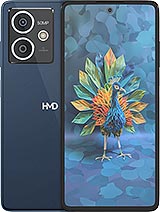
Crest
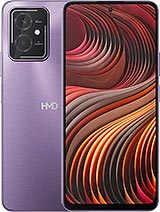
Vibe
Pulse Pro
Vibe 4G
Galaxy M16 5G