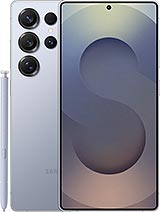
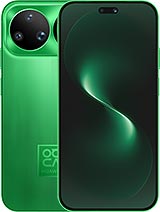
Huawei Nova 15 Ultra review
This phone suits someone who values speed at the outlet and screen quality over CPU muscle, and can work around HarmonyOS's geographic limitations. Anyone banking on gaming performance or deep Google integration should cross-shop the Snapdragon-powered competition at similar prices.
This review is written with AI assistance from Huawei’s published specifications and public benchmark data for the Huawei Nova 15 Ultra, and the rating is spec-based. GoSolo does not physically test devices; where we estimate real-world behaviour such as battery life or charge time, we say so. How we rate phones.
Overview
The Nova 15 Ultra is a big, thin phone with a bright OLED screen and genuine 100W charging that justifies its 520 EUR price for someone who values display quality and speed at the outlet. The Kirin 9010S is no workhorse for demanding games, but handles everyday work without stuttering, and the 6500 mAh battery lasts a full day if you are not streaming video constantly.
Design & Build
At 6.8 mm thick and 209 g, the Nova 15 Ultra is remarkably slim and light for a 6.84-inch phone. The Kunlun Glass front and aluminum frame feel solid in hand, though the glass-fiber reinforced plastic back is a step down from full glass or ceramic and does pick up fingerprints. IP68 and IP69 ratings cover submersion to 2 meters and high-pressure jets, giving real confidence for beach use or accidental dunks. The overall build quality sits comfortably above entry-level but trails phones at double the price that use premium materials throughout. For the money, it is a sensible trade-off: the thickness and weight discipline matter more in daily use than the back material choice.
Display
The 6.84-inch LTPO OLED panel is the phone's strongest card. A 1320 x 2856 resolution yields 460 ppi, which renders text and detail sharply, and the 120 Hz refresh rate makes scrolling noticeably crisper than 60 Hz alternatives. The 4000 nit peak brightness—higher than many flagships—means outdoor readability in direct sun is excellent, and the LTPO refresh downscaling keeps battery drain in check during static content. HDR Vivid support adds color punch to streaming and games. At 90.4 percent screen-to-body ratio, bezel waste is minimal. There is no mention of local dimming zones, so contrast is bounded by the panel's native OLED capability rather than per-zone backlight tricks, but for the price this is genuinely competitive.
Performance
The Kirin 9010S is a high-end mid-range chip with 12 cores at 2.5 GHz. It handles daily tasks—email, messaging, social media, light web browsing—without lag, and app switching remains fluid with 12 GB RAM across all storage tiers. Gaming is where it shows its limits: demanding titles like Genshin Impact will run, but you will see frame drops if you push graphics to maximum; casual games and esports titles hold 60 fps without strain. For productivity work, video editing on the phone is feasible but not quick. The gap between this and a flagship Snapdragon is real, but for someone who is not a heavy gamer, it is enough. The GPU is Huawei's Maleoon, which is improving but still lags the top mobile graphics processors in raw throughput.
Software
HarmonyOS 6.0 is Huawei's homegrown Android alternative, and it runs smoothly with a polished interface. The problem is geographical: outside China, Google Play is inaccessible, and you must sideload apps or rely on Huawei's AppGallery, which lacks depth in English-language and region-specific apps. For China-based users this is not an issue; for everyone else, it is a friction point that no amount of interface refinement erases. The OS itself is responsive and offers good customization, but ecosystem limitations will frustrate users accustomed to Android's breadth.
Camera
Three 50 MP sensors on the back—a f/1.4-4.0 wide with OIS, an 88 mm f/2.2 periscope with 3.7x optical zoom, and a 118-degree ultrawide—give you flexibility without resorting to digital crop. The periscope zoom is the standout; 3.7x optical reach lets you frame distant subjects without degradation. The wide camera's variable aperture (f/1.4 to f/4.0) helps in low light, and all three have autofocus and stabilization. The 50 MP count is more spec-sheet padding than a tangible day-to-day advantage—a 12 MP with good optics would suffice—but the optical design is sound. The selfie camera (50 MP ultrawide) handles video calls and selfies without complaint. Video capture maxes at 4K with gyro-stabilization and HDR Vivid, which is table stakes at this price.
Battery & Charging
The 6500 mAh battery yields about 18 to 22 hours of typical use (email, browsing, light messaging); heavy video or gaming drops that to 12 to 16 hours. That is ordinary for this size and power budget, not exceptional. Where the Nova 15 Ultra shines is charging: 100 W wired gets you to full in around 25 to 35 minutes, a real advantage over the 65 W or 80 W found on rivals at 520 EUR. The 50 W wireless charging is a useful fallback if you need a quick top-up over 45 to 60 minutes. For anyone who hates waiting by the outlet, the wired speed alone justifies the phone's price.
Value & Verdict
At roughly 520 EUR, the Nova 15 Ultra competes with phones that offer either more processing power, more camera range, or cheaper charging. What you are paying for here is the combination of display quality, charging speed, and thinness. If you prioritize a large, bright OLED screen that scrolls smoothly and can refill in under 40 minutes, this phone delivers. If you are a mobile gamer who demands consistent high framerates or rely heavily on the Google ecosystem outside China, look elsewhere. For the global south, where fast charging infrastructure is sparse and outdoor sunlight is intense, the 100 W charging and 4000 nit display have tangible daily value.
Verdict
This phone suits someone who values speed at the outlet and screen quality over CPU muscle, and can work around HarmonyOS's geographic limitations. Anyone banking on gaming performance or deep Google integration should cross-shop the Snapdragon-powered competition at similar prices.
- 6.84-inch LTPO OLED display with 120Hz refresh, 4000 nits peak brightness, and 90.4 percent screen-to-body ratio—scrolling is visibly smoother than 60Hz rivals and outdoor visibility is genuinely strong
- 100W wired charging gets you from empty to full in around 25 to 35 minutes, meaningfully faster than the 65W or 80W standard in this price tier
- 6.5 mm thickness paired with 209 g weight keeps the phone slim and light enough not to feel like a brick in the pocket, rare for a 6.84-inch display
- 50 MP wide, 50 MP periscope with 3.7x optical zoom, and 50 MP ultrawide with a 118-degree field of view give you versatility without relying on digital crop alone
- Kirin 9010S sits in the upper mid-range, not flagship: demanding 3D games will see frame drops at high settings, and you will feel the performance ceiling if you regularly push the hardware
- HarmonyOS 6.0 remains geographically fragmented, with key Google services unavailable outside China or on workarounds, which complicates app ecosystem and cloud sync for users outside the mainland
Huawei Nova 15 Ultra Key Specifications
The essentials at a glance. See the full spec sheet.
| Released | 2025, December 22 |
|---|---|
| Display | 6.84 inches, 115.0 cm2 (~90.4% screen-to-body ratio), LTPO OLED, 1B colors, HDR Vivid, 120Hz, 2160Hz PWM, 4000 nits (peak) |
| Resolution | 1320 x 2856 pixels, 19.5:9 ratio (~460 ppi density) |
| Chipset | Kirin 9010S |
| RAM & storage | 256GB 12GB RAM, 512GB 12GB RAM, 1TB 12GB RAM |
| Main camera | 50 MP, f/1.4-4.0, 24mm (wide), PDAF, OIS 50 MP, f/2.2, 88mm (periscope telephoto), PDAF, OIS, 3.7x optical zoom 50 MP, f/2.2, 13mm, 118˚ (ultrawide), AF |
| Selfie camera | 50 MP, f/2.0, (ultrawide), 1/2.5", Dual Pixel PDAF |
| Battery | 6500 mAh |
| Charging | SuperCharge up to 100 W, Wireless: Charger power 50 W |
| Software | HarmonyOS 6.0 |
| Dimensions | 163 x 78 x 6.8 mm (6.42 x 3.07 x 0.27 in) |
| Weight | 209 g (7.37 oz) |
| Build | Glass front (Kunlun Glass), aluminum frame, glass-fiber reinforced plastic back |
| Durability | IP68/IP69 dust tight and water resistant (high pressure water jets; immersible up to 2m for 30 min) |
| Network | GSM / CDMA / HSPA / CDMA2000 / LTE / 5G |
| NFC | Yes |
| USB | USB Type-C 2.0, OTG |
Huawei Nova 15 Ultra FAQ
Common questions, answered from the spec sheet.
Does the Nova 15 Ultra support 5G?
Yes. The Nova 15 Ultra supports 5G networks.
What chipset does the Nova 15 Ultra use?
The Nova 15 Ultra runs on the Kirin 9010S.
What display does the Nova 15 Ultra have?
A 6.84 inches, 115.0 cm2 (~90.4% screen-to-body ratio) LTPO OLED, 1B colors, HDR Vivid, 120Hz, 2160Hz PWM, 4000 nits (peak), 1320 x 2856 pixels, 19.5:9 ratio (~460 ppi density).
How big is the Nova 15 Ultra battery?
The Nova 15 Ultra has a 6500 mAh battery. Charging is rated at SuperCharge up to 100 W, Wireless: Charger power 50 W.
Does the Nova 15 Ultra have NFC?
Yes, the Nova 15 Ultra has NFC.
Is the Nova 15 Ultra water resistant?
The Nova 15 Ultra carries a IP68/IP69 dust tight and water resistant (high pressure water jets; immersible up to 2m for 30 min) rating.
Does the Nova 15 Ultra support a microSD card?
No, the Nova 15 Ultra does not support expandable storage.
Alternatives to consider
If the Nova 15 Ultra isn’t quite right, these are the closest calls.
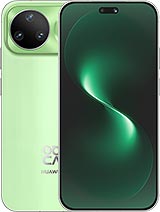
Nova 15 Pro
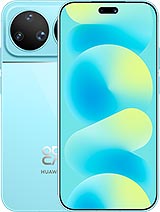
nova 16 Ultra
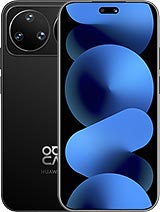
nova 16s Pro
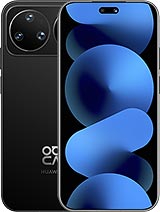
nova 16 Pro
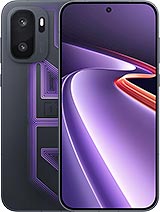
Ace 5 Ultra