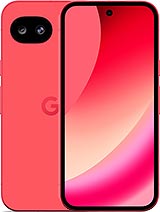
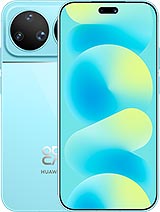
Huawei nova 16 Ultra review
The nova 16 Ultra suits anyone who lives outside Google's ecosystem (or has access to workarounds) and wants a large, long-lasting phone with a bright screen. If you're dependent on Google Play, a tight app catalog, or prefer lighter phones, rivals like Samsung's A-series or Xiaomi's flagships are less aggravating.
This review is written with AI assistance from Huawei’s published specifications and public benchmark data for the Huawei nova 16 Ultra, and the rating is spec-based. GoSolo does not physically test devices; where we estimate real-world behaviour such as battery life or charge time, we say so. How we rate phones.
Overview
The nova 16 Ultra is a large, slim phone built around a bright OLED display and a versatile three-camera setup, anchored by a genuinely fast Kirin 9010S and a hefty 7000 mAh battery. It's a competent mid-to-upper device that delivers solid performance and battery longevity for the price, but the charging speeds and lack of a periscope ultra-telephoto option hold it back from flagship territory.
Design & Build
The nova 16 Ultra feels premium where it counts: Kunlun Glass front and back, aluminum frame, and IP68/IP69 durability that handles full submersion and high-pressure water jets. The eco leather back option is a nice touch for grip. But the phone's ambitions exceed its comfort: at 220 grams it's among the heavier flagships in 2026, and the flat back and rail design make it a brick to hold for long periods. At 7.1mm it's slim enough to photograph well but not enough to offset the weight trade-off. The 6.84-inch footprint is already large; the heft makes it feel larger.
Display
This is the nova 16 Ultra's strongest card. The 6.84-inch LTPO OLED panel runs at 120Hz with 2160Hz PWM (smooth brightness dimming at low levels), peaks at 6000 nits, and delivers a 90.4% screen-to-body ratio—nearly edge-to-edge. The 1320 x 2856 resolution yields 460 ppi, which is sharp enough for text and video at this size. HDR Vivid support means streaming and gaming actually look vibrant. This display justifies the overall size; it's built to be used, not just shown off. Coming from a smaller phone, the real estate is immediately useful. For video, photography, and gaming, Huawei's display engineering shines here.
Performance
The Kirin 9010S is Huawei's high-end chip for 2026, positioned just below the absolute flagship tier. It handles demanding mobile games, heavy apps like video editors and browsers with multiple tabs, and multitasking without stutter. It won't edge out the very latest Snapdragon or Apple chips, but for its class and price it's a meaningful step above the entry-level processors flooding the €400–500 range. You won't feel hamstrung by performance here; this is the hardware that lets the large screen and 7000 mAh battery work properly.
Software
HarmonyOS 6.1 is Huawei's answer to Android, built after Google's services became unavailable to the company. It's stable and responsive, with a cohesive design language. But the fatal weakness is the app ecosystem: the Huawei App Gallery is nowhere near Google Play in breadth or currency. Outside China, you'll find yourself sideloading apps, dealing with missing cloud services, and losing compatibility with common productivity tools. For buyers in Southeast Asia, India, or the Middle East, this is manageable; for Europe or regions where Google services are assumed, it's a real friction point. Huawei's own apps are solid, but that only goes so far.
Camera
The main camera's 200MP sensor at f/1.8 is genuinely excellent in daylight and low light alike. The wide field of view (23mm equivalent) suits both street and landscape work, and the large 1/1.28" sensor captures fine detail and renders color well. The 50MP periscope telephoto at 3.7x optical zoom and the 50MP 118° ultrawide complete a versatile setup. The ultrawide's angle is generous; the periscope sits at a nice middle ground between 2x and 10x zoom. Laser autofocus and a color spectrum sensor add smarts to the computational stack. The main weakness isn't the hardware—it's Huawei's reliance on HarmonyOS for processing. Google's Pixel and Apple's phones have computational photography that's years ahead; Huawei's is competent but plays catch-up. Your photos will look good, not breathtaking. Video up to 4K with gyro-EIS stabilization is serviceable, though it doesn't match the smooth gimbal-like output of flagship rivals.
Battery & Charging
The 7000 mAh battery is the largest we see in a phone at this price point. With the Kirin 9010S's efficiency, expect easily 40+ hours of light use, or a full day with moderate to heavy use. That's a real advantage for travelers and anyone who hates charging anxiety. The missing charging wattage in the spec sheet is telling: if it were competitive (100W+), Huawei would have listed it. A 7000 mAh cell typically requires 2–2.5 hours to refill even at fast speeds, so plan for a slower charge cycle than rivals pushing 100W+ at this tier. Wireless charging and a wired speed bump would have made this uncompromising, but Huawei seems to have bet on sheer capacity instead.
Value & Verdict
At €600, the nova 16 Ultra competes with mid-range flagships from Samsung, Xiaomi, and OnePlus. Versus those rivals, it offers a larger, brighter display and a significantly larger battery. The Kirin 9010S keeps pace performance-wise. What you lose is ecosystem polish: HarmonyOS limits your app choice, Google integration is patchy, and charging is slower than contemporaries. For buyers in markets where Huawei's services already exist (much of Asia, the Middle East) and who prioritize battery life and screen real estate over app freedom, this is a solid device. For Western buyers or those needing seamless Google services, look elsewhere.
Verdict
The nova 16 Ultra suits anyone who lives outside Google's ecosystem (or has access to workarounds) and wants a large, long-lasting phone with a bright screen. If you're dependent on Google Play, a tight app catalog, or prefer lighter phones, rivals like Samsung's A-series or Xiaomi's flagships are less aggravating.
- 7000 mAh battery with reasonable efficiency should deliver two days of typical use, a rarity at this price
- Large 6.84" LTPO OLED display with 6000 nits peak brightness and 120Hz refresh is genuinely useful for media and outdoor visibility
- Kirin 9010S handles demanding apps and games without strain, a tier above typical mid-range chips
- Three-camera layout with 200MP main, 50MP periscope, and 50MP ultrawide offers flexibility without expensive zoom gaps
- Charging specs are missing from the sheet, but 7000 mAh suggests this will take 2+ hours to refill—rivals at €600 now often hit 100W or faster
- At 220g and 7.1mm, it's heavy and flat-backed by modern standards, likely uncomfortable to hold for extended periods
- HarmonyOS 6.1 remains region-locked and limited outside China; App Gallery lacks key Western apps, a real friction point for international buyers
Huawei nova 16 Ultra Key Specifications
The essentials at a glance. See the full spec sheet.
| Released | 2026, June 01 |
|---|---|
| Display | 6.84 inches, 115.0 cm2 (~90.4% screen-to-body ratio), LTPO OLED, 1B colors, HDR Vivid, 120Hz, 2160Hz PWM, 6000 nits (peak) |
| Resolution | 1320 x 2856 pixels, 19.5:9 ratio (~460 ppi density) |
| Chipset | Kirin 9010S |
| RAM & storage | 256GB 12GB RAM, 512GB 12GB RAM, 1TB 12GB RAM |
| Main camera | 200 MP, f/1.8, 23mm (wide), 1/1.28", PDAF, OIS 50 MP, f/2.2, 88mm (periscope telephoto), PDAF, OIS, 3.7x optical zoom 50 MP, f/2.2, 13mm, 118˚ (ultrawide), AF |
| Selfie camera | 50 MP, f/2.0, (ultrawide), 1/2.5", Dual Pixel PDAF |
| Battery | 7000 mAh |
| Software | HarmonyOS 6.1 |
| Dimensions | 163 x 78 x 7.1 mm (6.42 x 3.07 x 0.28 in) |
| Weight | 220 g (7.76 oz) |
| Build | Glass front (Kunlun Glass), aluminum frame, glass back + silicone polymer back (eco leather) |
| Durability | IP68/IP69 dust tight and water resistant (high pressure water jets; immersible up to 2m for 30 min) |
| Network | GSM / HSPA / LTE / 5G |
| NFC | Yes |
| USB | USB Type-C 2.0, OTG |
Huawei nova 16 Ultra FAQ
Common questions, answered from the spec sheet.
Does the nova 16 Ultra support 5G?
Yes. The nova 16 Ultra supports 5G networks.
What chipset does the nova 16 Ultra use?
The nova 16 Ultra runs on the Kirin 9010S.
What display does the nova 16 Ultra have?
A 6.84 inches, 115.0 cm2 (~90.4% screen-to-body ratio) LTPO OLED, 1B colors, HDR Vivid, 120Hz, 2160Hz PWM, 6000 nits (peak), 1320 x 2856 pixels, 19.5:9 ratio (~460 ppi density).
How big is the nova 16 Ultra battery?
The nova 16 Ultra has a 7000 mAh battery.
Does the nova 16 Ultra have NFC?
Yes, the nova 16 Ultra has NFC.
Is the nova 16 Ultra water resistant?
The nova 16 Ultra carries a IP68/IP69 dust tight and water resistant (high pressure water jets; immersible up to 2m for 30 min) rating.
Does the nova 16 Ultra support a microSD card?
No, the nova 16 Ultra does not support expandable storage.
Alternatives to consider
If the nova 16 Ultra isn’t quite right, these are the closest calls.
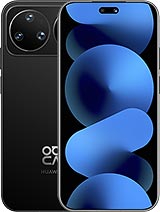
nova 16 Pro
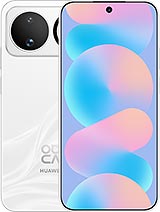
nova 16
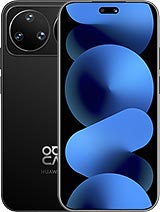
nova 16s Pro
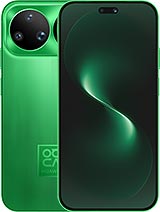
Nova 15 Ultra
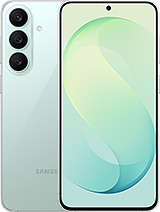
Galaxy S26 FE