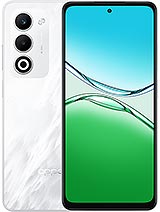
Itel S25 Ultra review
The S25 Ultra suits daily users who primarily text, browse, and stream, and who value a bright AMOLED screen and long battery life over speed or fast charging. Anyone who games, edits media, or charges multiple times a day should cross-shop Snapdragon competitors instead.
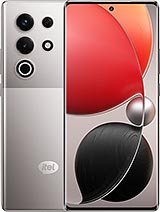
This review is based on Itel’s published specifications and public benchmark data for the Itel S25 Ultra, and the rating is spec-based. GoSolo does not physically test devices; where we estimate real-world behaviour such as battery life or charge time, we say so. How we rate phones.
Overview
The Itel S25 Ultra is a straightforward budget phone that trades raw speed for a large AMOLED display and a full day of battery life at around €200. Its strength is endurance and screen quality for the price; its weakness is the dated Unisoc T620 chip, which stumbles with demanding apps and games.
Design & Build
The S25 Ultra is thin and light—6.9mm and 163g—which works in its favor for everyday comfort. The dual Nano-SIM slots suit regional travel or work-personal juggling, and the RGB notification ring on the back is a neat flourish for a phone at this price. IP64 dust and splash resistance is respectable, though not submersion-rated; you can survive a rainy commute or accidental coffee splash, but not pool duty. Gorilla Glass 7i is solid mid-tier protection. Overall, the hardware feels sensible rather than flashy, with no pretense to durability it does not deliver.
Display
The 6.78-inch AMOLED screen is the phone's highlight. 120Hz scrolling is smooth, and the 1400 nits peak brightness keeps text legible in direct sunlight—a genuine advantage over cheaper LCD phones. The 1B color depth and 2160Hz PWM further suggest a display tuned for viewing comfort. The catch is resolution: 1080 x 2436 at 393 ppi looks soft at this diagonal. Web text and fine UI elements lose sharpness you would get from a 1440p panel, and side-by-side with a Poco or Redmi at similar money, the pixel density becomes obvious. For video and scrolling, it excels; for text-heavy reading, you will notice.
Performance
The Unisoc T620 is an entry-level chip designed for light tasks: messaging, social media, email, and basic video playback all run smoothly. The octa-core setup with dual high-clocked A75 cores keeps everyday apps snappy. Demanding 3D games will not run, or will run only on low settings at choppy frame rates. Multitasking is competent for normal use—no app crashes—but do not expect this phone to handle photo editing, heavy file transfers, or anything that scales with processor load. For its price and target audience, the T620 is fit; it simply does not pretend to be more than it is.
Software
Android 14 ships with itel OS 14.5, and the promise of two major upgrades means you can expect security patches and Android 15 and 16 over the next two to three years. That is baseline for a 2024 phone, not exceptional, but honest. Bloatware is typically light on itel devices, though regional variants may differ. The software experience does not standout in speed or features, but it does not lag either—you get a clean Android with itel's modest tweaks, which is fine for a budget device.
Camera
The 50MP main camera with f/1.6 aperture captures solid detail in daylight and performs reasonably in dim indoor light, thanks to the wide aperture. The macro sensor is present but often underwhelming in budget phones—a nice spec sheet entry that rarely sees heavy use. There is no optical zoom, and 1440p@30fps video is adequate for casual social media clips but not cinematic work. The 32MP selfie is generous for vlogging or calls. Overall, the camera is competent for casual users who do not pixel-peep; it lacks the computational photography chops and optical refinement of phones double the price.
Battery & Charging
The 5000 mAh cell is the real workhorse here. Paired with the low-power T620, you can expect a full day of moderate screen-on time, or push toward two days if you stick to messaging, calls, and basic browsing. Heavy video streaming will trim that. The 18W wired charging, however, is a weak point. A full charge from empty takes 90-120 minutes, and the final 20 percent crawls in. At this price point, 65W or faster charging is now routine, so the S25 Ultra's pace feels sluggish by comparison—you will spend more time tethered to the wall than competitors demand.
Value & Verdict Context
At around €200, the S25 Ultra is a budget phone, and the spec sheet reflects that: entry-level chip, 1080p AMOLED, no fancy features. It wins points for battery endurance and display brightness, and loses them on charging speed and raw processing power. The Unisoc T620 and soft resolution are the trade-offs you accept for the price and large bright screen. For buyers in regions with strong LTE coverage who prioritize a full day of screen time and a readable display over gaming or creative work, it delivers quietly. For anyone who wants snappier performance or faster charging, look at Poco or Redmi offerings at the same money—they tend to pack Snapdragon chips and 60-100W charging, even if the battery is smaller.
Verdict
The S25 Ultra suits daily users who primarily text, browse, and stream, and who value a bright AMOLED screen and long battery life over speed or fast charging. Anyone who games, edits media, or charges multiple times a day should cross-shop Snapdragon competitors instead.
- 5000 mAh battery paired with a power-efficient chipset delivers about a full day of real-world use, and sometimes stretches to two with light usage
- 6.78-inch AMOLED display with 120Hz refresh and 1400 nits peak brightness is genuinely pleasant for reading and video, even in sunlight
- Light build at 163g and thin 6.9mm profile make it comfortable to hold and pocket for extended periods
- IP64 rating and Gorilla Glass 7i handle everyday drops and splash exposure without ceremony
- 18W charging crawls to a full charge in 90-120 minutes; rivals at this price routinely hit 65W or higher
- Unisoc T620 is entry-level even for 2024, making any demanding game or app-heavy task slow or impossible
- 1080p display density (393 ppi) on a 6.78-inch screen leaves text soft and fine details noticeably fuzzy compared to 1440p competitors
Itel S25 Ultra Key Specifications
The essentials at a glance. See the full spec sheet.
| Released | 2024, November 09 |
|---|---|
| Display | 6.78 inches, 109.9 cm2, AMOLED, 1B colors, 120Hz, 2160Hz PWM, 1000 nits (HBM), 1400 nits (peak) |
| Resolution | 1080 x 2436 pixels (~393 ppi density) |
| Chipset | Unisoc T620 (12 nm) |
| RAM & storage | 128GB 8GB RAM, 256GB 8GB RAM, 512GB 8GB RAM |
| Main camera | 50 MP, f/1.6, (wide), AF XX MP (macro) Auxiliary lens |
| Selfie camera | 32 MP, f/2.2, 22mm (wide) |
| Battery | 5000 mAh |
| Charging | 18W wired, bypass charging |
| Software | Android 14, up to 2 major Android upgrades, itel OS 14.5 |
| Dimensions | 6.9 mm thickness |
| Weight | 163 g (5.75 oz) |
| Durability | IP64 dust tight and water resistant (water splashes) RGB ring notifications light (on the back) |
| Network | GSM / HSPA / LTE |
| NFC | Yes (market/region dependent) |
| USB | USB Type-C 2.0 |
Itel S25 Ultra FAQ
Common questions, answered from the spec sheet.
Does the S25 Ultra support 5G?
No. The S25 Ultra tops out at GSM / HSPA / LTE, without 5G.
What chipset does the S25 Ultra use?
The S25 Ultra runs on the Unisoc T620 (12 nm).
What display does the S25 Ultra have?
A 6.78 inches, 109.9 cm2 AMOLED, 1B colors, 120Hz, 2160Hz PWM, 1000 nits (HBM), 1400 nits (peak), 1080 x 2436 pixels (~393 ppi density).
How big is the S25 Ultra battery?
The S25 Ultra has a 5000 mAh battery. Charging is rated at 18W wired, bypass charging.
Does the S25 Ultra have NFC?
Yes, the S25 Ultra has NFC.
Is the S25 Ultra water resistant?
The S25 Ultra carries a IP64 dust tight and water resistant (water splashes) RGB ring notifications light (on the back) rating.
Does the S25 Ultra support a microSD card?
Yes, the S25 Ultra supports expandable storage (Unspecified).
Does the S25 Ultra have a headphone jack?
No, the S25 Ultra does not have a 3.5mm headphone jack.
Alternatives to consider
If the S25 Ultra isn’t quite right, these are the closest calls.
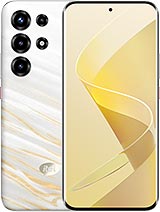
Super 26 Ultra
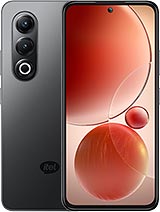
S25
S24
Power 70
Galaxy M16 5G