Lava Blaze 3 5G review
The Blaze 3 5G suits someone who values battery life and screen size over performance or camera finesse and has access to 5G. Anyone upgrading from this phone in 2024 or later will find the charging speed and display resolution frustrating compared to newer budget alternatives.
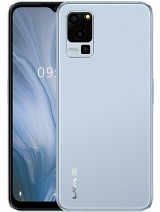
This review is based on Lava’s published specifications and public benchmark data for the Lava Blaze 3 5G, and the rating is spec-based. GoSolo does not physically test devices; where we estimate real-world behaviour such as battery life or charge time, we say so. How we rate phones.
Overview
The Lava Blaze 3 5G is a budget 5G phone built around a large battery and screen rather than processing power; it handles daily tasks smoothly but won't impress on raw speed or camera finesse. For €130 in 2022, it offered solid value for users prioritizing battery life and screen real estate over performance, though the 720p display on a 6.52-inch panel shows its cost-cutting plainly.
Design & build
At 207g and 8.9mm thick, the Blaze 3 5G is unremarkable to hold—solid without being light, and dense enough to feel present in a pocket. The all-plastic construction is predictable at this price tier; there's no premium feel, but durability isn't a concern for everyday use. The side-mounted fingerprint sensor is a practical choice that keeps bezels slim and the 81% screen-to-body ratio works well for a budget device. Dual SIM support (nano-SIM + nano-SIM, with microSD sharing the second slot) caters to regional markets where that matters.
Display
The 6.52-inch IPS LCD is where Lava made a bold choice: go large and cheap rather than sharp. At 720 × 1600 pixels, the density sits at 269ppi, which means text and UI elements are legible but noticeably soft compared to 1080p phones in the same size range. The 90Hz refresh rate helps scrolling feel fluid and masks the low resolution slightly during everyday use. For reading, video, and casual gaming, it's fine; fine is the word that sums it up. Brightness and color accuracy are baseline IPS fare—adequate indoors, washed out in direct sunlight.
Performance
The Dimensity 700 is a mainstream midrange chip from 2021 that handles messaging, social media, browsing, and light photo editing without stutters. Real-world performance is stable for everyday tasks. Heavy games, video rendering, and multitasking with many apps open will show the limits—the chip simply isn't built for that tier of work. The Mali-G57 GPU is competent for casual titles but will throttle or drop frames on anything demanding. For a phone at this price, the performance-to-cost ratio is sound; you're not paying for muscle you don't need, but you're also not getting any cushion for growth.
Software
Android 12 out of the box is dated by 2026 standards but was current when the phone launched in late 2022. There's no word on update timeline or how many major OS versions Lava will provide, which is typical transparency-wise for the budget segment. The lack of bloatware is a plus, though software support for a sub-€200 device from a smaller maker is always uncertain. Fingerprint and basic sensors work reliably.
Camera
The 50MP main camera is competent in daylight with its autofocus and f/1.8 aperture (implied by the 0.64µm pixel size), delivering sharp, well-exposed stills under good light. The 2MP macro and 0.3MP depth sensors add little beyond the headline figure. There's no ultrawide, which hurts for landscape shots, and 1080p30 video limits flexibility. Low-light performance is predictable for the hardware—noisy and soft, relying on the main sensor's pixel binning to stay usable. The 8MP front camera is basic but adequate for video calls.
Battery & charging
The 5000mAh battery is the phone's strongest asset. With moderate use—a mix of browsing, messaging, and social media—expect comfortably into a second day; heavy continuous use drops that to a full day. That's realistic value for the capacity and the Dimensity 700's efficiency. Charging at 18W takes roughly 90 minutes from empty, which is slow by modern standards (rival budget phones now reach 33W or more), so fast top-ups are out of reach. For a phone meant to run long, slow charging feels almost intentional—the battery life is the selling point, not the charger.
Value & verdict
At €130 in 2022, the Blaze 3 5G occupied a clear niche: 5G connectivity, a large screen, and two-day battery life for the price of a feature phone. It didn't excel at any one thing, but it didn't disappoint either. By 2026, that positioning is harder to defend; budget 5G phones have evolved, performance expectations have climbed, and software support questions remain unanswered. The 720p display now feels visibly dated, and 18W charging is a real drag point. If you can find this model at clearance pricing and live in a 5G market, it remains a workable emergency backup or media consumption device. As a primary phone, it's past its prime.
Verdict
The Blaze 3 5G suits someone who values battery life and screen size over performance or camera finesse and has access to 5G. Anyone upgrading from this phone in 2024 or later will find the charging speed and display resolution frustrating compared to newer budget alternatives.
- 5000mAh battery delivers comfortably into a second day with normal use
- Large 6.52-inch screen is useful for video and reading despite the 720p resolution
- 5G support on a sub-€200 budget phone was genuinely rare in 2022
- Stable everyday performance for social media, messaging, and light tasks
- 18W charging is slow; rivals at this price now exceed 30W, making full charges a 90-minute wait
- 720p resolution on a 6.52-inch panel shows its limits—text and UI are soft compared to 1080p competitors
- No ultrawide camera and weak low-light performance limit creative flexibility
Lava Blaze 3 5G Key Specifications
The essentials at a glance. See the full spec sheet.
| Released | 2022, October 3 |
|---|---|
| Display | 6.52 inches, 102.6 cm2 (~81.3% screen-to-body ratio), IPS LCD, 90Hz |
| Resolution | 720 x 1600 pixels, 20:9 ratio (~269 ppi density) |
| Chipset | Mediatek Dimensity 700 (7 nm) |
| RAM & storage | 128GB 4GB RAM, 128GB 6GB RAM |
| Main camera | 50 MP, (wide), 0.64µm, AF 2 MP (macro) 0.3 MP |
| Selfie camera | 8 MP, f/2.0, (wide) |
| Battery | 5000 mAh |
| Charging | 18W wired |
| Software | Android 12 |
| Dimensions | 165.3 x 76.4 x 8.9 mm (6.51 x 3.01 x 0.35 in) |
| Weight | 207 g (7.30 oz) |
| Network | GSM / HSPA / LTE / 5G |
| NFC | No |
| USB | USB Type-C 2.0, OTG |
Lava Blaze 3 5G FAQ
Common questions, answered from the spec sheet.
Does the Blaze 3 5G support 5G?
Yes. The Blaze 3 5G supports 5G networks.
What chipset does the Blaze 3 5G use?
The Blaze 3 5G runs on the Mediatek Dimensity 700 (7 nm).
What display does the Blaze 3 5G have?
A 6.52 inches, 102.6 cm2 (~81.3% screen-to-body ratio) IPS LCD, 90Hz, 720 x 1600 pixels, 20:9 ratio (~269 ppi density).
How big is the Blaze 3 5G battery?
The Blaze 3 5G has a 5000 mAh battery. Charging is rated at 18W wired.
Does the Blaze 3 5G have NFC?
No, the Blaze 3 5G does not list NFC support.
Does the Blaze 3 5G support a microSD card?
Yes, the Blaze 3 5G supports expandable storage (microSDXC (uses shared SIM slot)).
Does the Blaze 3 5G have a headphone jack?
Yes, the Blaze 3 5G has a 3.5mm headphone jack.
Alternatives to consider
If the Blaze 3 5G isn’t quite right, these are the closest calls.

Yuva 5G

Blaze Duo

Lava Blaze Duo 5G

Yuva 2 5G
Galaxy M16 5G