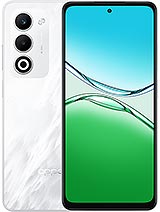
Lava Yuva 5G review
This phone suits buyers in 5G-enabled regions who spend more time on battery life and connectivity than sharpness or gaming, and who want to future-proof their 5G investment on a tight budget. Anyone who spends time reading text, editing content, or gaming should look elsewhere—even a 4G rival with a 1080p screen will feel more pleasant to use day to day.
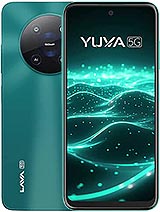
This review is based on Lava’s published specifications and public benchmark data for the Lava Yuva 5G, and the rating is spec-based. GoSolo does not physically test devices; where we estimate real-world behaviour such as battery life or charge time, we say so. How we rate phones.
Overview
The Lava Yuva 5G is a bare-bones budget 5G phone aimed squarely at battery life and network coverage over screen quality or speed. It delivers the 5G promise and a sensible 5000 mAh pack on a tight budget, but the 720p display and modest Unisoc chipset mean you're paying for the network badge, not the user experience.
Design & build
At 208 grams and 9.1 mm thick, the Yuva 5G is respectable in hand—neither featherweight nor brick-like. The dual nano-SIM setup makes sense for global markets where carrier switching is common. The spec sheet omits glass type and water resistance, which in this bracket usually means neither gorilla glass nor an IP rating, so don't expect durability theater. The side-mounted fingerprint sensor is a practical choice at this price; it's faster to use than fumbling for a rear reader and more reliable in sweaty conditions. The frame feels solid enough for the price, though there's no stated IP rating for water or dust.
Display
A 6.53-inch 720p LCD is the uncomfortable truth of budget 5G. At 269 ppi, text and icons are noticeably coarse if you hold the phone at arm's length—fine for video playback, rough for reading. The 20:9 ratio is now standard and 82.7% screen-to-body ratio is respectable. The 90Hz refresh helps scrolling feel less janky than 60Hz, but it can't mask the low pixel density. Compared to rivals at this price, some now push 1080p or even 1440p on similarly sized screens, making this display a real step back if sharpness matters to you. IPS LCD is fine for color, but the brightness spec isn't listed—a red flag suggesting it may not handle direct sunlight well.
Performance
The Unisoc T750 is a 6 nm octa-core paired with Mali-G57 graphics—capable enough for browsing, WhatsApp, and light video, but not for modern gaming. The two Cortex-A76 cores at 2.0 GHz give decent peak performance for single-threaded tasks, while the six A55 cores handle multitasking. In practice, this means apps will load and switch without lag, but anything demanding—Genshin Impact, Fortnite, heavy photo editing—will choke. The 4 GB RAM is the bare minimum for Android 13; multitasking will feel cramped if you run more than a handful of apps. UFS 2.2 storage is slower than modern UFS 3.x, so file transfers and app installs take noticeably longer.
Software
Android 13 is two years old by the Yuva's June 2024 release, and Lava's track record on updates is thin. Expect one or maybe two years of patches before the phone falls off support, which is typical for this tier but not ideal. The stock Android experience should be mostly clean, but bloatware is a real possibility depending on your region. Security updates are the wildcard—budget vendors often lag, so don't assume monthly patches.
Camera
The 50 MP main sensor captures reasonable detail in daylight because megapixel count still buys you headline specs, but the real test is dynamic range and low light—neither is listed, which is suspicious. The 2 MP macro is filler; macro modes this weak are usually gimmicks that produce soft, unusable crops. The 8 MP selfie will handle basic video calls and casual snaps, but don't expect it to rescue a bad angle. Video maxes out at 1080p@30fps, which is entry-level and fine for social media but lacks the frame rate options that rivals now offer. HDR and panorama are present but fairly standard features at any price.
Battery & charging
The 5000 mAh pack is genuinely useful. Paired with a 720p screen and modest chipset, you should see 18–24 hours on mixed use with moderate browsing and calls, and possibly longer on light duty. This is one of the Yuva's real selling points. The 18W wired charging, however, is outdated—it'll take about 60–75 minutes to fully charge, and many competitors at 110 EUR now hit 30–50W. There's no wireless charging or reverse charge, which is normal at this price but worth noting if you've grown accustomed to either.
Value & verdict context
At 110 EUR, the Yuva 5G targets buyers in regions with deploying 5G infrastructure who want battery longevity and a network upgrade without breaking the bank. The trade-off is clear: you're paying for the 5G badge and the battery, not the screen or performance. The 720p display and Unisoc chipset are genuine compromises that will be visible every day, while 5G and the 5000 mAh pack are benefits you may not fully use. For the same price, you could find a last-year's-model phone with a 1080p screen and a slightly faster chip, or stick with a 4G phone that has a sharper display. The math hinges on whether your carrier's 5G rollout is actually happening and whether you value screen sharpness over endurance.
Verdict
This phone suits buyers in 5G-enabled regions who spend more time on battery life and connectivity than sharpness or gaming, and who want to future-proof their 5G investment on a tight budget. Anyone who spends time reading text, editing content, or gaming should look elsewhere—even a 4G rival with a 1080p screen will feel more pleasant to use day to day.
- 5G on bands 1, 3, 5, 8, 28, 40, 77, 78 gives genuine future-proofing if your carrier deploys it
- 5000 mAh battery with modest 720p screen should deliver 18+ hours on light use, addressing the core complaint of most budget phones
- Side-mounted fingerprint reader is faster and more reliable than struggling with a rear sensor in pockets
- Headphone jack and FM radio remain, which matter for offline use in emerging markets
- 18W charging is sluggish even by budget standards; rivals now offer 30–50W at this price
- 720p resolution on a 6.53-inch screen leaves text and icons visibly blocky, and 90Hz can't hide the pixel grain
- Unisoc T750 handles browsing and social apps fine, but any modern 3D game will stutter or lag
Lava Yuva 5G Key Specifications
The essentials at a glance. See the full spec sheet.
| Released | 2024, March 30 |
|---|---|
| Display | 6.53 inches, 102.9 cm2 (~82.7% screen-to-body ratio), IPS LCD, 90Hz |
| Resolution | 720 x 1600 pixels, 20:9 ratio (~269 ppi density) |
| Chipset | Unisoc T750 (6 nm) |
| RAM & storage | 64GB 4GB RAM, 128GB 4GB RAM |
| Main camera | 50 MP, (wide), AF 2 MP (macro) |
| Selfie camera | 8 MP |
| Battery | 5000 mAh |
| Charging | 18W wired |
| Software | Android 13 |
| Dimensions | 163.4 x 76.2 x 9.1 mm (6.43 x 3.00 x 0.36 in) |
| Weight | 208 g (7.34 oz) |
| Network | GSM / HSPA / LTE / 5G |
| NFC | No |
| USB | USB Type-C 2.0, OTG |
Lava Yuva 5G FAQ
Common questions, answered from the spec sheet.
Does the Yuva 5G support 5G?
Yes. The Yuva 5G supports 5G networks.
What chipset does the Yuva 5G use?
The Yuva 5G runs on the Unisoc T750 (6 nm).
What display does the Yuva 5G have?
A 6.53 inches, 102.9 cm2 (~82.7% screen-to-body ratio) IPS LCD, 90Hz, 720 x 1600 pixels, 20:9 ratio (~269 ppi density).
How big is the Yuva 5G battery?
The Yuva 5G has a 5000 mAh battery. Charging is rated at 18W wired.
Does the Yuva 5G have NFC?
No, the Yuva 5G does not list NFC support.
Does the Yuva 5G support a microSD card?
Yes, the Yuva 5G supports expandable storage (microSDXC).
Does the Yuva 5G have a headphone jack?
Yes, the Yuva 5G has a 3.5mm headphone jack.
Alternatives to consider
If the Yuva 5G isn’t quite right, these are the closest calls.
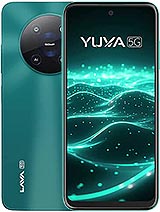
Yuva 2 5G
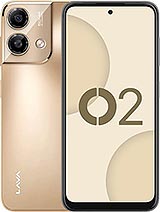
O2
Blaze 3 5G
Shark 4G
Galaxy M16 5G