Meizu Blue 20 review
This phone suits budget-conscious users in 5G regions who prioritize daylight stills, smooth scrolling, and a slim pocket profile over gaming power or zoom range. Anyone banking on demanding games, professional photography, or charging once every two days should look elsewhere.
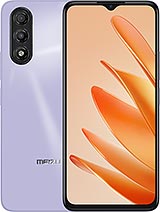
This review is based on Meizu’s published specifications and public benchmark data for the Meizu Blue 20, and the rating is spec-based. GoSolo does not physically test devices; where we estimate real-world behaviour such as battery life or charge time, we say so. How we rate phones.
Overview
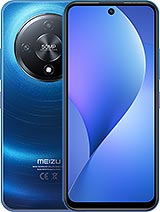
The Meizu Blue 20 is a 2024 mid-range Android phone built around a 6.52-inch 90Hz LCD and the Unisoc T765, aiming at users in 5G regions who prioritize screen smoothness and daylight photography without needing zoom. It's a modest performer at a modest price, hampered by ordinary battery life and a single camera lens that leaves distant subjects blurry.
Design & Build
At 8.3mm thick, the Blue 20 sits comfortably in the pocket and avoids the bulge that plagues heavier flagships. Meizu rates it slim for a phone carrying a 5010mAh battery, though weight is unlisted in the spec sheet. Dual Nano-SIM slots and a microSDXC card slot mean real flexibility for users who travel or juggle accounts. The 3.5mm headphone jack is a practical touch that survives more often on devices aimed at value-conscious buyers in Southeast Asia and Africa, but by 2024 it signals this is not a premium device chasing ultraslimness or water resistance claims.
Display
The 6.52-inch IPS LCD runs at 1080 x 2400 pixels (404 ppi), which is dense enough to render text and icons clearly without excessive strain. The 90Hz refresh rate lifts scrolling and swiping above the stiff 60Hz baseline, and for video playback or web browsing it makes a noticeable difference. However, a 90Hz panel at this size will show judder during fast pans compared to 120Hz or 144Hz competitors, and IPS LCD trails OLED in contrast and color punch. For its class, it is a sensible balance: bright enough for sunlight, smooth enough for casual use, and not so power-hungry that it drains battery in minutes.
Performance
The Unisoc T765, built on a modern 6nm process, handles daily tasks—messaging, social media, streaming—without hiccup. The octa-core CPU (2x A76, 6x A55) and Mali-G57 GPU keep most apps responsive. But this chipset sits below the Qualcomm Snapdragon 6 and 7 series that dominate the same price tier in 2024, and demanding titles like Genshin Impact or PUBG will require lower settings or frame drops. For light gaming, offline tools, and media consumption, it is adequate. For users who want headroom or plan to keep the phone for three years, it feels a step behind what rivals offer.
Software
Meizu's Flyme AIOS is the custom skin layered atop Android. The spec sheet does not name a base Android version, so it is unclear whether this launches on Android 13, 14, or later, but Flyme historically offers decent customization and quick software updates for Meizu's core markets. Bloatware and ad density will vary by regional build. Without hands-on time, this is a blind spot, but Flyme is not known for stability issues or aggressive ads compared to some rivals.
Camera
The 13MP main camera, interpolated to 50MP in marketing, shoots sharp stills in daylight and can record 4K video at 30fps. In good light, detail and color are competent. Low-light performance will be ordinary given the single lens and lack of optical stabilization detail in the spec. There is no secondary telephoto or ultra-wide—just the one focal length—so distant subjects will come out soft, and you cannot pivot to a wider view without stepping back yourself. The 5MP selfie camera (interpolated to 8MP) handles video calls but will not impress with detail. For casual photography and social media, it suffices; for travel or event shooting, it is limiting.
Battery & Charging
The 5010mAh battery is respectable on paper, but the slim form factor and moderate optimization of the Unisoc T765 mean realistic endurance is about one day with moderate use (mixed browsing, messaging, some video). Heavy users or those relying on 5G will need to charge by evening. The spec sheet does not list charging wattage, so charge time is unknown; if it is 18W or less, expect an hour or more to a full charge, which is slow by 2024 standards where 30W to 65W is routine at this price. This is a phone for people comfortable with a daily ritual of charging, not one for those who skip a day.
Value & Verdict
The Meizu Blue 20 occupies an awkward middle ground: it has 5G and 90Hz smoothness, but the Unisoc chipset and single camera lens feel dated next to peers. For buyers in markets with active 5G rollout (parts of Southeast Asia, India, Africa) who value a lightweight phone with a bright screen and do not push heavy workloads, it is defensible. The microSDXC slot and headphone jack are genuine perks that justify a glance. But at this price point, most shoppers will find Qualcomm mid-range alternatives—or even older flagship clearance—offer better gaming legroom, faster charging, and more camera reach. The Blue 20 is not poor; it is just crowded out by better value nearby.
Verdict
This phone suits budget-conscious users in 5G regions who prioritize daylight stills, smooth scrolling, and a slim pocket profile over gaming power or zoom range. Anyone banking on demanding games, professional photography, or charging once every two days should look elsewhere.
- 90Hz IPS LCD display remains smooth and bright for everyday use and video
- 5G SA/NSA support covers both standalone and non-standalone networks where rollout is happening
- Slim 8.3mm body with stereo speakers and a 3.5mm jack for headphones
- MicroSDXC slot lets you expand storage beyond 256GB without carrying another device
- 5010mAh battery needs a charge by evening with moderate to heavy daily use
- Unisoc T765 lags behind Qualcomm mid-range peers and cannot handle demanding games smoothly
- Single 13MP camera with no optical zoom or ultra-wide leaves you shooting with one focal length
Meizu Blue 20 Key Specifications
The essentials at a glance. See the full spec sheet.
| Released | 2024, July 17 |
|---|---|
| Display | 6.52 inches, 102.6 cm2, IPS LCD, 90Hz |
| Resolution | 1080 x 2400 pixels, 20:9 ratio (~404 ppi density) |
| Chipset | Unisoc T765 (6 nm) |
| RAM & storage | 128GB 6GB RAM, 256GB 8GB RAM |
| Main camera | 13 MP, AF (interpolated to 50 MP) Secondary unspecified camera |
| Selfie camera | 5 MP (interpolated to 8 MP) |
| Battery | 5010 mAh |
| Software | Flyme AIOS |
| Dimensions | 8.3 mm thickness |
| Network | GSM / HSPA / LTE / 5G |
| NFC | Unspecified |
| USB | USB Type-C |
Meizu Blue 20 FAQ
Common questions, answered from the spec sheet.
Does the Blue 20 support 5G?
Yes. The Blue 20 supports 5G networks.
What chipset does the Blue 20 use?
The Blue 20 runs on the Unisoc T765 (6 nm).
What display does the Blue 20 have?
A 6.52 inches, 102.6 cm2 IPS LCD, 90Hz, 1080 x 2400 pixels, 20:9 ratio (~404 ppi density).
How big is the Blue 20 battery?
The Blue 20 has a 5010 mAh battery.
Does the Blue 20 have NFC?
No, the Blue 20 does not list NFC support.
Does the Blue 20 support a microSD card?
Yes, the Blue 20 supports expandable storage (microSDXC).
Does the Blue 20 have a headphone jack?
Yes, the Blue 20 has a 3.5mm headphone jack.
Alternatives to consider
If the Blue 20 isn’t quite right, these are the closest calls.
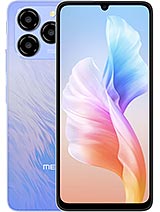
21 Note
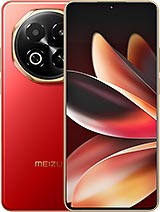
Note 16
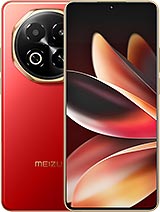
Note 22
Mblu 22 Pro
Galaxy M16 5G