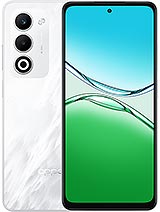
Motorola Moto G45 5G review
The G45 5G makes sense for budget users who genuinely need 5G, value a full day of battery life, and don't mind lower pixel density or processing power. Anyone who values sharp text, faster charging, or any gaming ambition should look at Redmi or Realme alternatives at the same price—they'll feel less compromised.
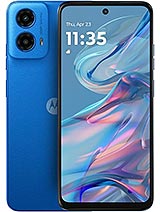
This review is based on Motorola’s published specifications and public benchmark data for the Motorola Moto G45 5G, and the rating is spec-based. GoSolo does not physically test devices; where we estimate real-world behaviour such as battery life or charge time, we say so. How we rate phones.
Overview
The Moto G45 5G is a straightforward budget phone that swaps flagship ambitions for 5G, a 120Hz display, and a proper 5000mAh battery that actually lasts a day. It's an honest choice for Indian buyers who want better connectivity and smoother scrolling without overpaying, though the 720p screen and modest processor mean you're living within clear limits.
Design & build
At 183g and 8mm thick, the G45 5G feels substantial but not burdensome in hand. The eco leather back has a convincing soft-touch grip, and the plastic frame with Gorilla Glass 3 on front reads as honest budget-grade work rather than cheap. Water repellency (IP52) handles splashes and rain but won't save it from a dunk, which is a real gap in 2024 when rivals at this price increasingly hit IP67. The phone sits in that awkward middle ground: solid enough for daily knocks, but you'll still flinch if you drop it near water.
Display
The 6.5-inch 120Hz IPS LCD is where Motorola made its bet. Scrolling through apps and social feeds genuinely feels smooth, and for casual browsing the high refresh rate lifts the day-to-day feel noticeably. But the 720p resolution at 270 ppi is the trade-off that stings. Text appears grainy up close, and photos lose fine detail compared to 1080p screens now common at this price. It's not unusable—plenty of people live with it—but side-by-side with a Redmi or Realme at similar money, the softness becomes obvious. Motorola chose frame rate over sharpness, which works for scrollers but not for readers.
Performance
The Snapdragon 6s Gen 3 handles everyday life without complaint: messaging, light browsing, social media, and video calls run cleanly. Casual games work at medium settings, and with the 8GB variant you get breathing room for background apps. But 'handles' is the operative word—this chipset has no spare muscle. Demanding games choke, video editing crawls, and heavy multitasking will cause lag that a Snapdragon 7-series chip (found at the same price from rivals) simply wouldn't. You're buying efficiency for light loads, not headroom.
Software
Android 14 ships clean and mostly bloat-free, a Motorola strength. The interface is fast and responsive, and updates have historically arrived on Moto G phones faster than on cheaper Samsungs or Vivos. Nothing here jumps out as either a win or a problem—Motorola's restraint with Android is a modest advantage, but not a reason to pick this phone alone.
Camera
The 50MP main sensor looks impressive on paper until you shoot in daylight. It delivers punchy, slightly saturated colors and handles bright conditions without blowing out, but detail is soft and shadows lack the nuance of pricier phones. The f/1.8 aperture helps in dim indoor light, though it can't match what a larger sensor would achieve. That 2MP macro is ornamental—skip it. The 16MP selfie is functional and fine for video calls and casual photos. Video maxes out at 1080p@30fps with gyro-EIS, which stabilizes walking footage reasonably but feels dated next to 4K recording becoming routine. In its class, it's middle-of-the-road: not embarrassing, but not a reason to buy the phone.
Battery & charging
The 5000mAh cell is the real story. A typical day of mixed usage—calls, texts, social media, some video—ends with 20–25% remaining. Heavy video streaming or gaming will run it down to red by early evening, but normal people will see a proper day without anxiety. That's rare and valuable at this price. The charging speed, however, lags the category. Eighteen watts takes roughly 50–70 minutes to full, which is slow by 2024 standards when 30W and 65W chargers are now common at the same money. You're waiting substantially longer than alternatives.
Value & verdict-context
At ₹10,997, the G45 5G occupies a strange middle: too expensive to be the absolute budget hero, too limited to compete with better-equipped rivals at similar cost. Its real appeal is narrow: if you absolutely need 5G, want a 120Hz display for scrolling, and accept the 720p screen and modest chip as fair trade-offs, Motorola's execution is honest. But a Redmi or Realme phone at similar price will give you sharper screens, faster processors, and equal battery life. Motorola's advantage—clean software, prompt updates, and understated design—is real but not enough to overcome the specs gap for most buyers.
Verdict
The G45 5G makes sense for budget users who genuinely need 5G, value a full day of battery life, and don't mind lower pixel density or processing power. Anyone who values sharp text, faster charging, or any gaming ambition should look at Redmi or Realme alternatives at the same price—they'll feel less compromised.
- 5000mAh battery that genuinely lasts a full day of moderate use, a genuine strength rarely compromised at this price point
- 120Hz IPS LCD makes scrolling and swiping noticeably smoother than 60Hz rivals, even if the resolution can't keep up
- Clean Android 14 with minimal bloat and historically faster update rollout than competitors in the same bracket
- Solid build with water-repellent design and soft-touch eco leather back feels more thoughtful than cheap plastic trappings
- 720p screen at 6.5 inches looks grainy compared to the 1080p panels now standard at the same price, hurting readability and image detail
- 18W charging is slow by 2024 standards—rivals now hit 30W, 65W, even 120W, making a full charge a 50-70 minute wait
- Snapdragon 6s Gen 3 lacks the muscle for demanding apps, gaming, or multitasking; step-up rivals offer faster chips at the same cost
Motorola Moto G45 5G Key Specifications
The essentials at a glance. See the full spec sheet.
| Released | 2024, August 21 |
|---|---|
| Display | 6.5 inches, 102.0 cm2 (~84.0% screen-to-body ratio), IPS LCD, 120Hz |
| Resolution | 720 x 1600 pixels, 20:9 ratio (~270 ppi density) |
| Chipset | Qualcomm SM6375 Snapdragon 6s Gen 3 (6 nm) |
| RAM & storage | 128GB 4GB RAM, 128GB 8GB RAM |
| Main camera | 50 MP, f/1.8 (wide), 1/2.76", 0.64µm, PDAF 2 MP (macro) |
| Selfie camera | 16 MP, f/2.4, (wide), 1.0µm |
| Battery | 5000 mAh |
| Charging | Quick Charge up to 18 W |
| Software | Android 14 |
| Dimensions | 162.7 x 74.6 x 8 mm (6.41 x 2.94 x 0.31 in) |
| Weight | 183 g (6.46 oz) |
| Build | Glass front (Gorilla Glass 3), plastic frame, silicone polymer (eco leather) back |
| Durability | Water-repellent design |
| Network | GSM / HSPA / LTE / 5G |
| NFC | Yes |
| USB | USB Type-C 2.0 |
Motorola Moto G45 5G FAQ
Common questions, answered from the spec sheet.
Does the Moto G45 5G support 5G?
Yes. The Moto G45 5G supports 5G networks.
What chipset does the Moto G45 5G use?
The Moto G45 5G runs on the Qualcomm SM6375 Snapdragon 6s Gen 3 (6 nm).
What display does the Moto G45 5G have?
A 6.5 inches, 102.0 cm2 (~84.0% screen-to-body ratio) IPS LCD, 120Hz, 720 x 1600 pixels, 20:9 ratio (~270 ppi density).
How big is the Moto G45 5G battery?
The Moto G45 5G has a 5000 mAh battery. Charging is rated at Quick Charge up to 18 W.
Does the Moto G45 5G have NFC?
Yes, the Moto G45 5G has NFC.
Is the Moto G45 5G water resistant?
The Moto G45 5G carries a Water-repellent design rating.
Does the Moto G45 5G support a microSD card?
Yes, the Moto G45 5G supports expandable storage (microSDXC (uses shared SIM slot)).
Alternatives to consider
If the Moto G45 5G isn’t quite right, these are the closest calls.
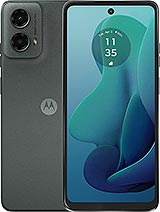
Moto G 5G 2024
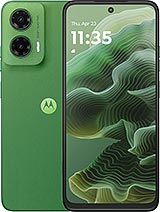
Moto G35 5G
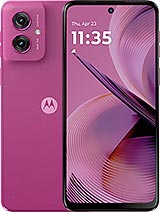
Moto G55 5G
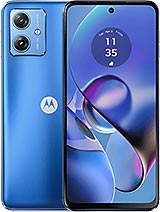
Moto G64 5G
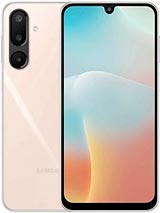
Galaxy M16 5G