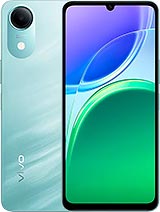
Nokia 123 Shield review
The Nokia 123 Shield suits people who need a durable, offline device for specific environments where 2G still works and durability matters more than features. Anyone relying on 4G, apps, or modern conveniences should look elsewhere—this is not a budget smartphone, it is a throwback to when phones did one thing well.
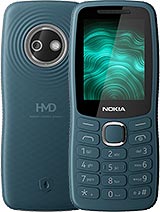
This review is written with AI assistance from Nokia’s published specifications and public benchmark data for the Nokia 123 Shield, and the rating is spec-based. GoSolo does not physically test devices; where we estimate real-world behaviour such as battery life or charge time, we say so. How we rate phones.
Overview
The Nokia 123 Shield is a 2026 GSM-only feature phone built for durability and simplicity at €40, with a tiny 2.4-inch display, basic QVGA camera, and a removable 1750 mAh battery. It is a stripped-down survival device for people who need calls, texts, and FM radio—not a smartphone alternative, and honestly not trying to be.
Design & build
At 108 grams and 15 mm thick, the 123 Shield is compact and built to last. The IP65 rating—dust tight and resistant to low-pressure water jets—is the defining feature here. In a 2026 market where durability has become a selling point rather than a given, this phone actually delivers on it without marketing fluff. The 2.4-inch screen and chunky bezels make it look like it walked out of 2010, but that industrial aesthetic is the whole point. Dual SIM on Mini-SIM is practical for people splitting work and personal lines or swapping carriers mid-journey, and the removable battery is a rare luxury in an era of sealed-cell worship. USB Type-C is at least modern enough to not feel out of place.
Display
The 2.4-inch TFT panel at 240 x 320 pixels (167 ppi) is a relic, but that is not a con for a device that has no business running anything graphically demanding. The 23.6% screen-to-body ratio reflects a design philosophy that prioritizes grip and durability over display real estate. You will read text, see call logs, and navigate a simple menu—all of which this panel handles without strain. Colors will not pop and viewing angles are narrow by modern standards, but on a phone this basic, the trade-off is irrelevant.
Performance
The Unisoc SC6531E is an entry-level chipset designed to run GSM voice calls, texts, and basic media. It is not here to multitask or handle anything sophisticated. For the intended use case—a backup phone, a construction site device, a work-only line—it does the job without fuss. Performance is a non-issue because the OS and firmware are equally barebones. Do not expect snappy app switching or fluid animations; expect reliability and simplicity.
Camera
The 0.1 MP QVGA rear camera with LED flash is a formality. It will capture blurry snapshots that are barely worth keeping. There is no selfie camera and no video. In 2026, when even budget phones ship with multi-camera setups and 4K recording, this is archaic. But again, this phone is not for photography. If you need a decent camera, this is not your device.
Battery & charging
The removable 1750 mAh battery is the standout here. Standby time on a phone that makes calls only should stretch into days; talk time will depend on network congestion, but expect a few hours of continuous use before you need to swap batteries. The removable design means you can carry a spare and never be stranded—something phones with sealed 5000 mAh cells cannot claim. No mention of a charger in the spec sheet, but USB Type-C at least aligns with every other device you own.
Value & verdict-context
At 40 EUR, the Nokia 123 Shield is not cheap as feature phones go, but it is priced for its durability story and industrial positioning rather than raw affordability. In 2026, this phone sits in a niche that most manufacturers have abandoned: the rugged, no-frills workhorse. If your network still supports 2G and your use case is calls, texts, and FM radio, this is honest hardware that will survive a construction site or a soaked backpack. The spec sheet mystery around RAM and storage is a red flag that needs clarifying; if it is genuinely 4 MB on both counts, the device is unusable. Assuming a typo and actual gigabytes of storage, this is a tool for a specific job, not a smartphone pretender.
Verdict
The Nokia 123 Shield suits people who need a durable, offline device for specific environments where 2G still works and durability matters more than features. Anyone relying on 4G, apps, or modern conveniences should look elsewhere—this is not a budget smartphone, it is a throwback to when phones did one thing well.
- IP65 rating means it shrugs off dust and water spray; genuinely useful in rough environments or for outdoor work
- Removable 1750 mAh battery lets you swap in a spare without hunting for a charger, a practical advantage most 2026 phones have abandoned
- Dual SIM on GSM bands covers most of the world's live 2G networks; still the standard in many regions where data is a luxury
- 4 MB RAM and 4 MB storage is a typo waiting to happen on the spec sheet—if real, the phone is barely functional; even if there's a decimal slip and it's meant to be 4 GB, that is still cramped for anything beyond calls and texts
- No 3G, 4G, or WiFi means this is stranded in an era most of the world has moved past; fine if your network still runs 2G, but that window is closing fast
Nokia 123 Shield Key Specifications
The essentials at a glance. See the full spec sheet.
| Released | 2026, July |
|---|---|
| Display | 2.4 inches, 17.8 cm2 (~23.6% screen-to-body ratio), TFT |
| Resolution | 240 x 320 pixels, 4:3 ratio (~167 ppi density) |
| Chipset | Unisoc SC6531E |
| RAM & storage | 4 MB 4 MB RAM |
| Main camera | QVGA |
| Selfie camera | No |
| Battery | 1750 mAh |
| Software | Android |
| Dimensions | 132.7 x 57 x 15 mm (5.22 x 2.24 x 0.59 in) |
| Weight | 108 g (3.81 oz) |
| Durability | IP65 dust tight and water resistant (low pressure water jets) |
| Network | GSM |
| NFC | No |
| USB | USB Type-C |
Nokia 123 Shield FAQ
Common questions, answered from the spec sheet.
Does the 123 Shield support 5G?
No. The 123 Shield tops out at GSM, without 5G.
What chipset does the 123 Shield use?
The 123 Shield runs on the Unisoc SC6531E.
What display does the 123 Shield have?
A 2.4 inches, 17.8 cm2 (~23.6% screen-to-body ratio) TFT, 240 x 320 pixels, 4:3 ratio (~167 ppi density).
How big is the 123 Shield battery?
The 123 Shield has a 1750 mAh battery.
Does the 123 Shield have NFC?
No, the 123 Shield does not list NFC support.
Is the 123 Shield water resistant?
The 123 Shield carries a IP65 dust tight and water resistant (low pressure water jets) rating.
Does the 123 Shield support a microSD card?
Yes, the 123 Shield supports expandable storage (microSDHC).
Alternatives to consider
If the 123 Shield isn’t quite right, these are the closest calls.
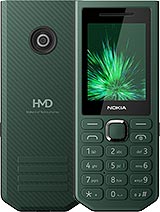
300 Charge
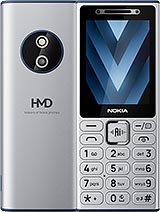
210 4G
235 4G (2026)
110 Power
Play 70C