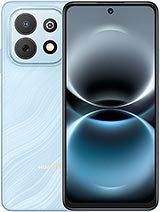
Nokia 2360 Flip review
The Nokia 2360 Flip suits elderly relatives, people in regions with sustained GSM coverage, or minimalists who genuinely want no internet access—the design choices reflect actual safety and longevity thinking. Anyone expecting a retro-cool smartphone experience, or anyone in a country phasing out 2G networks, should look elsewhere; this is a feature phone, not an Android nostalgia trip, and it will be obsolete faster than its build quality suggests.
This review is based on Nokia’s published specifications and public benchmark data for the Nokia 2360 Flip, and the rating is spec-based. GoSolo does not physically test devices; where we estimate real-world behaviour such as battery life or charge time, we say so. How we rate phones.
Overview
The Nokia 2360 Flip is a feature phone chasing the nostalgia of early-2000s candy bars with a modern GSM-only footprint and a secondary external display. It's built for people who want zero connectivity complexity, a week-plus battery life, and nothing that glows in your pocket—but it's not a smartphone and won't pretend to be one.
Design & build
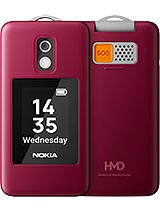
At 121 grams and 19mm thick, the 2360 Flip is pocket-friendly in the way flip phones were designed to be. The form factor itself is nostalgic, but the real story is the intentionality: removable battery, dual Mini-SIM slots, and a dedicated SOS button suggest this phone was engineered for people who value reliability and manual control over feature creep. The secondary 1.77-inch external display is a nod to classic flip design, though there's no indication what it actually does. Burgundy Red, Charcoal, and Teal color options lean into a retro aesthetic without feeling kitsch. Build quality on a 2026 feature phone is typically robust—you're looking at plastic and glass, not aluminum, but these phones are designed to survive drops and years of use without degradation.
Display
The 2.8-inch TFT screen runs 240 by 320 pixels at a density of 143 ppi—a spec sheet that reads like 2003. Text will be readable but soft, photos will be dim, and any color accuracy is an afterthought. For a phone meant to handle SMS and calls only, this is acceptable; for anything else, it's a deal-breaker. The 39% screen-to-body ratio reflects the chunky bezels necessary to house physical buttons and the flip mechanism. This is not a display designed to seduce; it's designed to last and not demand battery power.
Performance
4MB of RAM and a featureless chipset (specs omitted) confirm this phone runs a simple real-time OS, not Android or iOS. Call handling, SMS, and FM radio will work without lag. Anything beyond that—multi-tasking, app installation, internet browsing—is either impossible or glacial. The microSDHC slot offers expandable storage, but without 3G or 4G, there's nowhere to move data to or from the phone wirelessly. This is pure constraint by design: no browser, no app ecosystem, no temptation.
Camera
QVGA resolution translates to roughly 0.1 megapixels—a camera that captures barely usable images in good light and is essentially unusable in poor light. The LED flash will help outdoors but adds little substance. This is not a camera you would use intentionally; it exists to fulfill the bare definition of a phone camera. Video recording is unspecified and likely either absent or similarly primitive. Do not buy this phone expecting to document your life.
Connectivity & features
GSM only, no 3G or 4G, no Wi-Fi, no Bluetooth, no GPS, no NFC—this phone operates in a network tier that most carriers have sunset or plan to soon. In many countries, GSM 2G networks are already being decommissioned, which means the 2360 Flip may be a paperweight within two to three years depending on your region. The FM radio is a genuine throwback feature. The Family Assist remote management is the one intelligent addition: it allows a guardian to locate the phone, manage contacts, and monitor activity remotely—legitimately useful for elderly relatives or vulnerable users who need oversight without surveillance. Dual SIM is practical for switching carriers or regions.
Battery & charging
1450 mAh is modest by modern standards, but on a GSM-only phone with no data connectivity draining the radio constantly, battery life should stretch to a week or more between charges. The Li-Ion cell is removable, meaning you can carry a spare or swap for a fresh one without visiting a service center. USB Type-C charging is a small nod to current standards, though the charge speed is unspecified and likely slow. For a phone meant to sit in a desk drawer or pocket with minimal use, this battery strategy makes sense.
Value & verdict context
Pricing is not confirmed, but feature phones at this specification level typically cost between $50 and $120 USD. The 2360 Flip is not a bargain; it's a purpose-built device for a shrinking demographic: elderly users, security-conscious minimalists, or people in regions where GSM is still the only available network. In developed markets, GSM sunset means you have maybe two years before the phone stops working on most carriers. In parts of Africa, South Asia, and elsewhere, GSM remains common, and this phone's design—removable battery, dual SIM, no Wi-Fi drain, family remote management—makes real sense. For everyone else, this phone is a novelty or a lifestyle choice, and both require you to accept radical isolation from the modern internet.
Verdict
The Nokia 2360 Flip suits elderly relatives, people in regions with sustained GSM coverage, or minimalists who genuinely want no internet access—the design choices reflect actual safety and longevity thinking. Anyone expecting a retro-cool smartphone experience, or anyone in a country phasing out 2G networks, should look elsewhere; this is a feature phone, not an Android nostalgia trip, and it will be obsolete faster than its build quality suggests.
- Removable battery and microSD slot—real user control in an era of sealed-in components.
- Dual SIM, 1450 mAh battery, and lightweight build (121g) mean weeks of uptime between charges without fiddling.
- GSM-only design sidesteps the bloat and surveillance angles of data-heavy networks; FM radio included.
- Dedicated SOS button and Family Assist remote management add genuine safety value for elderly or isolated users.
- GSM-only in 2026 means no 3G or 4G—a severe limitation if you need any real data, even basic web browsing or messaging apps.
- QVGA camera and 4MB RAM make this phone feel like it stopped evolving around 2005; the screen is dim and the processing is glacial by any modern standard.
- No Wi-Fi, no GPS, no Bluetooth—isolation by design or neglect is hard to tell, but either way you're cut off from most everyday conveniences.
Nokia 2360 Flip Key Specifications
The essentials at a glance. See the full spec sheet.
| Released | 2026, October 30 |
|---|---|
| Display | 2.8 inches, 24.3 cm2 (~39.0% screen-to-body ratio), TFT |
| Resolution | 240 x 320 pixels, 4:3 ratio (~143 ppi density) |
| RAM & storage | 4MB 4MB RAM |
| Main camera | QVGA |
| Selfie camera | No |
| Battery | 1450 mAh |
| Software | Android |
| Dimensions | 111.9 x 55.6 x 19 mm (4.41 x 2.19 x 0.75 in) |
| Weight | 121 g (4.27 oz) |
| Durability | Dedicated SOS button |
| Network | GSM |
| NFC | No |
| USB | USB Type-C |
Nokia 2360 Flip FAQ
Common questions, answered from the spec sheet.
Does the 2360 Flip support 5G?
No. The 2360 Flip tops out at GSM, without 5G.
What display does the 2360 Flip have?
A 2.8 inches, 24.3 cm2 (~39.0% screen-to-body ratio) TFT, 240 x 320 pixels, 4:3 ratio (~143 ppi density).
How big is the 2360 Flip battery?
The 2360 Flip has a 1450 mAh battery.
Does the 2360 Flip have NFC?
No, the 2360 Flip does not list NFC support.
Is the 2360 Flip water resistant?
The 2360 Flip carries a Dedicated SOS button rating.
Does the 2360 Flip support a microSD card?
Yes, the 2360 Flip supports expandable storage (microSDHC).
Alternatives to consider
If the 2360 Flip isn’t quite right, these are the closest calls.
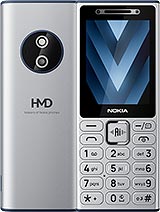
210 4G
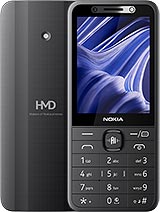
215 4G (2026)
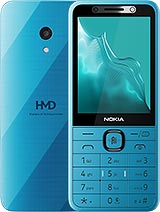
235 4G (2026)
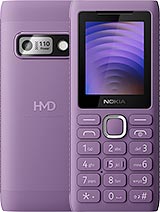
110 Power
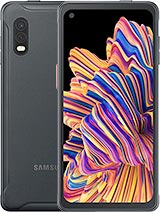
Galaxy XCover 7 Pro