Nothing Phone (4b) review
The Nothing Phone (4b) suits anyone who wants a large, bright screen and straightforward Android without the cost of a flagship. Look elsewhere if you need fast charging, sustained gaming performance, or a versatile camera system—competitors in this price bracket now offer stronger ultrawide sensors or quicker chips, and you should cross-shop before committing.
This review is written with AI assistance from Nothing’s published specifications and public benchmark data for the Nothing Phone (4b), and the rating is spec-based. GoSolo does not physically test devices; where we estimate real-world behaviour such as battery life or charge time, we say so. How we rate phones.
Overview
The Nothing Phone (4b) pairs a large, sharp AMOLED screen with everyday performance at a reasonable price, but the mid-range chipset and modest cameras mean it's a capable all-rounder rather than a standout. For the asking price it delivers a competent package, though it does not push boundaries in any meaningful way.
Design & build
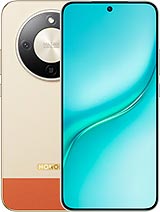
The 4b is a lean machine: 8.6mm thick and just 210g makes it feel light in the hand despite the large footprint. The glass front, plastic frame, and plastic back are the right material choices for this price point; nobody at €329 expects metal. Build feels sturdy enough, though the plastic back will pick up fingerprints and is less durable than glass. IP64 rating covers dust and light splashes, which is sensible protection without the premium of full waterproofing. At this thickness and weight, it actually handles better than some larger flagships.
Display
The 6.77-inch AMOLED panel is the star here. 1080p resolution (381ppi) is soft by flagship standards but perfectly sharp for scrolling and daily use at arm's length; you won't notice the pixels. 120Hz refresh is now table stakes in this price bracket and makes the interface feel responsive. What matters more is the brightness: 600 nits typical and 1200 nits in High Brightness Mode mean the screen remains legible in bright daylight, and 2000 nits peak is overkill for most users but welcome in sunny conditions. Colour accuracy and contrast are solid, though Nothing doesn't oversell it with heavy saturation or processing. Dragontail Pro Glass is respectable protection and has become standard for mid-range devices. The 87.4% screen-to-body ratio is reasonable, not exceptional.
Performance
The Snapdragon 6 Gen 4 is a capable upper-midrange chip that handles everyday tasks—messaging, scrolling, social media, light browsing—with no strain. Gaming runs at lower settings and frame rates; demanding titles like Genshin Impact will require graphics compromises. Multitasking with many apps in memory shows the limits: the 8GB of RAM helps, but sustained load or quick app-switching reveals the ceiling of this generation. For a 2026 mid-ranger it's appropriate, but it's not the chip to push for future longevity. UFS 2.2 storage is dated by today's standards (UFS 3.0+ is now common), meaning slower file transfers and app installations than direct rivals at the same price. If you're upgrading from a 2022 phone or older, the jump will feel smooth; if you're cross-shopping with competitors in this price tier that use faster chipsets, the 4b will feel moderately slower.
Software
Nothing OS 4.1 on Android 16 is where this phone earns points. The interface is clean and minimal, with no vendor bloat obscuring Google's design. Nothing's customization is restrained: the notification LED on the back and glyph interface are nice flourishes but not gimmicky. Three major Android upgrades promised through 2029 is better than some competitors offer at this price. Updates should be regular given Nothing's track record. The software experience feels less cluttered than alternatives from larger manufacturers, and that matters when you're living on an upper-midrange chip—bloat would amplify the performance constraints.
Camera
The 50MP main camera with f/1.8 aperture and OIS is the functional lens here. It captures sharp detail in daylight and handles low light better than the spec suggests, thanks to the wide aperture and optical stabilization. Colour rendition is neutral without heavy processing, which some will prefer. The 8MP ultrawide is where the camera system deflates: 120-degree field of view is narrower than rivals (most offer 115–120, but with larger sensors), and the detail is soft and noisy by comparison. It's adequate for a quick wide shot, but you won't want to reach for it often. The 16MP selfie camera is standard and suits video calls and casual shots. Ultra XDR mode for high-contrast scenes works but doesn't reinvent the wheel. 4K video at 30fps is fine, though 60fps would be more future-proof; 1080p at up to 120fps is a nice touch for slow-motion. Overall, the camera system is competent rather than a selling point; it won't disappoint for casual use, but it won't impress compared to rivals with more capable ultra-wide sensors or larger main camera sensors.
Battery & charging
The 5200mAh battery (6000mAh for the Indian market) is modest. On a moderately bright, large AMOLED screen running mid-range hardware, expect about a day of moderate use, with an evening charge needed if you're a heavy user. Video streaming, navigation, and gaming will drain it faster. 33W charging is slow by 2026 standards—most rivals in this bracket now hit 65–100W—meaning a full charge from empty takes over an hour. Nothing does not include a charger in the box (standard omission now, but it adds friction if you don't already own one). For a phone at this price that targets everyday use, faster charging would have made the experience less reliant on planning ahead.
Value & verdict
At €329 (roughly £299 or ₹32,799), the Nothing Phone (4b) offers a coherent package: a large, bright AMOLED screen, lean design, clean software, and adequate performance. It's not the lowest-priced option at this size, and it's not the most powerful. It's the balanced option for someone who wants a big screen and minimal fuss over raw speed. The main trade-offs are the mid-range chipset, the weak ultrawide camera, and slow charging—none of which are surprises at the price, but they do constrain the experience if you push the phone hard. This is a phone for the patient buyer who values simplicity and screen real estate over raw power or camera prowess, and who won't mind charging overnight.
Verdict
The Nothing Phone (4b) suits anyone who wants a large, bright screen and straightforward Android without the cost of a flagship. Look elsewhere if you need fast charging, sustained gaming performance, or a versatile camera system—competitors in this price bracket now offer stronger ultrawide sensors or quicker chips, and you should cross-shop before committing.
- 6.77-inch AMOLED display with 120Hz refresh, 1200 nits peak brightness, and solid brightness (600 nits typical) for outdoor legibility without fanfare
- Lean and thin at 8.6mm and 210g, fitting comfortably in one hand despite the large screen
- Clean Android 16 with Nothing OS 4.1 and promise of three major updates, avoiding bloat and keeping the experience straightforward
- 50MP camera with OIS and f/1.8 aperture handles low light reasonably and captures usable detail for its class
- Snapdragon 6 Gen 4 is upper-midrange; it manages daily tasks and gaming at lower settings, but sustained load and multitasking will feel slower than flagships or even comparable rivals at this price
- 8MP ultrawide has narrow field of view (120 degrees) and soft detail; it feels token rather than genuinely useful
- 5200mAh battery (6000mAh in India) is modest for a 6.77-inch screen and will need charging by evening with heavy use; 33W charging is slow by today's standards
Nothing Phone (4b) Key Specifications
The essentials at a glance. See the full spec sheet.
| Released | 2026, July 07 |
|---|---|
| Display | 6.77 inches, 112.4 cm2 (~87.4% screen-to-body ratio), AMOLED, 120Hz, 480Hz PWM, 600 nits (typ), 1200 nits (HBM), 2000 nits (peak) |
| Resolution | 1080 x 2344 pixels, 19.5:9 ratio (~381 ppi density) |
| Chipset | Qualcomm Snapdragon 6 Gen 4 (4 nm) |
| RAM & storage | 128GB 8GB RAM, 256GB 8GB RAM |
| Main camera | 50 MP, f/1.8, (wide), 1/2.76", PDAF, OIS 8 MP, f/2.2, 15mm, 120˚ (ultrawide), 1/4.0", 1.12µm |
| Selfie camera | 16 MP, f/2.4, (wide), 1/3.0" |
| Battery | 6000 mAh |
| Software | Android 16, Nothing OS 4.1, up to 3 major Android upgrades |
| Dimensions | 164.4 x 78.2 x 8.6 mm (6.47 x 3.08 x 0.34 in) |
| Weight | 210 g (7.41 oz) |
| Build | Glass front, plastic frame, plastic back |
| Durability | IP64 dust tight and water resistant (water splashes) Manufacturer-rated water-resistant (up to 25cm for 20 min) Notification LED (on the back) |
| Network | GSM / HSPA / LTE / 5G |
| NFC | Yes (market/region dependent) |
| USB | USB Type-C 2.0, OTG |
Nothing Phone (4b) FAQ
Common questions, answered from the spec sheet.
Does the Phone (4b) support 5G?
Yes. The Phone (4b) supports 5G networks.
What chipset does the Phone (4b) use?
The Phone (4b) runs on the Qualcomm Snapdragon 6 Gen 4 (4 nm).
What display does the Phone (4b) have?
A 6.77 inches, 112.4 cm2 (~87.4% screen-to-body ratio) AMOLED, 120Hz, 480Hz PWM, 600 nits (typ), 1200 nits (HBM), 2000 nits (peak), 1080 x 2344 pixels, 19.5:9 ratio (~381 ppi density).
How big is the Phone (4b) battery?
The Phone (4b) has a 6000 mAh battery.
Does the Phone (4b) have NFC?
Yes, the Phone (4b) has NFC.
Is the Phone (4b) water resistant?
The Phone (4b) carries a IP64 dust tight and water resistant (water splashes) Manufacturer-rated water-resistant (up to 25cm for 20 min) Notification LED (on the back) rating.
Does the Phone (4b) support a microSD card?
No, the Phone (4b) does not support expandable storage.
Alternatives to consider
If the Phone (4b) isn’t quite right, these are the closest calls.
Phone (4a)
CMF Phone 2 Pro
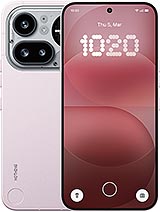
Phone (4a) Pro
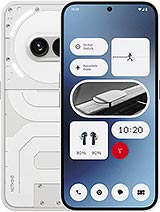
Phone (2a)
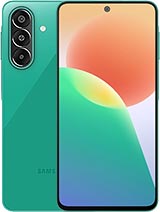
Galaxy F70 Pro