Oppo K13 5G review
The K13 5G suits people who live on their phones all day and want to plug in once at night rather than twice—the battery and display are its real strengths. Skip it if you need a zoom lens, a sharper screen, or the headroom to play AAA games; rivals in the 200-250 EUR range will serve you better in those areas.
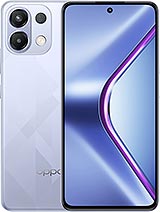
This review is written with AI assistance from Oppo’s published specifications and public benchmark data for the Oppo K13 5G, and the rating is spec-based. GoSolo does not physically test devices; where we estimate real-world behaviour such as battery life or charge time, we say so. How we rate phones.
Overview
The Oppo K13 5G is a large-screen phone built around a 7000 mAh battery and 120Hz AMOLED display—practical picks for all-day use at a budget-conscious price. The Snapdragon 6 Gen 4 chipset is competent enough for everyday tasks and light gaming, but the 1080p resolution and mid-range performance mean this phone trades processing grunt for longevity and screen real estate.
Design & Build
At 208g and 8.5mm thick, the K13 5G is slim and reasonably light for a 6.67-inch phone, though it edges toward the bulkier end of modern midrange devices. The IP65 rating handles dust and splashes from rain or accidental water jets, but it is not submersible—adequate peace of mind without flagship durability claims. The flat frame and minimal bezel design feel contemporary without trying too hard. No standout material story here; the build is functional and holds together, which is what matters at this price tier.
Display
The 6.67-inch AMOLED panel runs at 120Hz with 1200 nits peak brightness, a rare combo for this price class. Scrolling through apps is visibly smooth compared to 60Hz panels, and the brightness handles sunlight glare without fading text or colors. At 1080p (395 ppi), the resolution is not sharp enough to see individual pixels at arm's length, but the difference from 1440p is real: you will notice slightly softer text edges and a less refined look side by side with higher-res rivals. The AMOLED blacks and contrast are genuinely rich, a strength over budget LCDs. For the money, the display is one of the phone's best moves.
Performance
The Snapdragon 6 Gen 4 handles messaging, social media, streaming, and web browsing without lag or hiccups. This is not a gaming phone—demanding titles like Genshin Impact or PUBG will dial down graphics settings and run at lower frame rates to stay stable, though less demanding games play smoothly. General speed feels responsive enough for daily work, and the 8GB or 12GB RAM options keep multitasking light and snappy. For a phone at 190 EUR, the performance matches its purpose: it does not throttle on basic tasks, and it does not pretend to be something it is not.
Software
ColorOS 15 on Android 15 arrives bloat-light compared to earlier Oppo skins, though there are still a handful of pre-installed apps you may not open. The promise of two major Android upgrades (to Android 17) is decent but not exceptional—flagships and many upper-midrange phones offer longer support now. The interface is clean enough and does not get in the way. Security patches will depend on Oppo's momentum, which has been inconsistent outside China; there is no guarantee monthly updates will ship on time.
Camera
The 50MP main sensor with f/1.9 aperture captures plenty of light and detail in good conditions, and the 27mm focal length is standard for a wide lens. Real-world shots are competent—daylight photos are well-exposed with decent color, and the wide aperture helps in low light. There is no ultra-wide lens, no zoom camera, and no macro—a real limitation if you want variety or close-ups. The 16MP selfie camera is ordinary for video calls and portraits. Video at 4K and 1080p runs smoothly with gyro-EIS stabilization, though 4K is capped at 30fps. For a budget phone, the camera is workable but not a reason to pick this device over rivals; it is the kind of camera that makes you a competent social media poster, not a creative one.
Battery & Charging
The 7000 mAh battery is the standout here. Expect about 16 to 18 hours of mixed use before needing a charge—real value for people who want to go a full work day without anxiety. Heavy daily use (gaming, video streaming, constant connectivity) will cut that to 8 to 10 hours, but that is still solid. The 80W SuperVOOC charging tops the phone in roughly 35 to 50 minutes, a quick fill that suits the large battery. This is one of the phone's clearest strengths: you get capacity and speed, two things budget phones often sacrifice.
Value & Verdict
At around 190 EUR, the K13 5G aims squarely at people who want to avoid the daily charge ritual and spend half what flagship buyers pay. The combination of a 7000 mAh battery, 120Hz AMOLED screen, and fast charging is genuinely useful. The Snapdragon 6 Gen 4 is adequate for its tier—not exciting, but not a bottleneck for non-gamers. The real trade-off is camera versatility and raw processing power: there is no second lens, no optical zoom, and no chance of running demanding games at high settings. The 1080p display also falls short of the sharpness rivals at this price sometimes hit. If all-day battery life and a large, smooth screen matter more to you than zoom, portrait mode, or gaming chops, the K13 5G makes sense. If you want a more rounded midrange phone with a zoom camera and sharper screen, you will find better value elsewhere.
Verdict
The K13 5G suits people who live on their phones all day and want to plug in once at night rather than twice—the battery and display are its real strengths. Skip it if you need a zoom lens, a sharper screen, or the headroom to play AAA games; rivals in the 200-250 EUR range will serve you better in those areas.
- 7000 mAh battery routinely lasts 16-18 hours on mixed use, a rare comfort at this price
- 120Hz AMOLED display is smooth and bright (1200 nits peak), a real step above budget LCD rivals
- 80W SuperVOOC charging fills the tank in under an hour, convenient for top-ups
- No ultra-wide or zoom lens—the single 50MP camera limits creative shots and versatility
- 1080p screen resolution is softer than 1440p rivals at the same price; text edges lack refinement
- Snapdragon 6 Gen 4 struggles with demanding games and cannot sustain high frame rates in graphics-heavy apps
Oppo K13 5G Key Specifications
The essentials at a glance. See the full spec sheet.
| Released | 2025, April 21 |
|---|---|
| Display | 6.67 inches, 107.4 cm2 (~86.5% screen-to-body ratio), AMOLED, 120Hz, 1920Hz PWM, 600 nits (typ), 1200 nits (peak) |
| Resolution | 1080 x 2400 pixels, 20:9 ratio (~395 ppi density) |
| Chipset | Qualcomm Snapdragon 6 Gen 4 (4 nm) |
| RAM & storage | 128GB 6GB RAM, 128GB 8GB RAM, 256GB 8GB RAM, 256GB 12GB RAM, 512GB 12GB RAM |
| Main camera | 50 MP, f/1.9, 27mm (wide), 1/2.88", PDAF Auxiliary lens |
| Selfie camera | 16 MP, f/2.5, 23mm (wide), 1/3.0", 1.0µm |
| Battery | 7000 mAh |
| Charging | SuperVOOC up to 80 W |
| Software | Android 15, up to 2 major Android upgrades, ColorOS 15 |
| Dimensions | 163.2 x 76.1 x 8.5 mm (6.43 x 3.00 x 0.33 in) |
| Weight | 208 g (7.34 oz) |
| Durability | IP65 dust tight and water resistant (low pressure water jets) |
| Network | GSM / HSPA / LTE / 5G |
| NFC | NFC (China only) |
| USB | USB Type-C 2.0, OTG |
Oppo K13 5G FAQ
Common questions, answered from the spec sheet.
Does the K13 5G support 5G?
Yes. The K13 5G supports 5G networks.
What chipset does the K13 5G use?
The K13 5G runs on the Qualcomm Snapdragon 6 Gen 4 (4 nm).
What display does the K13 5G have?
A 6.67 inches, 107.4 cm2 (~86.5% screen-to-body ratio) AMOLED, 120Hz, 1920Hz PWM, 600 nits (typ), 1200 nits (peak), 1080 x 2400 pixels, 20:9 ratio (~395 ppi density).
How big is the K13 5G battery?
The K13 5G has a 7000 mAh battery. Charging is rated at SuperVOOC up to 80 W.
Does the K13 5G have NFC?
Yes, the K13 5G has NFC.
Is the K13 5G water resistant?
The K13 5G carries a IP65 dust tight and water resistant (low pressure water jets) rating.
Does the K13 5G support a microSD card?
No, the K13 5G does not support expandable storage.
Alternatives to consider
If the K13 5G isn’t quite right, these are the closest calls.
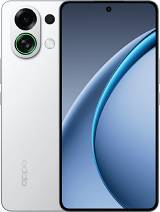
K13 Turbo 5G
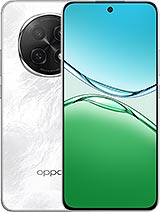
F29 Pro 5G
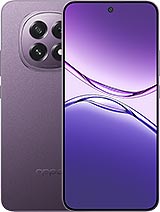
F29 5G

F31 Pro 5G
Galaxy F70 Pro