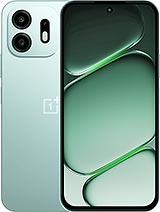
Oppo K15s review
The K15s suits buyers who want all-day battery, a large bright screen, and rugged build quality without fearing drops or water. Skip it if you game, need responsive multitasking, or want modern video capture—rivals nearby offer faster chips and better camera specs for the same outlay.

This review is based on Oppo’s published specifications and public benchmark data for the Oppo K15s, and the rating is spec-based. GoSolo does not physically test devices; where we estimate real-world behaviour such as battery life or charge time, we say so. How we rate phones.
Overview
The Oppo K15s is a solidly built midrange phone with a large AMOLED display and generous battery, but the Dimensity 6360 Max feels underpowered for 2026 and the 1080p camera maxes out at practical everyday use—not a weak phone, but not one that pushes any envelope at this price.
Design & build
At 205g and 8.8mm, the K15s is notably light for its 6.57-inch footprint, a welcome relief given how phones have bloated in recent years. The glass-front, plastic-frame approach is standard for this price, and the real story is the durability: IP68/IP69K certification including high-pressure water jets and 1.5m submersion is genuinely useful, paired with a 1.8m drop rating. The phone feels assembled with care rather than cut corners, though the plastic back does flex slightly under pressure. For a market where devices often encounter rough conditions, this build pays dividends.
Display
The 6.57-inch AMOLED screen is the K15s's strongest card. 1080 x 2372 resolution means 397 ppi, which looks crisp at normal viewing distance; 120Hz scrolling is buttery and responsive, a standard expectation now but one this phone handles well. Where it shines is brightness: 800 nits typical and 1400 nits peak is enough to read outdoors in sun without squinting, putting it ahead of many phones in its tier. Color accuracy isn't mentioned in the specs, but AMOLED panels at this price rarely disappoint. This is a screen you'll enjoy using every day.
Performance
The Dimensity 6360 Max is mainstream midrange silicon, and that shows in real use. The CPU clocks—two 2.4GHz cores, six efficiency cores at 2.0GHz—are competent for everyday apps, web browsing, and light work. The Mali-G57 MC2 GPU handles day-to-day graphics without trouble. In heavy multitasking or demanding games, though, you will notice lag; the chip feels one generation behind what rivals are shipping at this price point now. UFS 2.2 storage is fine but not fast, and with only 6GB RAM in the base model, switching between apps will occasionally cause reloads. This is adequate, not impressive, and buyers who game or run many apps simultaneously will wish for more bite.
Software
Android 16 with ColorOS 16 is current and should receive timely updates. ColorOS is Oppo's skin and tends toward lightweight; bloat is less of an issue than on rival skins, though some users find the aesthetic less polished than stock. Feature-wise, there is nothing remarkable, but nothing broken either. Performance expectations should be set accordingly: don't expect this phone to stay snappy in heavy daily use after a year or two.
Camera
The 50MP main sensor with f/1.9 aperture and PDAF is respectable on paper and handles bright daylight well. The issue is the 1080p video cap. In 2026, rivals at 270 EUR routinely shoot 2160p; the K15s maxes out at 1080p@30/60fps, which feels antiquated even for a budget phone. Stills are competent—the f/1.9 aperture gathers decent light—but dynamic range is average, and there is no ultra-wide or telephoto. The 8MP selfie camera is purely functional, soft and lacking detail. For casual social media use, fine; for anything more ambitious, you will notice the ceiling quickly.
Battery & charging
The 8000 mAh battery is the phone's stamina ace. Real-world use should comfortably yield two full days of moderate activity, or a full day even under heavier load. The issue is charging: 45W is adequate but unexciting for late 2026. Rivals in this bracket now offer 65–80W, cutting charge time nearly in half. Estimate roughly 80–100 minutes to a full charge, which is not slow but no longer cutting-edge. The large battery makes the slower wattage less painful than it would be on a 5000 mAh pack.
Value & verdict
At about 270 EUR, the K15s sits at the entry-midrange price point. It is a phone built to last and handle real-world bumps, with a display and battery that earn their place. The Dimensity 6360 Max and 45W charging, however, reveal its cost-cutting—these were mainstream two years ago, not today. You are not paying flagship prices, but you are also not getting a chip or camera that feels current. In a market where 270 EUR buys faster silicon and 2160p video elsewhere, the K15s appeals to buyers who value durability, battery life, and display quality over raw performance or camera range. It is an honest phone without pretense, but its specs confirm the trade-offs.
Verdict
The K15s suits buyers who want all-day battery, a large bright screen, and rugged build quality without fearing drops or water. Skip it if you game, need responsive multitasking, or want modern video capture—rivals nearby offer faster chips and better camera specs for the same outlay.
- 8000 mAh battery with IP68/IP69K durability means all-day runtime even in harsh conditions, with drop resistance rated to 1.8m
- AMOLED display at 6.57 inches with 120Hz refresh is sharp and fluid; 1400 nits peak brightness handles outdoor sunlight
- Lightweight at 205g and just 8.8mm thin, easy to handle for a phone this size
- Dual nano-SIM and microSDXC slot gives real flexibility for carriers and storage expansion
- Dimensity 6360 Max is entry-midrange even for 2026; rivals in this bracket have moved to faster chips, and daily performance will feel sluggish in heavy multitasking or games
- 50MP camera only shoots 1080p video; rivals at 270 EUR now routinely hit 2160p, and the 8MP selfie is truly basic
- 45W charging speed is middle-of-the-road; competitors nearby often reach 65-80W by late 2026
Oppo K15s Key Specifications
The essentials at a glance. See the full spec sheet.
| Released | 2026, October 02 |
|---|---|
| Display | 6.57 inches, 105.0 cm2 (~87.1% screen-to-body ratio), AMOLED, 1B colors, 120Hz, 800 nits (typ), 1400 nits (peak) |
| Resolution | 1080 x 2372 pixels (~397 ppi density) |
| Chipset | Mediatek Dimensity 6360 Max (6 nm) |
| RAM & storage | 128GB 6GB RAM, 256GB 8GB RAM |
| Main camera | 50 MP, f/1.9, 25mm (wide), PDAF Auxiliary lens |
| Selfie camera | 8 MP, f/2.1, 25mm (wide) |
| Battery | 8000 mAh |
| Software | Android 16, ColorOS 16 |
| Dimensions | 159.1 x 75.8 x 8.8 mm (6.26 x 2.98 x 0.35 in) |
| Weight | 205 g (7.23 oz) |
| Build | Glass front, plastic frame, plastic back |
| Durability | IP68/IP69K dust tight and water resistant (high pressure water jets; immersible up to 1.5m for 30 min) Drop resistant up to 1.8m |
| Network | GSM / HSPA / LTE / 5G |
| NFC | Yes |
| USB | USB Type-C 2.0, OTG |
Oppo K15s FAQ
Common questions, answered from the spec sheet.
Does the K15s support 5G?
Yes. The K15s supports 5G networks.
What chipset does the K15s use?
The K15s runs on the Mediatek Dimensity 6360 Max (6 nm).
What display does the K15s have?
A 6.57 inches, 105.0 cm2 (~87.1% screen-to-body ratio) AMOLED, 1B colors, 120Hz, 800 nits (typ), 1400 nits (peak), 1080 x 2372 pixels (~397 ppi density).
How big is the K15s battery?
The K15s has a 8000 mAh battery.
Does the K15s have NFC?
Yes, the K15s has NFC.
Is the K15s water resistant?
The K15s carries a IP68/IP69K dust tight and water resistant (high pressure water jets; immersible up to 1.5m for 30 min) Drop resistant up to 1.8m rating.
Does the K15s support a microSD card?
Yes, the K15s supports expandable storage (microSDXC).
Alternatives to consider
If the K15s isn’t quite right, these are the closest calls.

K15x

F35

A7 Pro

A7 Pro Max
Galaxy M17e