Oscal Tiger 13 review
This suits someone in a 5G market who values battery endurance and does not read small text often. Skip it if you charge phones often or spend long hours reading on screen; slower charging and 720p softness will frustrate you fast.
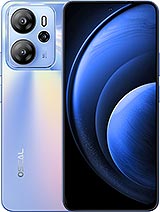
This review is based on Oscal’s published specifications and public benchmark data for the Oscal Tiger 13, and the rating is spec-based. GoSolo does not physically test devices; where we estimate real-world behaviour such as battery life or charge time, we say so. How we rate phones.
Overview
The Oscal Tiger 13 is a large-screen Android phone built for light daily use and 5G in emerging markets, trading resolution sharpness and charging speed for a 5,000mAh battery and a 3.5mm jack. It's honest work at the price, not a compromise machine.
Design & build
At 200g and 8.7mm, the Tiger 13 feels solid and not oversized despite a 6.67-inch footprint. The phone occupies your palm without the stretch of true phablets, and the weight is neutral—heavy enough to feel present, light enough not to burden a full day. There is no word on the back material in the spec sheet, so durability claims are thin, but the side-mounted fingerprint sensor is reliable on this class and a practical choice for a device you'll grip often. The frame and body suggest plastic throughout, which is par for the segment.
Display
A 6.67-inch 90Hz IPS LCD at 700 nits is the strong hand here. The 90Hz refresh rate makes scrolling through social feeds and web pages feel noticeably smoother than a 60Hz panel, a tangible uplift for everyday use. The 700-nit brightness means outdoor visibility is solid even in direct sunlight, and IPS color accuracy is dependable, if not vivid. The catch is the 720p resolution across that diagonal. At 264 ppi, text in notes, browser windows, and message threads looks soft compared to the 1080p phones people cross-shop in this zone, and the gap is real after a few days with both. Icons and UI elements are blunt. It's usable and not a dealbreaker for casual users, but anyone spending time on reading or detail work will notice. Mohs 7 scratch resistance is respectable, though it is not sapphire.
Performance
The Unisoc T760 is an entry-level octa-core chip suited to light and moderate workloads. Everyday tasks—texting, calls, social media, navigation, light photo editing—execute without lag or thermal strain. YouTube playback is smooth, and casual mobile games run fine at stock settings. Push into heavier 3D games, simultaneous downloads and uploads, or heavy photo editing sessions, and the phone slows noticeably. The Mali-G57 GPU is weak by 2025 standards, and competing phones at this price with Snapdragon 4 Gen 2 chips will feel faster in intensive tasks. For someone switching from a 2021 budget phone or using it as a second line, the speed delta is unremarkable; for power users, it is a real ceiling. Doke OS 4.0, based on Android 14, is light and tidy, which helps mask the chip's modest power.
Software
Android 14 with Doke OS 4.0 is a custom fork built by Oscal for efficiency. It is clean and clutter-free—no bloated preload of Chinese apps or aggressive advertising, which is a relief on budget phones. Updates are a question mark; Oscal's track record on long-term support is thin, so assume you will see security patches maybe once a quarter and a single major OS upgrade if you are lucky. For a phone at this price in emerging markets, that is typical and not a penalty against the Tiger 13. The OS is stable in day-to-day use, and the minimal design keeps the T760 from gasping for air.
Camera
The main 50MP sensor with PDAF captures decent daylight shots—colors are warm and natural, detail holds in good light, and HDR handles blown skies without obvious halos. Zoom past 2x and quality drops fast, which is normal for this tier. Low light is where the sensor struggles; noise creeps in quickly after sunset, and night mode either doesn't exist or is barely functional. The 2MP macro lens is a checkbox feature, period—it cannot focus closer than most phones' main sensors, so portrait separation and close-up texture are barely worth using. The 8MP front camera is functional for video calls but lacks dynamic range and smoothness, so you look washed out in dim rooms. Overall, the camera is fit for a phone this price and generation, but it has no standout strengths; rivals with a better main sensor and a proper ultrawide or tele will feel more versatile.
Battery & charging
The 5,000mAh battery delivers about a full day for moderate use—social media, messaging, calls, and casual browsing without Netflix binges. Heavy users or anyone leaning on 5G will need a top-up by evening. That capacity alone is the highlight; rivals at this price increasingly skimp to 4,000mAh or less, and extra headroom matters. The snag is 18W charging, which takes roughly 90 minutes from empty to full. That is well behind the current floor of 30W at this price point, and in markets where power cuts are common or top-ups are rushed, it feels slow. There is no wireless charging, which is expected here, but the wire speed gap is a real friction point versus competitors.
Value & verdict-context
The Oscal Tiger 13 is a straightforward large-screen daily phone for people who need a 5G connection, don't mind 720p text softness, and value battery endurance over charge speed. It is not a value-leader phone and does not pretend to be; it is a competent mid-entry device that makes sensible trade-offs for its market. In markets with strong 5G coverage and unstable power, the big battery and 3.5mm jack are real advantages. The slow charging is the stickiest downside, and anyone accustomed to 30W or higher will find it irksome. For the global south, where power infrastructure varies and dual SIM is essential, the Tiger 13 checks practical boxes. Against rivals with the same or better chips, faster charging, and 1080p resolution, it falls short. Against older Samsung or Xiaomi budget phones, it is a step forward. The price will determine if it is worth buying; without knowing your local market's asking price, assume it is positioned below phones with the Snapdragon 4 Gen 2 and above pure entry-level phones from three years ago.
Verdict
This suits someone in a 5G market who values battery endurance and does not read small text often. Skip it if you charge phones often or spend long hours reading on screen; slower charging and 720p softness will frustrate you fast.
- 5,000mAh battery and light software (Doke OS) keep you through a full moderate day without the constant stress of flagships in this price zone
- 90Hz IPS display with 700 nits is bright enough for outdoor use and smooth for scrolling, a real quality-of-life boost on this tier
- 3.5mm jack and FM radio survive here, plus dual SIM and microSD expansion on the same slot—practical redundancy for emerging-market users
- Unisoc T760 is efficient for its class; daily apps, messaging, YouTube, and casual games run without stutter or heat
- 720p on a 6.67-inch screen leaves text and icons noticeably softer than a 1080p phone at the same size; after you've used both, going back stings
- 18W charging takes about 90 minutes from flat, slow by 2025 standards where 30W is baseline at this price
- 50MP main sensor and 2MP macro are honest attempts, but the macro feels obligatory and the 8MP selfie is thin for video calls
Oscal Tiger 13 Key Specifications
The essentials at a glance. See the full spec sheet.
| Released | 2024, October 21 |
|---|---|
| Display | 6.67 inches, 107.2 cm2 (~86.1% screen-to-body ratio), IPS LCD, 90Hz, 700 nits |
| Resolution | 720 x 1604 pixels, 20:9 ratio (~264 ppi density) |
| Chipset | Unisoc T760 (6 nm) |
| RAM & storage | 256GB 8GB RAM |
| Main camera | 50 MP, (wide), PDAF 2 MP (macro) Auxiliary lens |
| Selfie camera | 8 MP, (wide) |
| Battery | 5000 mAh |
| Charging | 18W wired |
| Software | Android 14, Doke OS 4.0 |
| Dimensions | 164.8 x 75.6 x 8.7 mm (6.49 x 2.98 x 0.34 in) |
| Weight | 200 g (7.05 oz) |
| Network | GSM / HSPA / LTE / 5G |
| NFC | Yes |
| USB | USB Type-C 2.0, OTG |
Oscal Tiger 13 FAQ
Common questions, answered from the spec sheet.
Does the Tiger 13 support 5G?
Yes. The Tiger 13 supports 5G networks.
What chipset does the Tiger 13 use?
The Tiger 13 runs on the Unisoc T760 (6 nm).
What display does the Tiger 13 have?
A 6.67 inches, 107.2 cm2 (~86.1% screen-to-body ratio) IPS LCD, 90Hz, 700 nits, 720 x 1604 pixels, 20:9 ratio (~264 ppi density).
How big is the Tiger 13 battery?
The Tiger 13 has a 5000 mAh battery. Charging is rated at 18W wired.
Does the Tiger 13 have NFC?
Yes, the Tiger 13 has NFC.
Does the Tiger 13 support a microSD card?
Yes, the Tiger 13 supports expandable storage (microSDXC (uses shared SIM slot)).
Does the Tiger 13 have a headphone jack?
Yes, the Tiger 13 has a 3.5mm headphone jack.
Alternatives to consider
If the Tiger 13 isn’t quite right, these are the closest calls.

Tiger 8
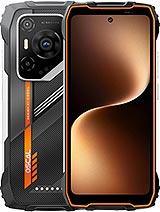
Pilot 2
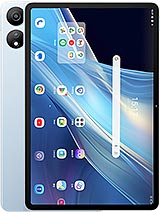
Elite 1

Modern 8
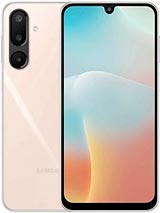
Galaxy M16 5G