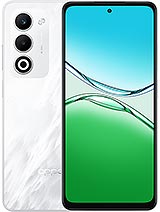
Oukitel WP50 review
The WP50 suits outdoor workers, fieldworkers, and rugged-use buyers who prioritize survival over screen polish or raw speed. Skip it if you want flagship performance, bright daylight display, or fast charging; a mainstream midrange phone from a bigger brand will serve you better for the same money and conditions that do not punish phones."
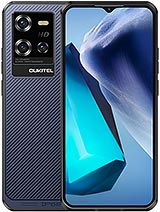
This review is based on Oukitel’s published specifications and public benchmark data for the Oukitel WP50, and the rating is spec-based. GoSolo does not physically test devices; where we estimate real-world behaviour such as battery life or charge time, we say so. How we rate phones.
Overview
The WP50 is a rugged workhorse built for outdoor duty and demanding conditions, not everyday speed or screen quality. It trades brightness, pixel density, and processing power for genuine durability—IP68/IP69K ratings, military compliance, 1.5-meter drop resistance—and a battery that runs past two days. Worth the money if you need a phone that survives mud and water; ordinary if you want a polished everyday experience.
Design & build
The WP50 is built like a tool. At 281 grams and 12.4mm thick, it is chunky and notably heavier than most phones in its price bracket, but that weight is purposeful—it houses a frame that survives IP68/IP69K submersion to 1.5 meters for 30 minutes, high-pressure water jets, and drops from 1.5 meters. The phone carries MIL-STD-810H certification, meaning it has been tested against shock, vibration, extreme temperatures, and salt spray. For someone working in construction, agriculture, or travel to wet climates, this is not padding; it is a real specification that changes whether the phone ends the year in one piece. The trade-off is obvious: the heft and bulk that protect it also make it less pleasant to hold for hours of casual browsing. The design is honest rather than refined—no attempt to make durability look slim or light. If your phone spends time in pockets covered in dirt, this is the right choice. If you want a phone that disappears in your hand, look elsewhere.
Display
A 6.6-inch IPS LCD with 720 by 1612 resolution and 440 nits of brightness is a compromise. The pixel density of 267 ppi means text and images have a soft, visible grain when you bring the phone close to your face—noticeable next to any mid-range phone from 2024 onward. The 440-nit peak brightness handles indoor light and mild sun, but direct sunlight washes the display; you will squint to read small text outdoors, a real limitation if you need to check email or maps in a sunny job site. The IPS panel offers decent color and wide viewing angles, which matters when multiple people need to see the screen at once. For a rugged phone, the choice of 720p makes sense—lower resolution means less power draw and a simpler manufacturing process that favors durability. But it does mean the screen experience sits a tier below what you would get from a mainstream 2024 midrange phone at the same price. If outdoor readability in bright sun is critical, the WP50 will frustrate you.
Performance
The Dimensity 6100+ with Mali-G57 GPU is a mainstream midrange processor for 2024. The two 2.2GHz Cortex-A76 cores paired with six efficiency cores handle everyday work—messaging, email, basic browsing, social media—without lag. Gaming at lower settings and standard app use run smoothly. Demanding tasks like video editing or heavy multitasking will make the phone work harder, and frame rates in modern games drop noticeably when you push quality settings up. By midrange 2024 standards, this is competent but not quick; it is the kind of chip that does the job without impressing. The 4GB of RAM is tight for keeping many apps open at once, though Android 14 manages it reasonably well. Nobody buying a rugged phone for 290 EUR is expecting performance fireworks, and the WP50 does not pretend otherwise. It stays out of the way, which is exactly what a workhorse should do.
Software
Android 14 is current and brings reasonable security and privacy controls. The phone runs a fairly stock version of the operating system with minimal bloat, which means it should remain responsive even as the Android version ages. Oukitel has a mixed track record with update frequency, so do not expect regular patches beyond the security fixes built into your regional carrier's release. For a phone positioned as durable and practical, the software step is solid. No feature surprises here, just a clean baseline that lets you do what you came for without fighting the interface.
Camera
The 48MP main sensor with f/1.8 aperture and PDAF captures decent detail in good light and does surprisingly well with the 2MP macro lens for close-up work. Daylight photos are sharp and colors are true, though the wide aperture does not buy you much depth-of-field control in most real-world shooting. The lack of a telephoto lens means no optical zoom; distant subjects must be cropped, and you lose quality fast. The 1440p video maxes out at 30fps, which is fine for casual clips but lags behind most rivals at this price that now offer 60fps or higher. The 8MP selfie camera is basic and delivers soft, muddy self-portraits by 2024 standards. For a rugged phone, the main camera performs well for its purpose—strong in sunlight, acceptable in dim light, useful for close-ups. But there is no zoom reach and no video fluidity that would make it a compelling camera phone. It is a tool that documents the day, not a device you would reach for to shoot photos.
Battery & charging
The 6500mAh battery is generous and delivers about 1.5 to 2 days of real-world use with moderate to heavy screen time. On lighter use, it easily stretches to a second day. This is one of the WP50's genuine strengths—the battery life is reliable and predictable, exactly what someone working in a remote location needs. The 18W wired charging tops the battery in about 1.5 to 2 hours, which is slow by 2024 standards (most rivals in this price band now hit 66W or higher), but the trade-off is consistent and acceptable. There is no wireless charging, which does not matter for a rugged device designed to withstand harsh conditions. For durability-first buyers, the large capacity and reliable charge cycle are worth more than flagship charging speeds.
Value & verdict
At about 290 EUR, the WP50 costs what a mainstream midrange phone costs, but delivers a different proposition. The durability engineering—IP68/IP69K, military compliance, drop resistance—is genuine and rare at this price. The downside is that processing power, screen brightness, display resolution, and charging speed are all below the standard for an equally priced ordinary phone. You are not overpaying for ruggedness; you are making a conscious choice to spend your money on durability rather than performance or screen quality. For outdoor workers, travelers to wet climates, and anyone whose phone spends time in harsh conditions, this is exactly right. For someone who just wants a good everyday phone and happens to live somewhere with weather, save money and buy a standard midrange device from a mainstream brand.
Verdict
The WP50 suits outdoor workers, fieldworkers, and rugged-use buyers who prioritize survival over screen polish or raw speed. Skip it if you want flagship performance, bright daylight display, or fast charging; a mainstream midrange phone from a bigger brand will serve you better for the same money and conditions that do not punish phones."
- Genuine IP68/IP69K durability and military-grade drop resistance—not decorative, and actually rare at this price
- 6500mAh battery delivers honest 1.5 to 2 days on real-world use, a standout advantage for remote work
- 48MP main camera with f/1.8 aperture and macro capability handles daylight photography well and captures close-up detail
- Screen brightness of 440 nits and 720p resolution on a 6.6-inch panel mean poor readability in direct sunlight and visible pixelation indoors
- 18W charging is markedly slower than rivals at this price, which now routinely hit 66W or higher
- Midrange Dimensity 6100+ and 4GB RAM leave little headroom for demanding apps or heavy multitasking
Oukitel WP50 Key Specifications
The essentials at a glance. See the full spec sheet.
| Released | 2024, June 17 |
|---|---|
| Display | 6.6 inches, 104.6 cm2 (~76.0% screen-to-body ratio), IPS LCD, 440 nits |
| Resolution | 720 x 1612 pixels, 20:9 ratio (~267 ppi density) |
| Chipset | Mediatek Dimensity 6100+ (6 nm) |
| RAM & storage | 256GB 4GB RAM |
| Main camera | 48 MP, f/1.8, (wide), 1/2.0", PDAF 2 MP (macro) Auxiliary lens |
| Selfie camera | 8 MP, f/2.2, (wide), 1/4.0" |
| Battery | 6500 mAh |
| Charging | 18W wired |
| Software | Android 14 |
| Dimensions | 172.2 x 80 x 12.4 mm (6.78 x 3.15 x 0.49 in) |
| Weight | 281 g (9.91 oz) |
| Durability | IP68/IP69K dust tight and water resistant (high pressure water jets; immersible up to 1.5m for 30 min) Drop resistant up to 1.5m MIL-STD-810H compliant |
| Network | GSM / HSPA / LTE / 5G |
| NFC | Yes |
| USB | USB Type-C 2.0, OTG |
Oukitel WP50 FAQ
Common questions, answered from the spec sheet.
Does the WP50 support 5G?
Yes. The WP50 supports 5G networks.
What chipset does the WP50 use?
The WP50 runs on the Mediatek Dimensity 6100+ (6 nm).
What display does the WP50 have?
A 6.6 inches, 104.6 cm2 (~76.0% screen-to-body ratio) IPS LCD, 440 nits, 720 x 1612 pixels, 20:9 ratio (~267 ppi density).
How big is the WP50 battery?
The WP50 has a 6500 mAh battery. Charging is rated at 18W wired.
Does the WP50 have NFC?
Yes, the WP50 has NFC.
Is the WP50 water resistant?
The WP50 carries a IP68/IP69K dust tight and water resistant (high pressure water jets; immersible up to 1.5m for 30 min) Drop resistant up to 1.5m MIL-STD-810H compliant rating.
Does the WP50 support a microSD card?
No, the WP50 does not support expandable storage.
Does the WP50 have a headphone jack?
No, the WP50 does not have a 3.5mm headphone jack.
Alternatives to consider
If the WP50 isn’t quite right, these are the closest calls.
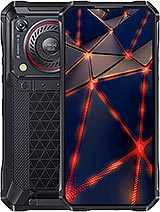
WP33 Pro
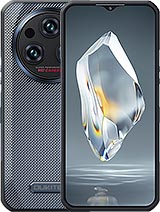
WP35
WP36
WP28 E
Galaxy M16 5G